Safe Travel Destinations 2026: Why Europe is the Top Choice for Spring Travel

In 2026, travelers are making a deliberate shift toward destinations where safety is not a concern they need to manage around. Europe leads every major global safety index this year, with The Netherlands, Switzerland, Austria, and Finland setting the standard. Spring is the strategic window: crowds are low, weather is mild, and the infrastructure that keeps travel smooth and secure is operating at full capacity. This blog covers which European destinations rank highest for safety in 2026, why spring is the right timing, and how staying digitally connected through an eSIM plan is itself a personal safety tool for modern travelers.
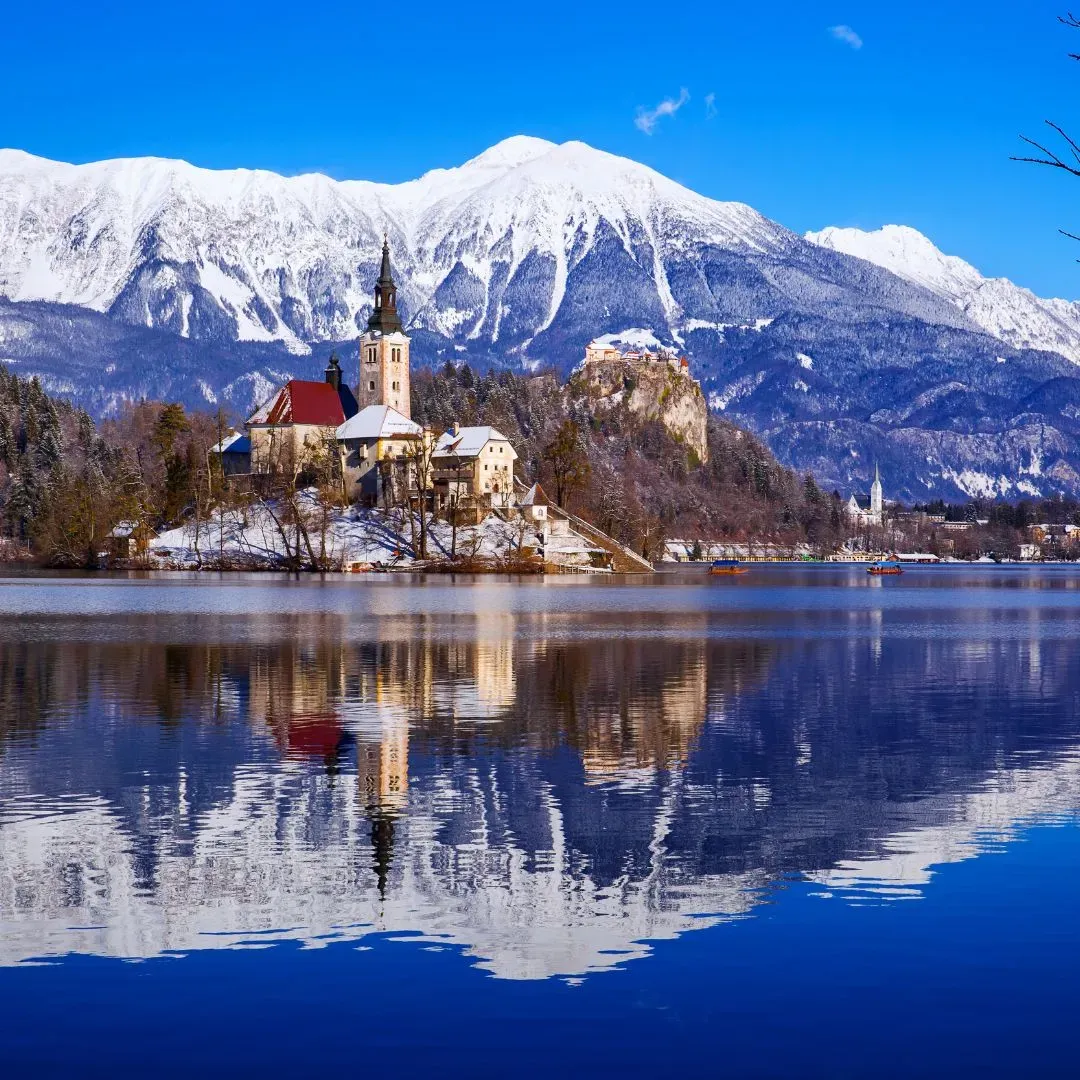
The 2026 Safety-First Travel Trend: What has Changed and Why it Matters
The single most significant shift in international travel behavior in 2026 is not about budget or experience type. It is about the decision to prioritize stability and personal security above other destination selection criteria.
This shift has been building for several years, driven by a combination of factors: geopolitical instability in several previously popular regions, the lingering risk-awareness that the pandemic period instilled in frequent travelers, and a growing body of travel data showing that safety perceptions directly affect how much travelers enjoy a trip regardless of the destination's other qualities. A traveler who spends any portion of their trip managing safety anxiety is not getting the full value of that trip, regardless of how beautiful the destination is.
Europe has emerged as the clearest beneficiary of this safety pivot. The continent ranks highest globally across all primary safety dimensions in 2026: political stability, personal security metrics including violent crime and petty crime rates, infrastructure reliability, healthcare access, and the quality of emergency response systems that travelers depend on when things go wrong. For travelers who want a spring break that delivers genuine peace of mind rather than a destination that requires constant situational awareness, Europe in 2026 is the straightforward answer.
For travelers planning a multi-country European spring loop, an eSIM Europe plan from Mobimatter provides seamless cross-border data connectivity across the Schengen Zone, ensuring travelers are never without real-time access to navigation, emergency information, and transit alerts as they move between countries.

The Safest Destinations in Europe for Spring 2026
The Netherlands: The World's New Safety Champion
The Netherlands has overtaken Iceland in 2026 to rank as the world's safest country to visit by international travelers. This ranking reflects the country's exceptional performance across every safety metric: extremely low rates of violent crime, a highly functional and trustworthy police presence, outstanding public infrastructure, and a cultural environment that is genuinely welcoming to international visitors of every background.
For spring travelers specifically, The Netherlands in March through May is one of Europe's most rewarding experiences. The famous tulip fields of the Bollenstreek region are in full bloom from mid-April through early May. Amsterdam is noticeably less crowded than its peak summer version while still fully operational. The Hague offers a quieter, equally safe alternative with its international character and coastal proximity to Scheveningen. Eindhoven, consistently highlighted for its design culture and innovation community, delivers high safety scores alongside a distinctly local experience.
Practical safety advantages of The Netherlands for spring travelers:
- Public transport is reliable, well-marked in English, and operates safely after dark
- Cycling infrastructure is world-class and provides a safe mode of transport even for first-time visitors
- Emergency services respond rapidly in both English and Dutch
- ATM fraud and tourist-targeted crime rates are among the lowest in Western Europe
MobiMattter Tip - Check out the best eSIMs for Netherlands to stay connected.
Switzerland and Austria: Consistent Leaders in Stable Travel Environments
Switzerland and Austria have maintained top-tier safety rankings for over a decade and show no signs of ceding that position in 2026. Both countries combine political neutrality with exceptional social stability, producing travel environments that feel genuinely stress-free for both solo travelers and family groups.
Zurich in spring offers the combination of the world's strongest financial infrastructure, immaculate public spaces, and the natural backdrop of the Alps beginning to emerge from winter snow. The city's public transport system runs with the precision that Switzerland's reputation suggests, and personal security in Zurich's streets, parks, and late-night areas is consistently strong.
Vienna brings a different but equally safe character to spring travel. The Austrian capital is architecturally stunning in spring light, culturally rich across its world-class museum quarter, and socially progressive in ways that make it accessible and welcoming for travelers of every description. Vienna's Prater park, the Ringstrasse, and the Naschmarkt are all walkable, well-lit, and safe at virtually every hour of the day.
MobiMatter Tip - To stay connected in Switzerland and Austria, you can explore our regional Europe plans or go for a single country eSIM like Switzerland eSIM.
Finland: The Northern Haven for Solo and Family Travelers
Helsinki and the broader Finnish travel experience have built a reputation specifically among solo travelers and family groups for delivering a stress-free environment that few destinations anywhere in the world match.
Finland's low crime rates reflect a social infrastructure built on trust, equity, and a functional relationship between citizens and public institutions that extends naturally to how visitors are treated. Helsinki in spring, emerging from the long Nordic winter into extended daylight hours, offers a genuinely uplifting travel experience with world-class design culture, excellent food, and a natural environment that becomes dramatically more accessible as the season progresses.
For solo female travelers specifically, Finland consistently ranks as one of the safest destinations globally, with Helsinki scoring at the very top of personal security indices for solo international visitors. Don't forget to get a travel eSIM for Finland before you land.

Why Spring is the Strategic Safety Window for European Travel
Avoiding Crowds Reduces Risk Naturally
The relationship between crowd density and certain categories of travel risk is well-documented. Pickpocketing, bag snatching, and other opportunistic tourist-targeted crimes are statistically correlated with the high-density crowd environments that summer creates in popular European destinations.
A traveler visiting The Colosseum in Rome in April experiences the site at perhaps 30 to 40 percent of its July capacity. The same traveler is significantly less exposed to the crowd-dependent risks that peak season brings. This pattern holds across the most popular European destinations: the Eiffel Tower in Paris, the Sagrada Familia in Barcelona, the Acropolis in Athens, and Bruges city center in Belgium all become meaningfully lower-risk personal security environments in spring compared to summer.
Beyond crime risk, crowd reduction during spring improves the quality of every safety-adjacent experience. Emergency access is faster in lower-density environments. Accommodation staff have more capacity to assist with problems. Transport systems operate at more comfortable levels. The entire travel experience is more manageable and more responsive to individual needs.
Spring Weather and Infrastructure Reliability
Southern European destinations including Greece and Portugal are at their most reliably pleasant in spring. Temperatures in Athens range from 15 to 22 degrees Celsius in April and May. Lisbon and Porto sit in a similar range. Neither destination carries the summer heat stress that affects vulnerable travelers and that can make outdoor exploration genuinely uncomfortable.
Infrastructure reliability is also strongest in spring. Transport services that scale down or become irregular during the deep winter months are fully operational. Tourist infrastructure including museums, transportation links, and hospitality services runs without the seasonal strain that July and August impose.
For travelers who want to maximize the accessible, comfortable, and incident-free quality of their European spring experience, France and Germany both offer exceptional spring conditions alongside their established reputation for safety and reliable infrastructure. Travelers entering France can activate an eSIM France plan through Mobimatter for immediate local carrier data from Charles de Gaulle or any regional French airport, and those covering Germany can do the same with an eSIM Germany plan that connects to Germany's comprehensive national carrier network from the moment of landing.
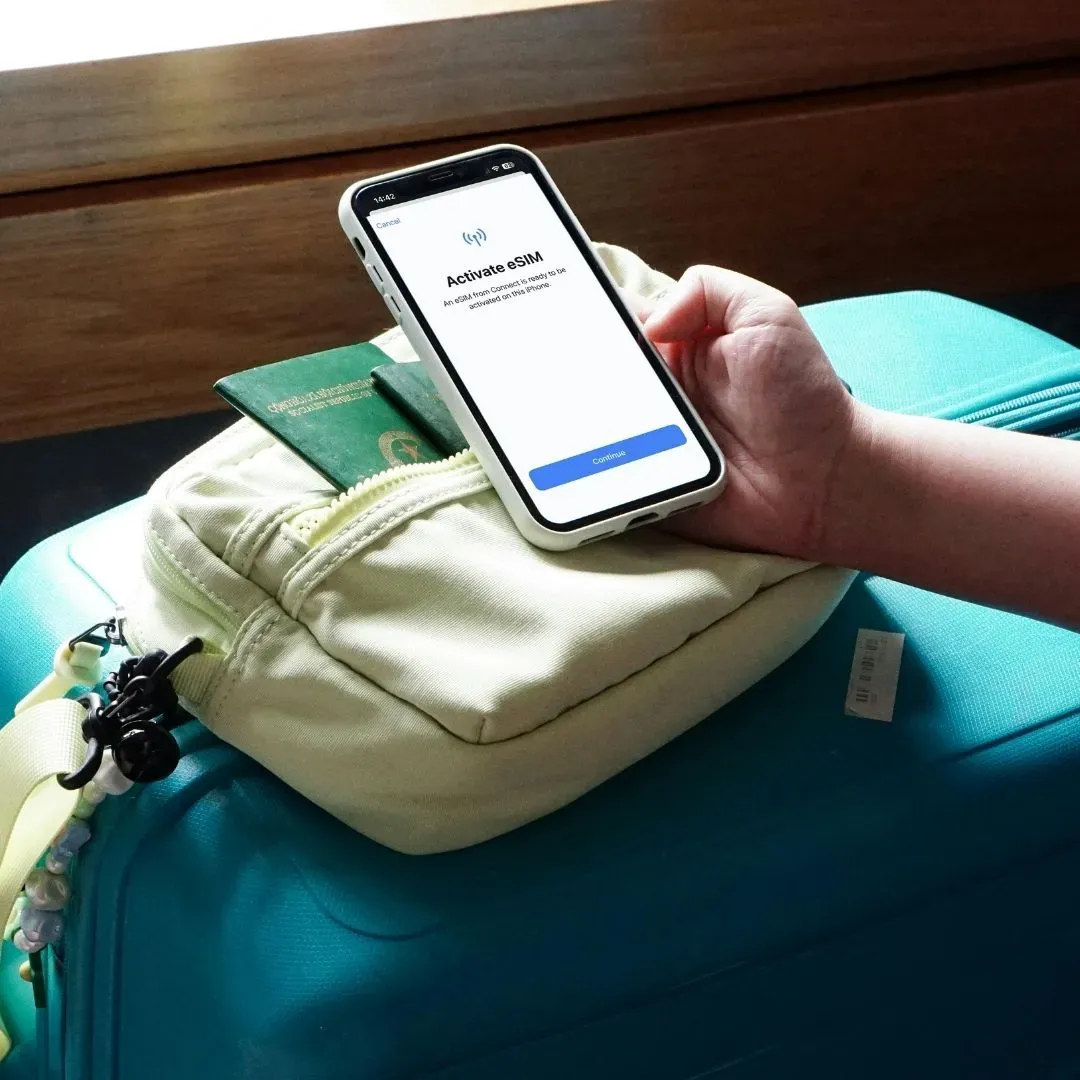
Connectivity as a Personal Safety Tool in 2026
Why Being Off-Grid Is a Safety Risk, Not Just an Inconvenience
In 2026, personal digital connectivity and personal safety are inseparable concepts for any informed traveler. A traveler without reliable mobile data is not just inconvenienced by missing navigation. They are operating without access to the tools that modern safety depends on.
Real-time access to government travel advisories means a traveler can see updated safety information for their specific destination as it is published, not hours later when they find WiFi at the accommodation. Real-time access to transit alerts means a disrupted route is known and rerouted before the traveler has wasted 40 minutes at a closed station. Real-time GPS means a traveler who is disoriented in an unfamiliar neighborhood can reorient instantly rather than asking strangers for directions. Emergency translation tools mean a traveler in a medical situation in a non-English-speaking country can communicate their condition and receive instructions accurately.
None of these safety-critical functions work without a reliable data connection. Hotel WiFi covers the accommodation. It does not cover the 14 hours per day when a traveler is outside.
How eSIM Supports Safety Across a Multi-Country European Trip
A spring European loop might move through five or six countries over two to three weeks. Each border crossing historically represented a connectivity decision point where travelers had to choose between expensive roaming, hunting for a local SIM, or accepting a data gap.
Mobimatter's regional Europe eSIM plans eliminate this decision entirely for European trips. A single plan covering the Schengen Zone provides continuous data across multiple countries without any re-purchase, re-activation, or gap in connectivity at border crossings. The traveler who crosses from France into Spain, then into Portugal, and back through Northern Spain to France maintains continuous GPS, continuous messaging, and continuous access to real-time safety information throughout.
Travelers who prefer country-specific coverage for portions of their trip can activate dedicated plans for each destination. An eSIM Spain plan connects to Spanish carrier networks for the Iberian leg of the trip. An eSIM Italy plan covers the Italian portion with local carrier speeds and coverage. An eSIM UK plan handles connectivity for any time in England, Scotland, or Wales, where post-Brexit the UK operates on networks outside the standard EU roaming framework.
All of these plans are available through Mobimatter's website or app, manageable from a single account, stored simultaneously on any eSIM-compatible device, and switchable between destinations in under a minute.
Traveling Europe in Spring 2026 With Peace of Mind: What the Full Setup Looks Like
The combination of destination choice, timing, and digital preparation that produces the most genuinely stress-free European spring trip in 2026 looks like this:
Destination selection: Choose from the top-tier safety leaders. The Netherlands, Switzerland, Austria, or Finland for maximum personal security. Add Greece, Portugal, France, Germany, or Northern Italy for a multi-country experience that combines high safety scores with spring-specific appeal.
Timing: Plan the core trip between mid-March and the end of May. This window captures tulip season in The Netherlands, cherry blossom equivalent moments in Germany and Austria, spring hiking conditions in Switzerland, and pre-peak crowd levels across Southern European destinations.
Connectivity setup: Purchase a Mobimatter eSIM plan before departure. For multi-country trips, a regional Europe plan or a combination of country-specific plans for each destination covers the full itinerary. Activate before boarding. Land connected. Stay connected for the entire trip.
Safety habits: Keep emergency numbers for each country saved offline. Download offline maps before departing each accommodation. Register your trip with your home country's foreign ministry travel advisory system. Keep a screenshot of your accommodation address in the local language accessible without data.
The travelers who will enjoy the best European spring experiences in 2026 are not necessarily those with the largest budgets or the most elaborate itineraries. They are the ones who picked stable, high-safety destinations, traveled during the strategic spring window before summer crowds and heat arrive, and kept themselves digitally connected well enough to use their destination's information infrastructure as the safety layer it is designed to be.
eSIM Coverage Comparison for Key European Spring Destinations
| Destination | eSIM Available via Mobimatter | Network Quality | Spring Crowd Level | Safety Ranking 2026 |
|---|---|---|---|---|
| Netherlands | Yes, via Europe plan | Excellent | Low to moderate | World's safest 2026 |
| Switzerland | Yes, dedicated plan or via Europe plan | Excellent | Low | Top 3 globally |
| Austria | Yes, via Europe plan | Excellent | Low | Top 5 globally |
| Finland | Yes, via Europe plan | Excellent | Very low | Top 5 globally |
| France | Yes, dedicated plan or via Europe plan | Excellent | Moderate | Top 10 globally |
| Germany | Yes, dedicated plan or via Europe plan | Excellent | Low to moderate | Top 10 globally |
| Spain | Yes, dedicated plan or via Europe plan | Excellent | Moderate | Top 15 globally |
| Italy | Yes, dedicated plan or via Europe plan | Excellent | Moderate | Top 15 globally |
| UK | Yes, dedicated plan or via Europe plan | Excellent | Moderate | Top 15 globally |
| Greece | Yes, dedicated plan or via Europe plan | Excellent | Low in spring | High stability |
Frequently Asked Questions
Is Europe safe to visit in spring 2026?
Yes. Europe ranks as the safest region for international travel in 2026 across all primary safety metrics including political stability, violent crime rates, petty crime, infrastructure reliability, and emergency response quality. Spring travel between March and May offers additional safety advantages through lower crowd density, which reduces exposure to tourist-targeted opportunistic crime. The Netherlands, Switzerland, Austria, and Finland are the highest-ranked individual country destinations within Europe for personal safety in 2026.
Which is the safest country to visit in Europe in 2026?
The Netherlands has ranked as the world's safest country to visit in 2026, overtaking Iceland which had held that position in previous years. The ranking reflects the Netherlands' exceptional performance across violent crime rates, personal security, political stability, and infrastructure reliability. Cities including The Hague and Eindhoven score particularly high on safety indices alongside Amsterdam. Switzerland and Austria follow closely as the most consistent long-term safety leaders in European travel.
Does having an eSIM genuinely improve personal safety while traveling in Europe?
Yes, in meaningful and practical ways. Real-time GPS navigation prevents the disorientation that creates vulnerability in unfamiliar environments. Immediate access to government travel advisories provides safety information as it is published rather than hours later. Emergency translation tools enable communication in medical or safety situations regardless of language barriers. Transit alerts allow travelers to avoid disrupted routes before they encounter them. A reliable eSIM plan from Mobimatter ensures all of these functions are available throughout a European trip, not just when WiFi happens to be accessible.
What is the best eSIM setup for a multi-country European spring trip? The most practical setup for a multi-country European spring trip depends on the specific itinerary. For trips confined to Schengen Zone countries, a regional Europe data plan from Mobimatter provides continuous cross-border coverage without the need for separate country plans. For trips that include the UK, a separate UK eSIM plan is required because the UK operates outside EU roaming frameworks post-Brexit. For trips with heavy use concentrated in one or two countries, dedicated country plans for France, Germany, Spain, or Italy alongside a regional plan for the rest of the itinerary provides the best combination of coverage and cost efficiency.
Why is spring specifically better than summer for safe European travel?
Spring offers lower crowd density than summer across all popular European destinations, which naturally reduces exposure to opportunistic tourist-targeted crime such as pickpocketing and bag snatching that statistically increase with crowd density. Transport systems are less strained and more responsive. Accommodation staff have more capacity to assist with problems. Weather in Southern European destinations is mild and comfortable without the intense heat that summer brings. Infrastructure across the continent operates at its most reliable seasonal level. The combination of these factors makes spring the strategic safety window for European travel.
Can I keep my home phone number active while using a Mobimatter eSIM in Europe?
Yes. eSIM technology allows travelers to keep their physical home SIM active for calls, texts, and two-factor authentication while routing all data through an active eSIM plan at local European carrier rates. This dual SIM configuration means your primary number remains reachable to family, colleagues, and emergency contacts throughout the trip. The home carrier charges for calls and texts received on the primary number while roaming, but all data costs, which represent the largest expense for most travelers, are handled by the local eSIM plan at significantly lower rates than home carrier roaming data pricing.
Are there any European countries where eSIM does not work well in 2026?
eSIM coverage is excellent across all major Western and Northern European destinations in 2026. Coverage quality is strong in France, Germany, Spain, Italy, the UK, the Netherlands, Switzerland, Austria, Finland, and Greece. Some smaller Eastern European countries and remote rural areas within any European country may have more limited eSIM carrier support or reduced network speeds compared to major cities. Mobimatter provides coverage information for each plan and destination, allowing travelers to verify coverage for their specific itinerary before purchasing.