Does a UK eSIM Work in Ireland? The Ultimate Guide to Confusing eSIM Destinations

The Double-eSIM Trap
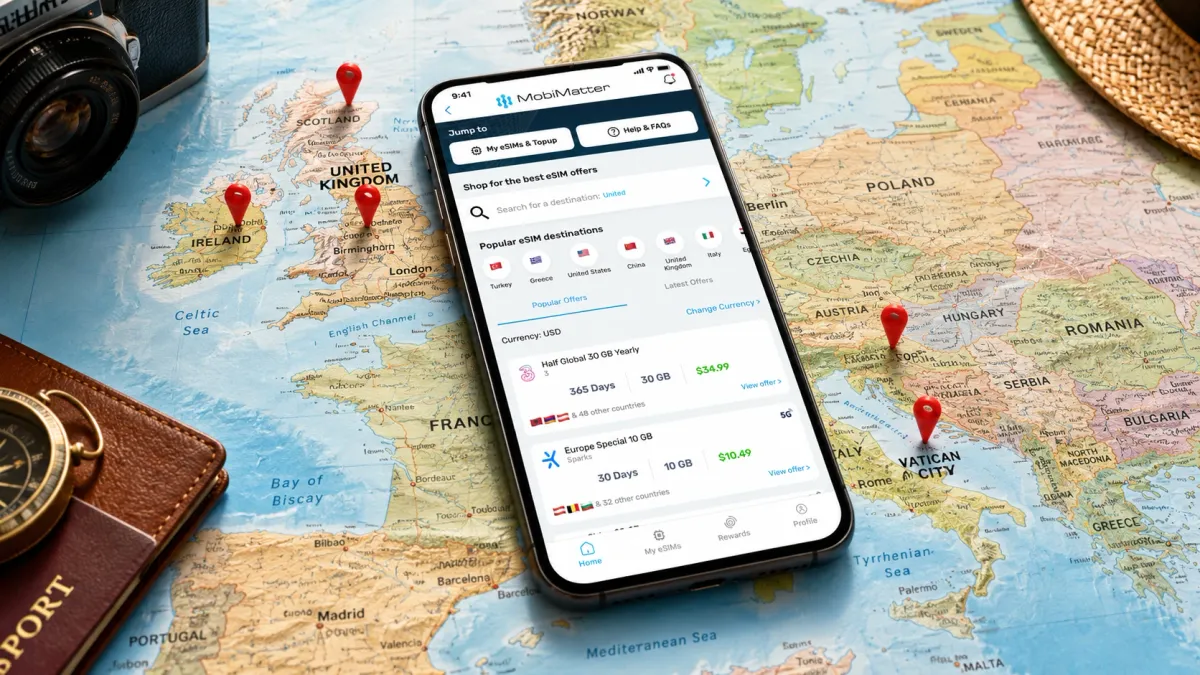
Picture this. You are planning a dream trip to Italy with a day trip to the Vatican. You search "eSIM" and see Italy and Vatican City listed as two separate options. Naturally, you buy both. You have just fallen for a search engine optimization trap that costs real travelers real money every day.
Many eSIM players list tiny micro-states, islands, and territories as standalone destinations purely to capture more Google search traffic, not because the coverage actually works that way. Mobile networks follow physical tower infrastructure, not political borders, so a plan built around one country's network often already reaches its neighbors, enclaves, or island territories at no extra cost. Before you check out on any Italy eSIM plan, it is worth knowing exactly which nearby micro-states ride along on the same towers.
This guide breaks down exactly where a single country eSIM already has you covered, and where the networks are genuinely separate enough that you need a second plan or a regional bundle. Bookmark it before your next trip so you stop paying twice for the same connection.

Why eSIM Sites Split One Destination into Two
This kind of listing split happens because search volume, not network reality, drives most eSIM marketplace content. If enough people search "Vatican City eSIM" or "Monaco eSIM" every month, a listing page tends to appear for it, even when the underlying product is identical to the mainland plan the visitor already has open in another tab.
The pattern repeats across nearly every micro-state, autonomous island group, and disputed territory on the map. A search engine sees "Vatican City" and "San Marino" as distinct entities because they are distinct countries on paper, complete with their own postal codes, currencies in some cases, and flags. A telecom network, on the other hand, only sees a physical radio tower a few kilometers away broadcasting the same signal. That mismatch between political geography and network geography is the entire source of the confusion this guide untangles.
Part 1: The "Two-for-One" Wins (Where 1 eSIM Covers Both)
These destinations share the same physical telecom towers as their mainland, so buying the primary country plan means you are already fully covered the moment you land, with no second purchase needed. The confusion usually comes from political rather than network borders.
| Mainland eSIM Plan | Hidden Locations Natively Covered | Why Travelers Get Confused |
|---|---|---|
| Italy | Vatican City, San Marino | Vatican City runs on Italian towers (TIM, Vodafone Italia), so listing it separately is a search-traffic tactic, not a coverage fact. MobiMatter shows these details clearly in the 'destinations and networks' section on the eSIM plan page. |
| United Kingdom | Scotland, Wales, Northern Ireland | Travelers mix up Northern Ireland (part of the UK) with the Republic of Ireland (a separate country). A UK eSIM works fine in Belfast and Edinburgh. |
| Spain | Canary Islands, Balearic Islands | Because the islands sit far from the mainland, travelers assume they need a regional add-on. They do not; Movistar, Vodafone, and Orange serve them the same way. |
| United States | Hawaii, Alaska | Both are full US states on standard US 5G networks, not overseas territories, despite feeling far removed from the mainland. |
| Portugal | Madeira, Azores | Two popular island getaways fully covered by any standard Portugal eSIM. |
Part 2: The eSIM Traps (Where One Plan is NOT Enough)
These are the routes where travelers assume coverage continues because of geographic or political closeness, but the telecom networks are entirely separate. Crossing into one of these zones on the wrong plan usually means an instant loss of signal.
| If You Buy This Plan | It Will Not Work Here | The Reality Check and Solution |
|---|---|---|
| United Kingdom | Republic of Ireland | Ireland is a fully separate sovereign nation with its own networks. Coverage cuts off at the border. A Europe Regional eSIM solves this in one purchase. MobiMatter Tip: Get a Europe Regional plan instead. |
| Republic of Ireland | Northern Ireland | Although they share an island, Northern Ireland is part of the UK and runs on UK mobile networks. A single-country Ireland eSIM won't connect across the border; requiring two separate eSIMs unless you choose a regional plan. Similarly, a UK eSIM will not cover Republic of Ireland. Always check the plan details on MobiMatter to verify which destinations are covered. |
| United States | Puerto Rico, US Virgin Islands | Some premium US carriers include them, but many standard prepaid eSIMs treat them as international roaming. Always check the plan's fine print in the details. |
| France | Monaco | Monaco Telecom runs its own network. A strict France-only eSIM will hit a roaming wall the moment you reach Monte Carlo. |
| Cyprus | Northern Cyprus | The Republic of Cyprus (south) is on EU networks. Northern Cyprus runs on Turkish carriers like Turkcell and Vodafone TR. |
| China | Hong Kong, Macau | Both are Special Administrative Regions with fully independent telecom infrastructure. A mainland China eSIM will not connect in either city. |
How MobiMatter Solves This Confusion
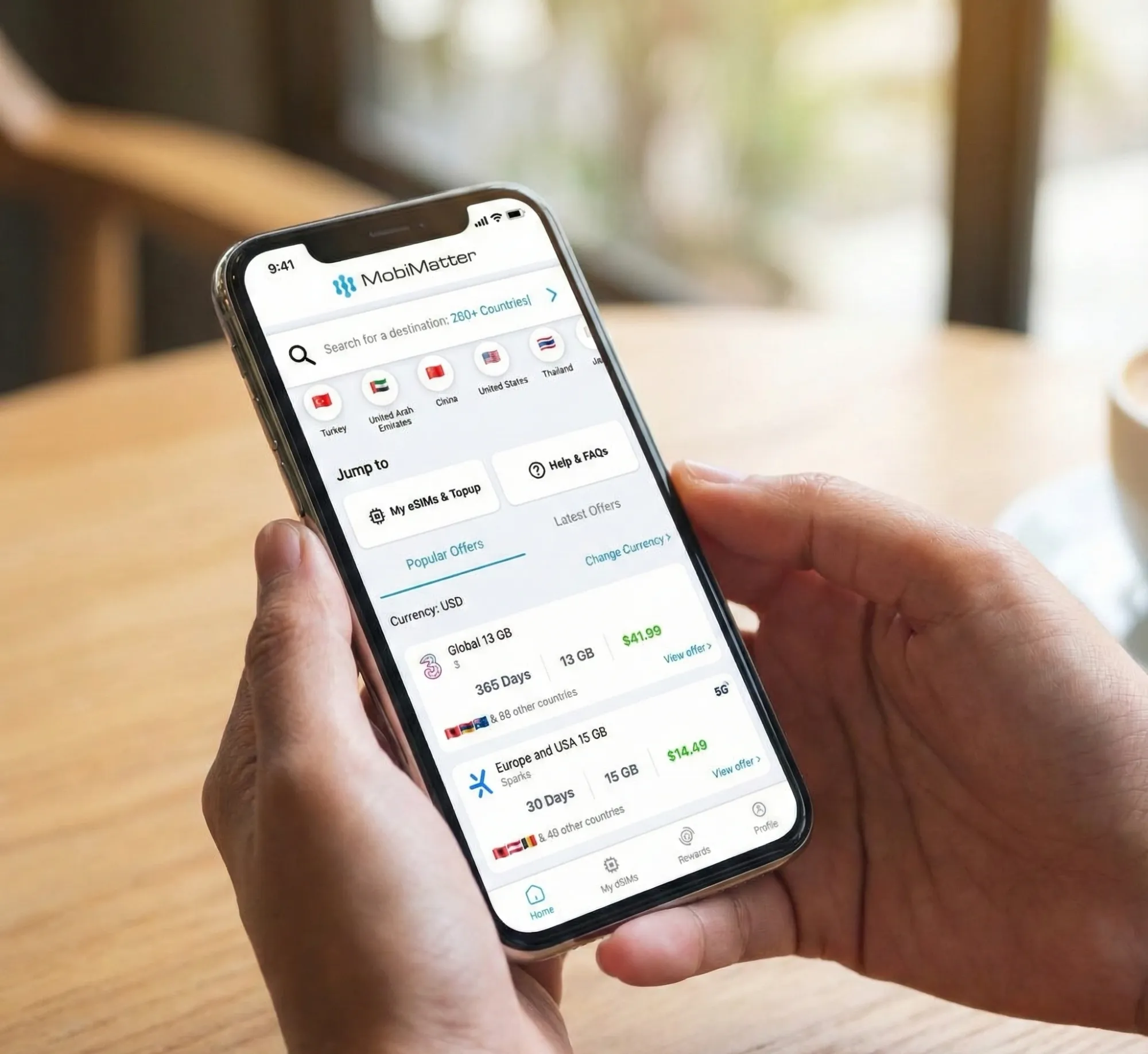
Most eSIM players let users double-buy without ever flagging the overlap, which is where MobiMatter's approach is different. Every plan page lists a "Destinations & networks" section at the end so you can confirm exactly what is included before checkout, rather than discovering the gap after landing.
Because MobiMatter is a marketplace with direct telecom partnerships, coverage can vary by plan, so this destinations list is worth checking even on single-country listings; some already bundle in neighboring territories through carrier agreements. When you search "Vatican City" or "San Marino" in the destinations search bar, MobiMatter routes you straight to the Italy eSIM plan instead of showing a duplicate listing, since one eSIM already covers both.
Walk through what this looks like in practice. A traveler planning a Rome and Vatican itinerary opens the search bar and types "Vatican." Instead of landing on a separate, thinner Vatican City page with fewer plan options, the search resolves to the full Italy eSIM catalog, complete with every data tier, validity period, and price point already available for the mainland. That single redirect is the difference between a traveler paying once and a traveler paying twice for identical coverage. The same logic applies on the US eSIM page, where the Destinations & Networks section makes clear whether Puerto Rico and the US Virgin Islands are included before you commit.
For routes that cross a genuine network border, such as London to Dublin or Nice to Monaco, skip single-country plans entirely. A Europe eSIM spanning 35-plus countries switches networks automatically as you cross, so you are never caught with a dead connection mid-trip.

How to Check Coverage Before You Buy
Before purchasing any eSIM for a trip that touches more than one country, territory, or micro-state, run through this quick checklist:
- Search the specific city or territory name in our app's destination search bar and see whether it redirects to a larger country plan or shows a separate listing.
- Open the "Destinations & Networks" or "Coverage" section on the plan page and scan for the exact territory name, not just the country name.
- Check whether the listed carrier name matches the mainland carrier or a distinct local one, since a different carrier name is usually a sign of a genuine network border.
- For any itinerary crossing three or more borders, compare the total cost of individual country plans against a single regional plan before deciding.
- When in doubt, read the plan's fine print for territories like Puerto Rico, the USVI, Hong Kong, or Macau, since inclusion varies by provider even within the same country.
Italy and the Micro-States
Vatican City covers roughly 100 acres entirely inside the city of Rome, so it never had its own cellular infrastructure to begin with there was simply no room, and no need, to build a separate network for such a small enclave. Every antenna a visitor connects to at St. Peter's Square, the Sistine Chapel, or the Vatican Museums still belongs to an Italian carrier, broadcasting from towers scattered across the surrounding city.
The same logic applies to San Marino, a small mountain republic fully surrounded by Italian territory on all sides, with no coastline or border crossing into any other country. Despite technically being an independent microstate with its own government and flag, San Marino relies on the same Italian mobile networks that blanket the region, since building isolated infrastructure for a population of about 34,000 would make little practical sense. A traveler planning a Rome to San Marino day trip, then, doesn't need to juggle multiple SIM cards or worry about crossing an invisible border mid-drive they need exactly one eSIM for Italy, and nothing more.

United Kingdom, Scotland, Wales, and Northern Ireland
The UK is a single sovereign state made up of four constituent nations England, Scotland, Wales, and Northern Ireland and its mobile carriers, including EE, Vodafone UK, O2, and Three, operate across all four without distinction, treating the entire country as one seamless coverage zone. A visitor flying into Edinburgh, driving through the valleys of Wales, or landing in Belfast on a UK eSIM will see the exact same network bars, data speeds, and carrier logo as someone standing in central London, since there's no internal border to trigger a network switch.
The confusion almost always comes from travelers assuming Northern Ireland must behave like the separate country just across its land border, forgetting that political geography and mobile coverage don't always follow the same map. Anyone island-hopping around the UK on a single eSIM can relax: one plan, one network experience, no matter which of the four nations they wake up in that morning.

Spain, the Canary Islands, and the Balearic Islands
Both island groups the Balearics in the Mediterranean and the Canaries off the coast of Africa are autonomous communities of Spain rather than separate territories, and Spanish carriers treat them as part of the same national coverage footprint, extending mainland plans out across hundreds of miles of open water.
A traveler island-hopping from Ibiza to Mallorca, or flying to Tenerife or Gran Canaria in the Canaries, stays on the same Spain eSIM the entire trip, with no separate island add-on required despite the considerable distance from the mainland. It's a detail that surprises some travelers, since the Canaries in particular sit closer to Morocco than to Spain itself, yet the network experience never changes: no roaming charges kick in, no new profile needs installing, and no coverage gaps appear at the shoreline. One Spain eSIM covers the entire archipelago sprawl, mainland included.

United States, Hawaii, and Alaska
Both Alaska and Hawaii joined the union in 1959, becoming the 49th and 50th states within months of each other, and have carried full domestic carrier coverage from T-Mobile, AT&T, and Verizon ever since, just like any state east of the Mississippi. Because both are physically separated from the lower 48 Hawaii by open ocean and Alaska by Canadian territory travelers frequently assume they'll need an international or regional plan to stay connected, picturing roaming fees or a patchy foreign network.
In reality, a standard USA eSIM performs identically in Honolulu and Anchorage as it does in any mainland city, since domestic coverage maps don't care about the geographic gap. Whether someone is watching whales off the Alaskan coast or hiking a volcano in Hawaii, the same plan, the same data speeds, and the same carrier bars follow them the entire way.

Portugal, Madeira, and the Azores
Madeira and the Azores are autonomous regions of Portugal, sitting far out in the Atlantic yet still served by the same national carriers that operate on the mainland, including MEO, NOS, and Vodafone Portugal. Despite Madeira lying closer to Morocco than to Lisbon, and the Azores drifting even further out toward the middle of the ocean, both archipelagos fall under the same domestic coverage umbrella as any mainland Portuguese city.
A hiker heading to the volcanic trails of Sao Miguel in the Azores, or exploring the cliffside villages of Madeira, needs nothing beyond a standard Portugal eSIM purchased before departure no special island package, no roaming surcharge, and no gap in signal once the plane touches down. The same connectivity that covers Porto or the Algarve simply extends out across the water to these remote corners of the country.
Final Takeaway
Before checking out on any single-country eSIM, spend thirty seconds confirming whether your destination is a hidden two-for-one or a genuine trap, and lean on a Europe Regional eSIM whenever your route crosses more than one real network border. That one check is the difference between landing connected and landing with a plan that quietly stopped working at the border.
Frequently Asked Questions
Do I need to buy a separate eSIM for the UK and Ireland?
Yes, if you buy a strict UK-only plan. The Republic of Ireland is a fully separate sovereign nation with its own mobile networks, and a UK plan loses signal the moment you cross the border south. A Europe Regional eSIM covers both UK and Ireland on a single profile instead.
Does a UK eSIM plan cover Scotland and Northern Ireland?
Yes. A standard UK eSIM covers the entire UK: England, Scotland, Wales, and Northern Ireland, all on the same national networks like EE and Vodafone. Whether you are driving the NC500 in the Highlands or landing in Belfast, no extra regional plan is required.
Does a US eSIM work in Hawaii and Alaska?
Yes. Hawaii and Alaska are full US states sharing the same carrier infrastructure, including T-Mobile, AT&T, and Verizon, as the mainland. A standard US eSIM activates the moment you land in Honolulu or Anchorage, with no separate purchase needed.
Will my USA eSIM cover Puerto Rico and the US Virgin Islands?
Not automatically, so always check the fine print first. Puerto Rico and the USVI use US carrier brands, but many basic prepaid eSIMs treat them as international roaming zones. Check the coverage list on your plan; many MobiMatter USA bundles already include both territories at no extra charge.
Do I need a separate eSIM for Italy and Vatican City?
No, one Italy eSIM is enough. Vatican City sits entirely within Rome and runs on Italian towers like TIM and Vodafone Italia. Sites listing a separate Vatican City eSIM are usually chasing search traffic rather than reflecting an actual coverage gap.
Does a standard Italy eSIM cover San Marino?
Yes. San Marino sits entirely within Italy's borders and shares the same cellular towers, so a local Italy data plan hands off between the two without any noticeable interruption or setup step.
Do I need a specific eSIM for the Canary Islands or Ibiza?
No, a standard Spain eSIM covers them fully. Despite the distance from the mainland, these island groups are autonomous communities of Spain running on the same national networks: Movistar, Vodafone, and Orange.
Does a France eSIM work in Monaco?
Usually not, and this is one of the most common budget traps on the French Riviera. Monaco runs its own carrier, Monaco Telecom, so a rigid France-only plan tends to drop the instant you reach Monte Carlo. Choose a Europe Regional eSIM for that route.
Will a China eSIM cover Hong Kong and Macau?
No, unless it is specifically a Greater China regional plan. Hong Kong and Macau run independent telecom infrastructure despite being part of China, so a mainland-only plan will not connect in either city.
How do I know if a plan already includes a nearby micro-state or territory?
Check the "Destinations & Networks" section on the specific plan page, and try searching the smaller territory's name directly in the marketplace search bar. A redirect to the larger country's plan is a strong signal that one eSIM already covers both.
What is a regional eSIM and when should I buy one instead of a single country plan?
A regional eSIM bundles many countries onto one profile that switches networks automatically as you cross borders. It is the simpler choice for any itinerary crossing three or more countries, or any route known to include a genuine network trap like UK to Ireland or France to Monaco.