Is Trustpilot Legit? How to Check the Credibility of TrustScore and Star Ratings
By Shweta Sharma (Head of Marketing, MobiMatter)
· 9 min read
Is Trustpilot legit? The short answer
Yes. Trustpilot is a legitimate, London-listed review platform. But a company's TrustScore is only an average of star ratings. The TrustScore rating alone doesn't tell you where those reviews came from.
You should focus your attention on ‘Verified’ reviews: the rating and the actual feedback. A high score coming mostly from Verified reviews should give you confidence. Conversely, a high share of positive ‘Organic’ or ‘Invited’ reviews (as opposed to Verified reviews) should raise concerns, as these are easier to manipulate.
Here's how to check the review sources for any company in two minutes.
How to check where a company's reviews come from
- Open the company's profile on Trustpilot, for example MobiMatter's profile.
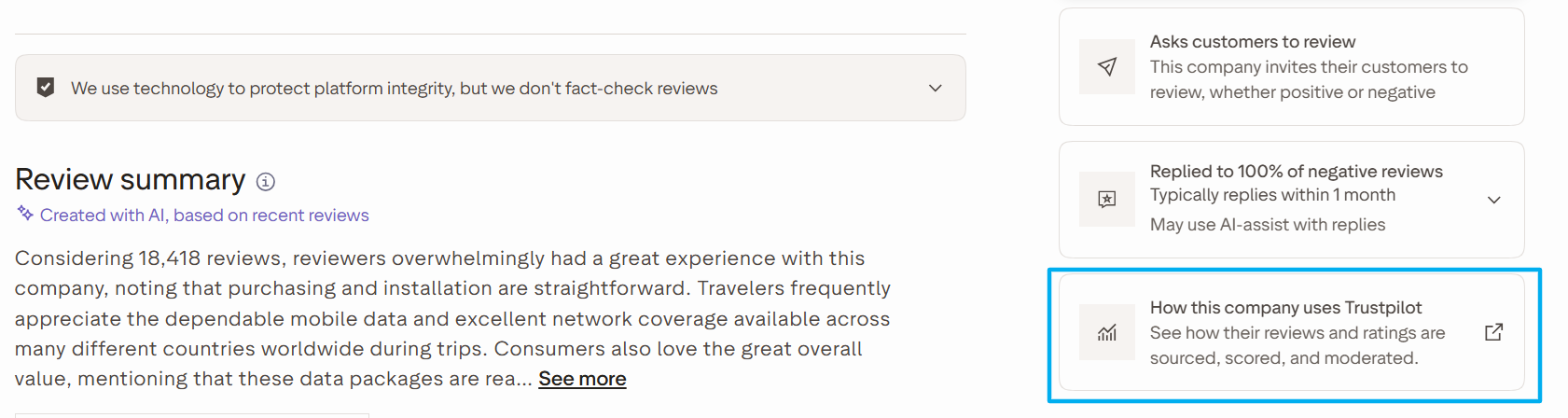
- Click How this company uses Trustpilot. On the desktop, it's in the right-hand column of the profile. This opens the Company activity page.
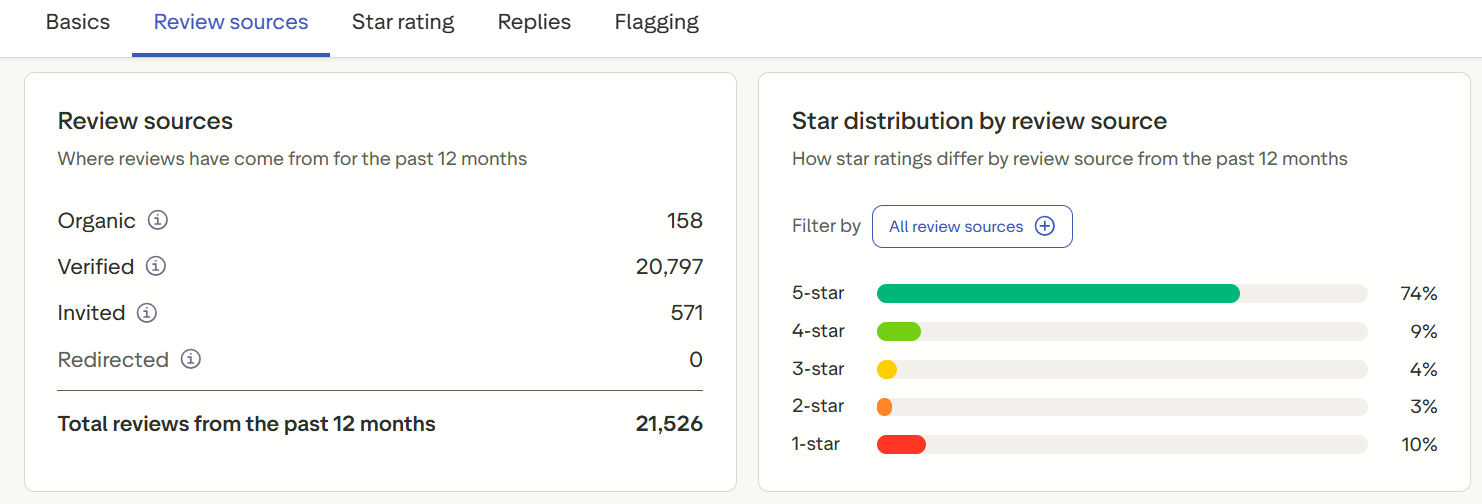
- In the Review sources panel, see how many of the past 12 months' reviews were Verified, Invited, Organic and Redirected.
- In Star distribution by review source, use the Filter by menu to switch between sources and compare the ratings.
What each label means
These definitions come from Trustpilot's Help Center. Trustpilot doesn't fact-check what any review says, so a label tells you how a review arrived, not whether it's true.
| Label | How the review got there | Proof of purchase? |
|---|---|---|
| Verified | Trustpilot's automatic invitation, triggered by a real order or customer interaction | Yes. The strongest sign of a real customer |
| Invited | An invitation the company sent itself, from an uploaded email list or its own system | Purchase not verified by Trustpilot |
| Organic | The reviewer came to Trustpilot on their own | None. Anyone can write one |
| Redirected | The reviewer clicked a Trustpilot link on the company's website | Purchase not verified by Trustpilot |
How to read the mix
"Trust confidence" here means how much you can rely on a profile's rating, based on how hard its reviews are to fake or cherry-pick. It's not a verdict.
| What you see | Trust confidence | Why |
|---|---|---|
| Mostly Verified | High | Each review is triggered by a real order, so it's far harder to fake |
| Mostly Invited, little or no Verified | Medium | Trustpilot doesn't confirm a purchase, and the company chooses who gets invited |
| Mostly Organic, little or no Verified | Low to medium | Anyone can post without any purchase including paid reviewers and competitors |
| Invited ratings far more positive than Organic ones | Low | A sign that invitations may be going mainly to happy customers |
| Mostly Organic and mostly 5-star | Low | Unprompted reviews usually tend to be negative, so a wall of glowing positive ones matches the pattern of bought reviews |
These patterns apply mainly to paid Trustpilot profiles. Free profiles can send only 50 automatic invitations a month (Trustpilot plans).
The short version: Give the most weight to Verified reviews, the ones written after a real purchase, and use the rest of the page to fill in the picture.
Here's how to read each mix in detail, and what to check before you trust a company.
How the TrustScore works
The TrustScore is the 1 to 5 rating on every profile. It's calculated from star ratings, with newer reviews weighted more, as Trustpilot explains in its Trust Centre. What it doesn't show is where those ratings came from: a 4.5 built on Verified reviews looks the same as a 4.5 built on reviews anyone could post. That's why the review sources matter. For that, refer to the ‘how this company uses Trustpilot’ section on the profile page and check reviews by review sources.
How to read each pattern
Mostly Organic, little or no Verified
Most reviews came from people who found the page on their own. Each one could be genuine or fake, positive or negative. A big Organic share usually means a well-known brand, or a company that doesn't send automatic invitations after purchase.
Bought reviews. Paid reviews can't come through a company's automatic post-purchase invitations, so they usually land as Organic. We regularly get emails offering to sell us Trustpilot reviews to "boost" our profile, so these sellers are active. A run of short, glowing, similar Organic reviews is the pattern to watch for.
What to check: on the Company activity page, filter the star distribution to Organic.
- Mostly 5-star: Look closer. High shares of glowing, positive organic reviews are also what bought reviews look like. Watch for many one-review accounts, near-identical wording, no trip details and bursts within a few days. It can also be genuine, such as a company asking for reviews in its own emails.
- Mostly low-star: People who aren't asked tend to write after a bad experience, so read them for repeated problems. But, sometimes, there can be paid negative fake reviews as shared in the research on Yelp by Luca and Zervas.
Mostly Invited, little or no Verified
The company sends invitations itself, by uploading customer emails or through its own system. Trustpilot doesn't confirm that these reviewers bought or used the service, so each review may or may not follow a real purchase. Trustpilot's rules say every customer must be invited the same way, whatever their experience.
Selective invitations. If only happy customers get asked, the score climbs. In a 2020 Which? investigation, 60% of one holiday company's invited reviews were 5-star, against 20 of its 718 unprompted reviews. You can't see from outside who was invited.
What to check: filter the star distribution to Invited, then to Organic, and compare.
- Similar ratings: a good sign that invitations went out broadly.
- Near-perfect Invited, mostly low-star Organic: a gap worth questioning. Read the recent low-star reviews to see what customers who weren't asked are saying.
Mostly Verified
Reviews come from Trustpilot's automatic invitations, triggered by purchases in the company's order system. Research suggests this gives the most representative picture, because it reaches ordinary customers, not only the angriest or happiest. That's how we collect reviews. Every MobiMatter order triggers a Trustpilot invitation five to seven days after purchase, so people can use their eSIM before they write about it.
A Verified review is the strongest sign of a real purchase you'll find on Trustpilot, but it isn't a 100% guarantee. The company still decides when invitations go out, and Trustpilot doesn't fact-check what reviewers write. But because each Verified review starts with a real order, it's far harder to fake than a review anyone can post, or one sent to an email list the company uploads.
Why these ratings: what the research says
A handful of studies explain why the mix matters.
Reviews nobody asked for skew negative. Northwestern University researchers analysed 238,809 reviews from four online retailers. Reviews written after an email invitation averaged 4.3 stars. Reviews people wrote on their own initiative averaged 3.88, with far more 1- and 2-star ratings. Northwestern's Spiegel Research Center saw the same pattern: anonymous reviewers were significantly more likely to give 1 or 2 stars.
The reason is simple. People who aren't asked usually write after a very bad experience, and sometimes after a very good one too. The quietly satisfied majority rarely bothers. But this doesn’t show whether the review is genuine or fake as there’s no proof of purchase here.
Verified badges earn more trust. The Spiegel research found a verified buyer badge raised the odds of purchase by 15%. In a 2022 PowerReviews survey of 12,866 US shoppers, 69% said a Verified Buyer tag made them view a review more positively, the highest of any label tested.
Fake reviews come in both directions. A UK government study estimated that 11% to 15% of reviews in three product categories on major UK shopping platforms were likely fake. Research on Yelp by Luca and Zervas found businesses posting fake negative reviews about competitors. Trustpilot's own checks have also been questioned. In March 2026, Italy's competition authority fined Trustpilot €4 million, finding its checks on review authenticity inadequate. Trustpilot is appealing this.
Some reviews are easier to manipulate than others. Review sellers are active. Like many brands, we regularly get emails offering to write Trustpilot reviews for money to boost our profile. A seller can post an Organic review from any account, and a company can upload any list of emails for Invited reviews or share a link that produces Redirected ones. A Verified review is harder to fake, because it starts with a real order in the company's system. A determined company could still go as far as faking orders, but that takes far more effort.
The short version: Verified reviews tend to be the most representative and genuine, unprompted reviews tend to be harsher and are most likely easier to manipulate.
More checks before you trust a company
On Trustpilot
- Start with Verified reviews. Trustpilot lets you filter reviews to Verified only. Read the recent ones first. Filter based on the source and check ratings.
- Check the date of experience. Each review shows when the experience happened. A review written after someone has actually used the product or service says more than one written minutes after paying.
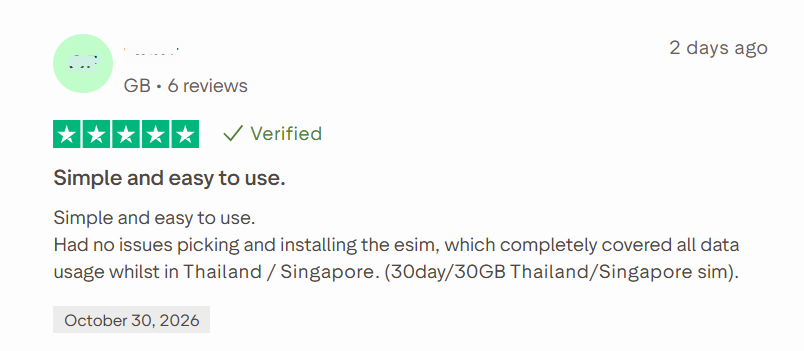
- Look for specific details. Genuine reviews tend to name what was bought, what went right or wrong, and what support actually did. "Great service!!!" tells you nothing either way.
- Check the reviewers and the replies. Watch for waves of first-time reviewers posting near-identical praise. The best sign on any profile is a 1-star review followed by a reply that fixes the problem.
- Watch for warning banners. Trustpilot puts a Consumer Warning on profiles that keep breaking its rules, hides their score and closes them to new reviews.
The bottom line
Trustpilot is legit, but the star rating is only the start. Give the most weight to Verified reviews written after a purchase, use the other labels as context, and check the basics beyond reviews. If a company passes these checks, a few bad reviews shouldn't scare you off. Every company has some, because of a variety of factors. What matters is whether problems get fixed.
FAQs
Is Trustpilot legit?
Yes. Trustpilot is a London-listed review platform that screens every review with automated fake-review detection and removed 7.8 million fake reviews in 2025. The TrustScore alone can mislead, so check where a company's reviews come from too.
How is the Trustpilot TrustScore calculated?
It's calculated from star ratings, with newer reviews weighted more than older ones. It also includes seven reviews at 3.5 stars, so businesses with few reviews start from a balanced score.
What's the difference between Verified and Invited reviews on Trustpilot?
Verified reviews come through Trustpilot's automatic invitations, triggered by a real order or customer interaction. Invited reviews come from invitations the company sends itself, and Trustpilot doesn't confirm a purchase behind them. Invited reviews can still be genuine, but Verified is the stronger sign that the reviewer actually bought something.
Do companies have to pay to get Verified reviews?
No. Trustpilot's free plan includes 50 automatic invitations a month, which produce Verified reviews. Paid plans raise that limit, so a large company on the free plan will naturally have few Verified reviews.
Can Organic reviews on Trustpilot be fake?
Yes. Organic reviews need no invitation, so paid fake reviews and attacks from competitors usually land there. Many are genuine too, but the label alone can't tell you which.
Can companies delete bad reviews on Trustpilot?
No. Companies can flag reviews they think break Trustpilot's guidelines, and Trustpilot decides whether to remove them. The reviewer can also edit or delete their own review.
Which Trustpilot reviews should I trust most?
Verified reviews written after a purchase. They start with a real order, so they're far harder to fake than reviews anyone can post. Read recent ones, including the low-star reviews, and check the date of experience.
How we researched this
We checked every label definition and the TrustScore method against Trustpilot's own Help Center, Trust Centre and business guidelines, read the studies linked above, and captured our profile figures on 18 November 2026. MobiMatter sells travel eSIMs and collects reviews through Trustpilot's automatic invitations linked to real orders, which is why we use our own profile as the example.
Sources
- Trustpilot Trust Centre
- Trustpilot Help Center: how reviews end up on Trustpilot
- Trustpilot plans
- Trustpilot Guidelines for Businesses
- Trustpilot: six things that might surprise you about Trustpilot
- Askalidis and Malthouse, Understanding and Overcoming Biases in Customer Reviews
- Spiegel Research Center, How Online Reviews Influence Sales
- PowerReviews consumer survey, 2022
- UK Department for Business and Trade, fake online reviews research, 2023
- Luca and Zervas, Yelp review fraud research
- AGCM decision on Trustpilot, March 2026
- Trustpilot statement on appealing the AGCM finding
- Which?, Did travel companies pay their way to better ratings on Trustpilot?, 2020
- Blog
About the author
Head of Marketing, MobiMatter
Head of Marketing at MobiMatter, based in Dubai. 10+ years in digital marketing. When she isn't planning campaigns, she's planning her next trip and testing eSIMs on the way.