Lunar New Year 2027: Date, Zodiac Animal, and Everything You Need to Know
By Abhishek Aggarwal (Travel & eSIM writer, MobiMatter)
· · 15 min read
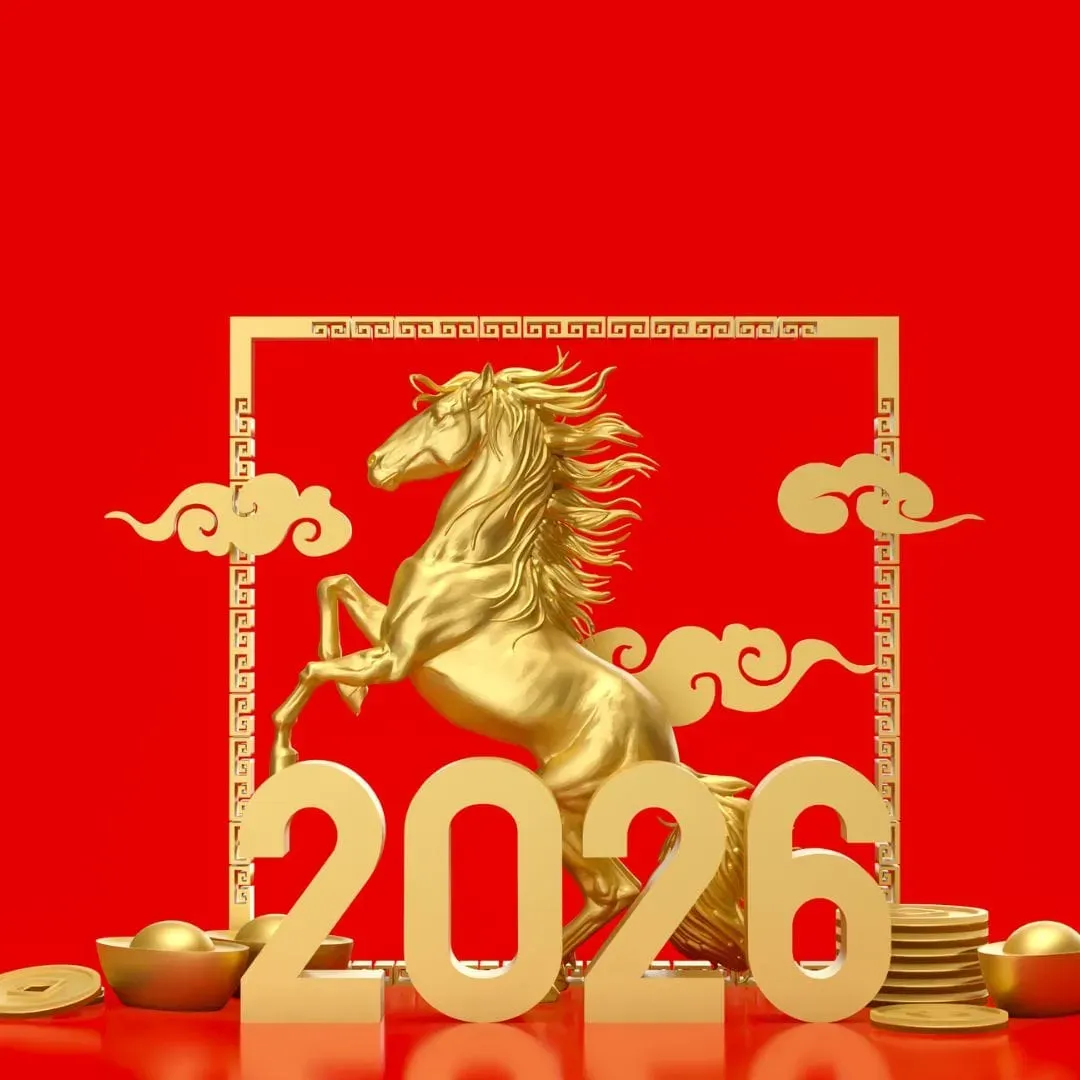
Lunar New Year 2027 falls on Saturday, 6 February 2027, and starts the Year of the Goat (a Ding-wei year, which popular astrology calls the Fire Goat). New Year's Eve, the night of the reunion dinner, is Friday 5 February, and the 15-day season ends with the Lantern Festival on Saturday 20 February 2027 (Hong Kong Observatory). In South Korea, Seollal falls one day later, on Sunday 7 February.
Updated October 2026. Lunar New Year 2026 was on 17 February and began the Year of the Horse. This guide covers 2027 dates by country, traditions, food and travel tips.
When is Lunar New Year 2027?
Lunar New Year 2027 falls on Saturday, 6 February 2027, 11 days earlier than in 2026. The date changes every year because it follows the lunisolar calendar: it is the first day of the first lunar month, usually the second new moon after the winter solstice, so it always lands between 21 January and 20 February.
The festivities don't last just one day; the Lunar New Year celebration traditionally spans 15 days, culminating in the Lantern Festival. This extended period allows families and communities to fully immerse themselves in the traditions, enjoy special foods, and participate in various cultural activities.
Lunar New Year 2027 holidays by country
| Country | New Year's Day | Public holiday (2027) |
|---|---|---|
| China (Spring Festival) | Sat 6 Feb | Week-long national holiday; the State Council usually publishes the exact days in November |
| Hong Kong | Sat 6 Feb | 6, 8 and 9 Feb (9 Feb replaces the second day, a Sunday) |
| Vietnam (Tết) | Sat 6 Feb | Thu 4 to Wed 10 Feb, 7 days |
| South Korea (Seollal) | Sun 7 Feb | 6 to 8 Feb, plus 9 Feb as a substitute holiday |
Sources: Hong Kong Observatory 2027 calendar, GovHK general holidays 2027, Government of Vietnam (October 2026 decision), Korea AeroSpace Administration 2027 calendar. Korea's date differs because its calendar is computed for Korean time (UTC+9), where the new moon falls just after midnight on 7 February. Shops, restaurants and transport run reduced services over these days, and trains and flights within China, Vietnam and Korea sell out weeks ahead.
What is the Lunar New Year?
The Lunar New Year, also known as the Spring Festival in China, is a festival that marks the beginning of a new year according to the lunisolar calendar. While many people refer to it as Chinese New Year 2026, the term "Lunar New Year" is more inclusive as it acknowledges that many Asian cultures celebrate this important holiday.
This ancient festival has been celebrated for over 3,000 years and is deeply rooted in mythology, tradition, and cultural significance. It's a time for family reunions, honoring ancestors, warding off evil spirits, and welcoming good fortune for the year ahead.
What is the Meaning of Lunar New Year?
At its core, the Lunar New Year represents renewal, hope, and the triumph of light over darkness. The festival symbolizes the end of winter and the beginning of spring, a time when nature awakens and new life emerges. It's an opportunity to:
- Start fresh: People settle debts, clean their homes, and make resolutions
- Honor family: Multi-generational gatherings strengthen family bonds
- Respect ancestors: Traditional ceremonies pay homage to those who came before
- Welcome prosperity: Various rituals invite good luck and fortune for the coming year
- Celebrate culture: Communities preserve and pass down ancient traditions
The 2027 zodiac animal: the Goat
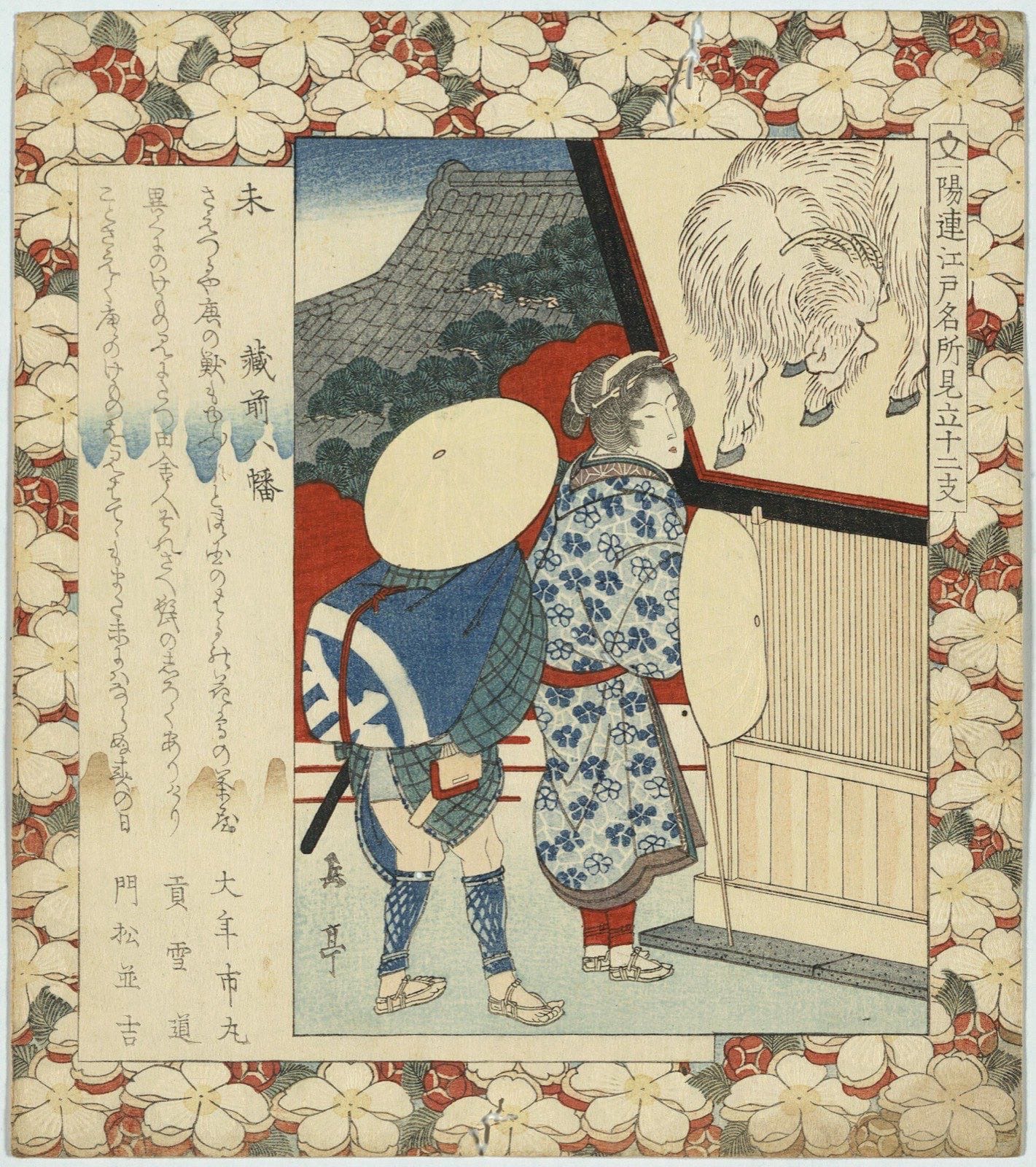
Lunar New Year 2027 begins the Year of the Goat (also translated Sheep or Ram), the eighth animal of the twelve-year cycle: Rat, Ox, Tiger, Rabbit, Dragon, Snake, Horse, Goat, Monkey, Rooster, Dog, Pig. In the 60-year stem-and-branch cycle 2027 is Ding-wei; Ding is a fire stem, which is why it is called a Fire Goat year. The Year of the Goat runs from 6 February 2027 to 25 January 2028.
The Goat in the Chinese zodiac
People born in Goat years are traditionally described as gentle, creative, calm and kind, with a strong sense of family. Recent Goat years: 2015, 2003, 1991, 1979 and 1967; the last Fire Goat year was 1967.
In popular belief, a Goat year favours:
- Creative projects and the arts
- Home, family and community
- Steady, cooperative work over risky bets
- Rest, health and travel at a slower pace
The Horse year (2026, a Fire Horse year, the first since 1966) ends on 5 February 2027.
Who Celebrates Lunar New Year?
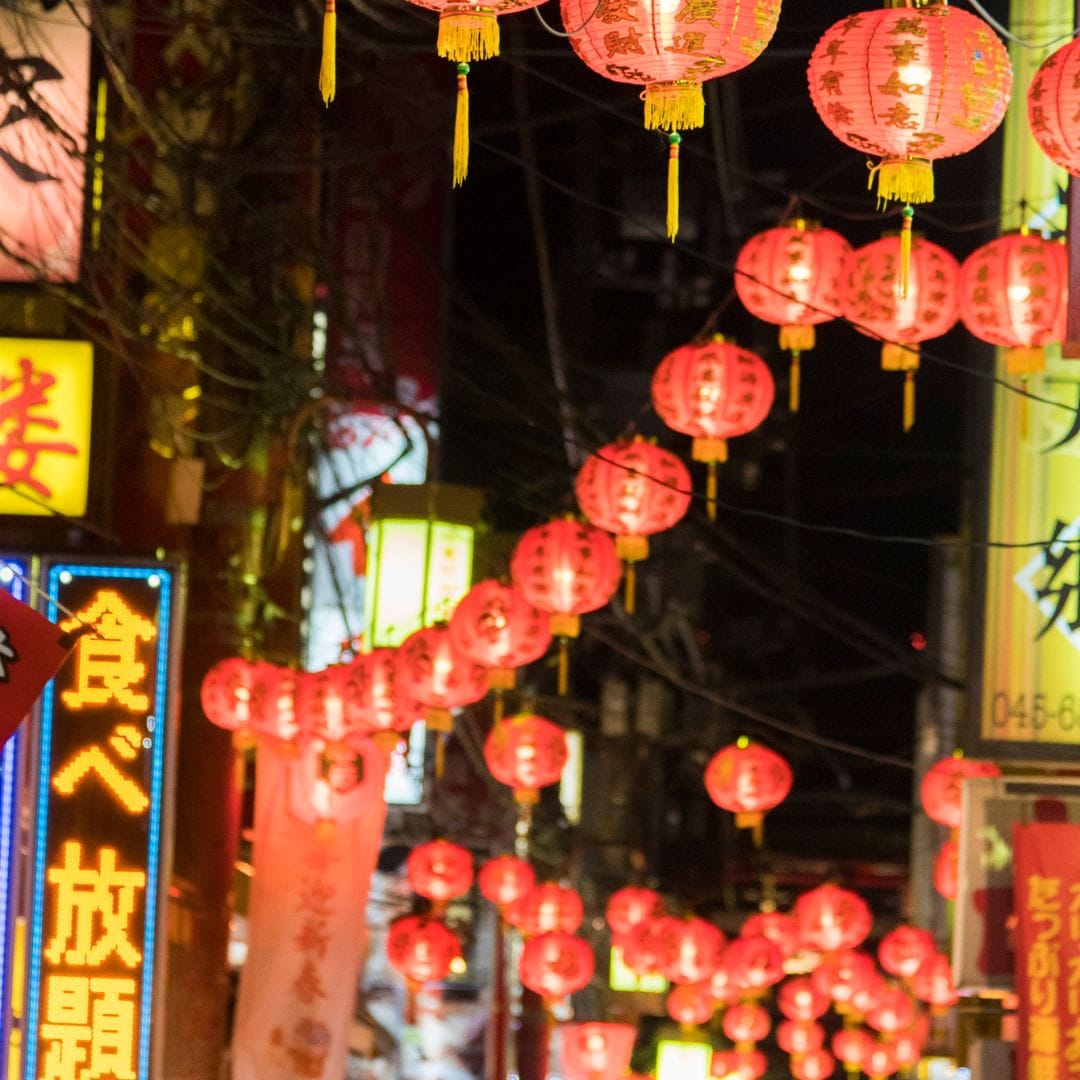
Lunar New Year is often called Chinese New Year, though it's celebrated well beyond China: millions of people across Asia and the diaspora observe it, and each community adds its own traditions.
Countries and Cultures That Celebrate:
China: the Spring Festival is the most important holiday of the year. Cities empty as hundreds of millions travel home, families reunite, and temple fairs and fireworks fill the streets. Many Western apps are blocked in mainland China. Travel eSIMs usually route data abroad, so those apps keep working, but check the plan details (China eSIM plans).
Vietnam: Known as "Tết Nguyên Đán" or simply "Tết," Vietnamese Lunar New Year is equally significant. Vietnam celebrates with unique traditions including giving lucky money in red envelopes, preparing bánh chưng (square rice cakes), and decorating with peach or kumquat blossoms. Travelers visiting during this festive season often use eSIM Vietnam to stay connected while exploring cultural events, sharing moments with family, and navigating busy cities during the celebrations.
South Korea: Seollal is a three-day holiday (6 to 8 February 2027, plus a substitute day on 9 February). Families wear hanbok, hold ancestral rites (charye), play yutnori and eat tteokguk, rice-cake soup that marks gaining a year of age. Many shops and palaces change hours, so check before you go (South Korea eSIM plans).
Singapore: Chinatown light-ups and festive markets, River Hongbao and the Chingay Parade (Singapore eSIM plans).
Malaysia: in multicultural Malaysia, Chinese communities host open houses, lion dances and reunion dinners (Malaysia eSIM plans).
Indonesia: Imlek is a national holiday; Chinese-Indonesian communities visit temples and gather with family (Indonesia eSIM plans).
Philippines: Chinese New Year is a holiday, celebrated with firecrackers, tikoy (sticky rice cake) and gatherings, most visibly in Binondo, Manila's Chinatown (Philippines eSIM plans).
Thailand: Thai-Chinese communities celebrate with temple ceremonies, food and performances, with Bangkok's Yaowarat (Chinatown) the main stage (Thailand eSIM plans).
Japan: Japan moved to the Gregorian calendar in 1873 and celebrates New Year on 1 January, but Chinatowns in Yokohama, Kobe and Nagasaki hold Lunar New Year events; Nagasaki's Lantern Festival is the best known (Japan eSIM plans).
Mongolia: Tsagaan Sar (White Moon) follows the Mongolian lunar calendar, so its date can differ from the Chinese new year; families visit elders and eat dairy foods and buuz dumplings (Mongolia eSIM plans).
Tibet: Losar follows the Tibetan calendar and can fall on a different day. Foreign visitors need a Tibet Travel Permit arranged through a licensed tour operator (Tibet eSIM plans).
Lunar New Year vs Chinese New Year: What's the Difference?
The terms Lunar New Year and Chinese New Year are often used interchangeably, but there is a distinction:
Chinese New Year refers to the celebration as practised in Chinese culture and by Chinese communities worldwide.
Lunar New Year is a more inclusive term that encompasses all cultures celebrating the new year based on the lunar calendar. This term respects that Vietnamese, Korean, Mongolian, and other communities have their own distinct ways of observing this festival.
While the date might be the same or very similar, each culture has unique traditions, foods, and customs. Using "Lunar New Year" acknowledges this cultural diversity and shows respect for all communities that participate in this celebration.
Lunar New Year Traditions
The Lunar New Year is rich with traditions that have been passed down through generations. These customs are believed to bring good luck, prosperity, and happiness for the year ahead.
Red Envelopes (Hongbao)
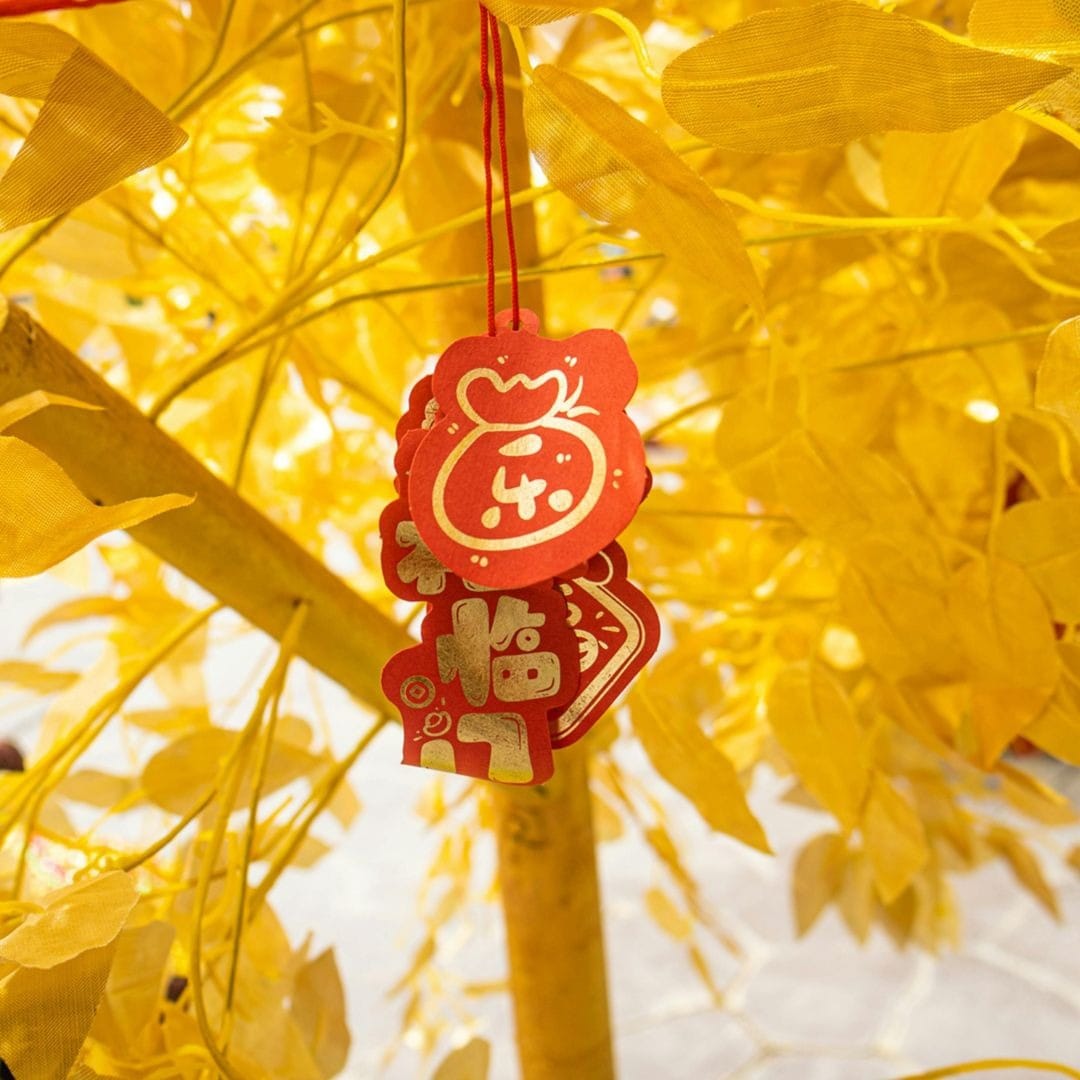
One of the most beloved traditions involves giving red envelopes filled with money. Called "hongbao" in Mandarin, "lai see" in Cantonese, and "lucky money" in English, these gifts are given by elders to children and unmarried adults. The red color symbolizes good luck and is believed to ward off evil spirits.
Spring Cleaning
Before the new year arrives, families thoroughly clean their homes to sweep away bad luck and make room for good fortune. However, cleaning and sweeping are avoided on New Year's Day itself to prevent sweeping away newly arrived good luck.
Family Reunion Dinner
The most important meal of the year occurs on New Year's Eve, when families gather for an elaborate feast. This reunion dinner symbolizes family unity and includes symbolic foods that represent various wishes for the coming year.
Firecrackers and Fireworks
The tradition of setting off firecrackers stems from the ancient legend of a monster named Nian who was scared away by loud noises and the color red. Today, spectacular fireworks displays light up the sky in celebration.
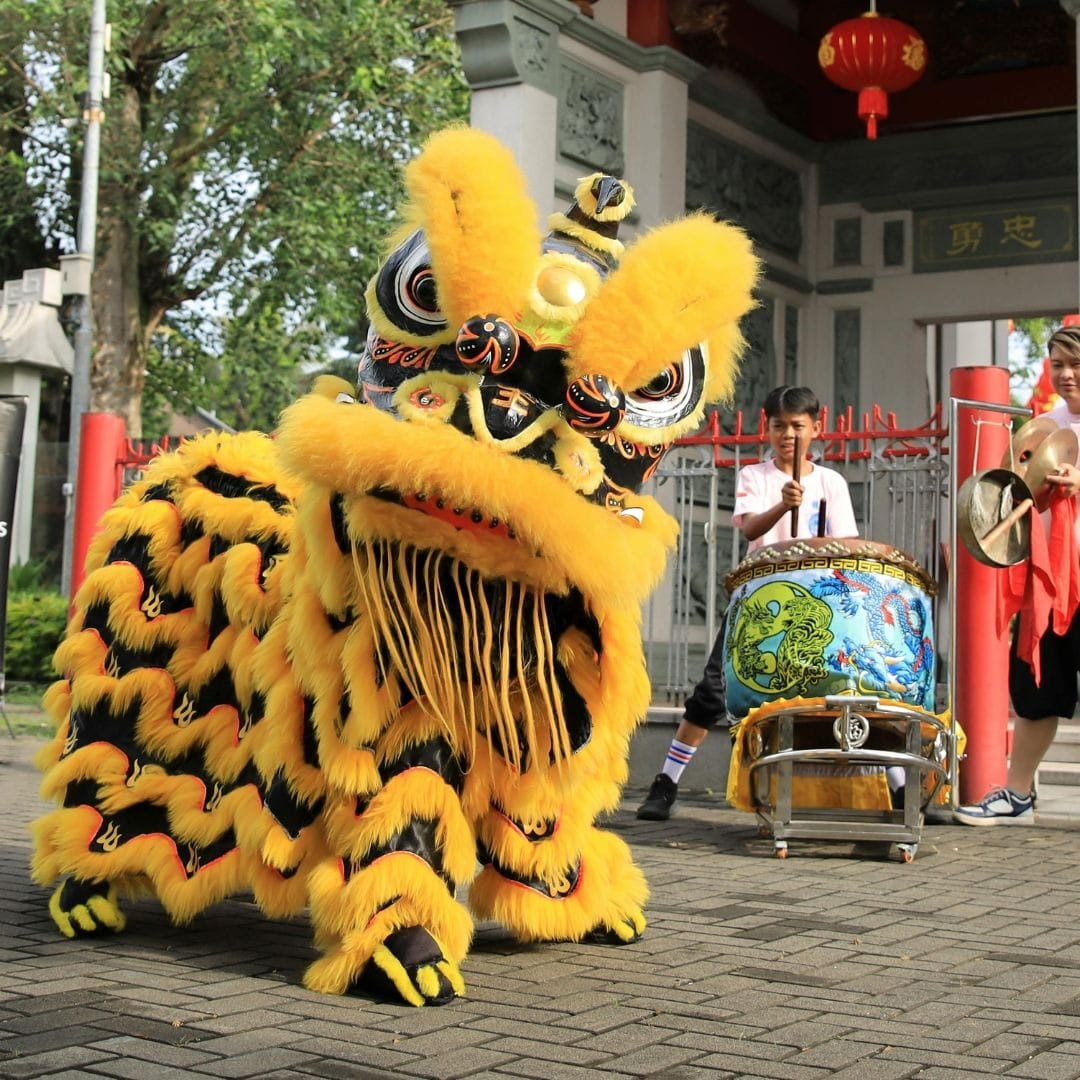
Lion and Dragon Dances
These energetic performances are believed to bring good luck and chase away evil spirits. The Lunar New Year dragon, performed by a team of dancers manipulating a long, colorful dragon figure, is especially spectacular and can stretch over 100 feet long.
Visiting Temples
Many people visit temples during the Lunar New Year period to pray for blessings, make offerings, and light incense for ancestors.
Wearing New Clothes
It's traditional to wear new, preferably red, clothing during the Lunar New Year to symbolize a fresh start and good fortune.
Lunar New Year Decorations
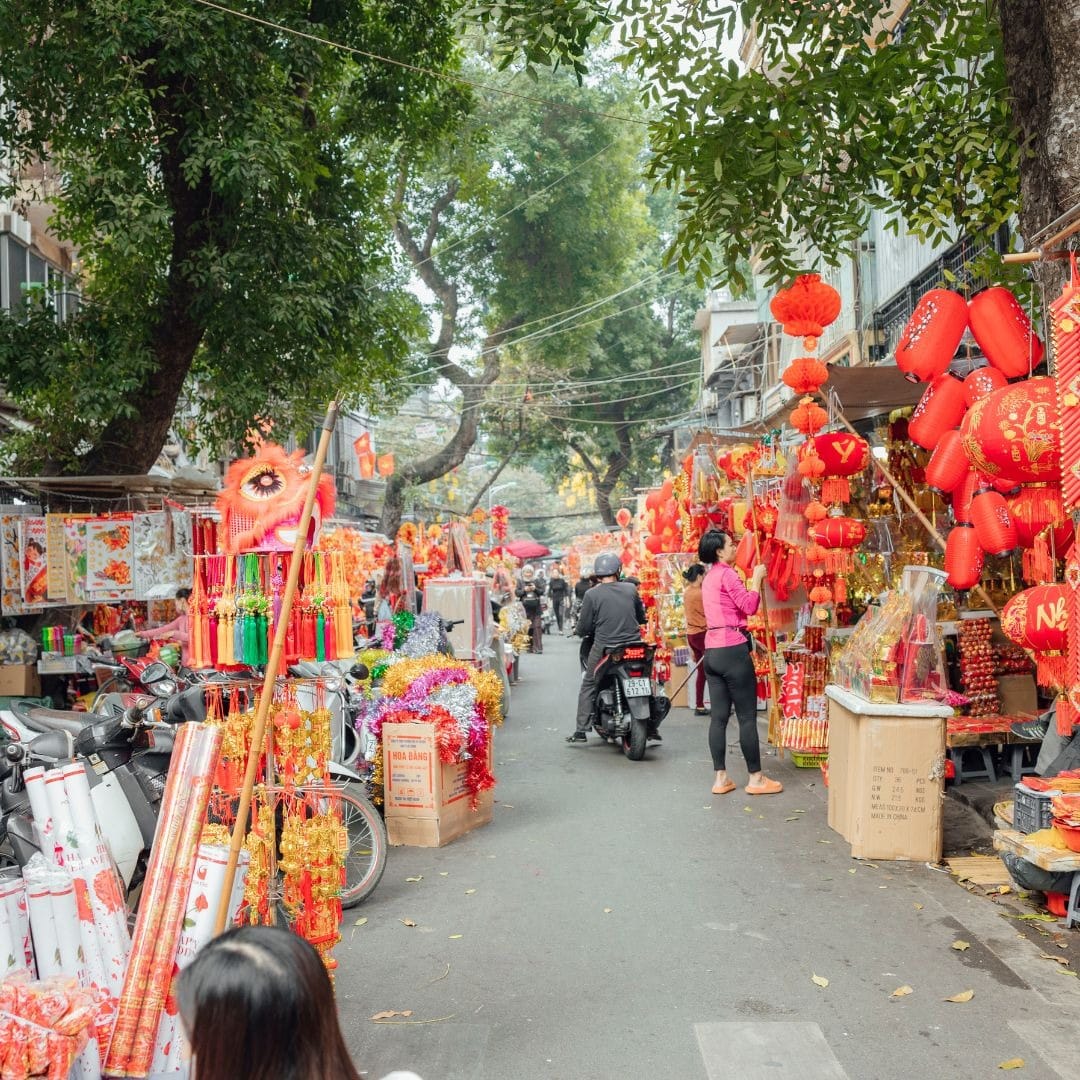
Creating a festive atmosphere is essential to Lunar New Year celebrations. Homes, businesses, and streets come alive with vibrant decorations.
Common Decorations Include:
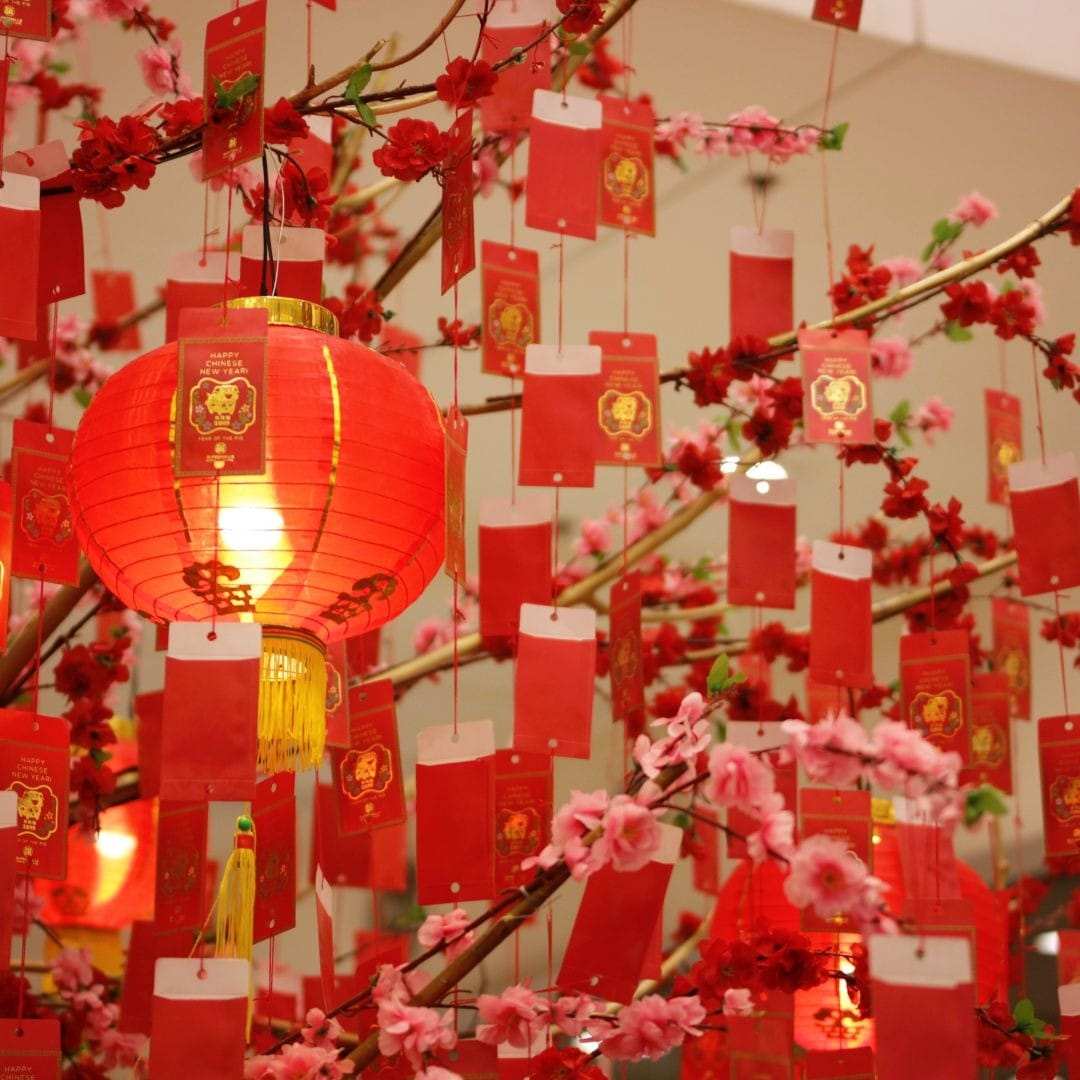
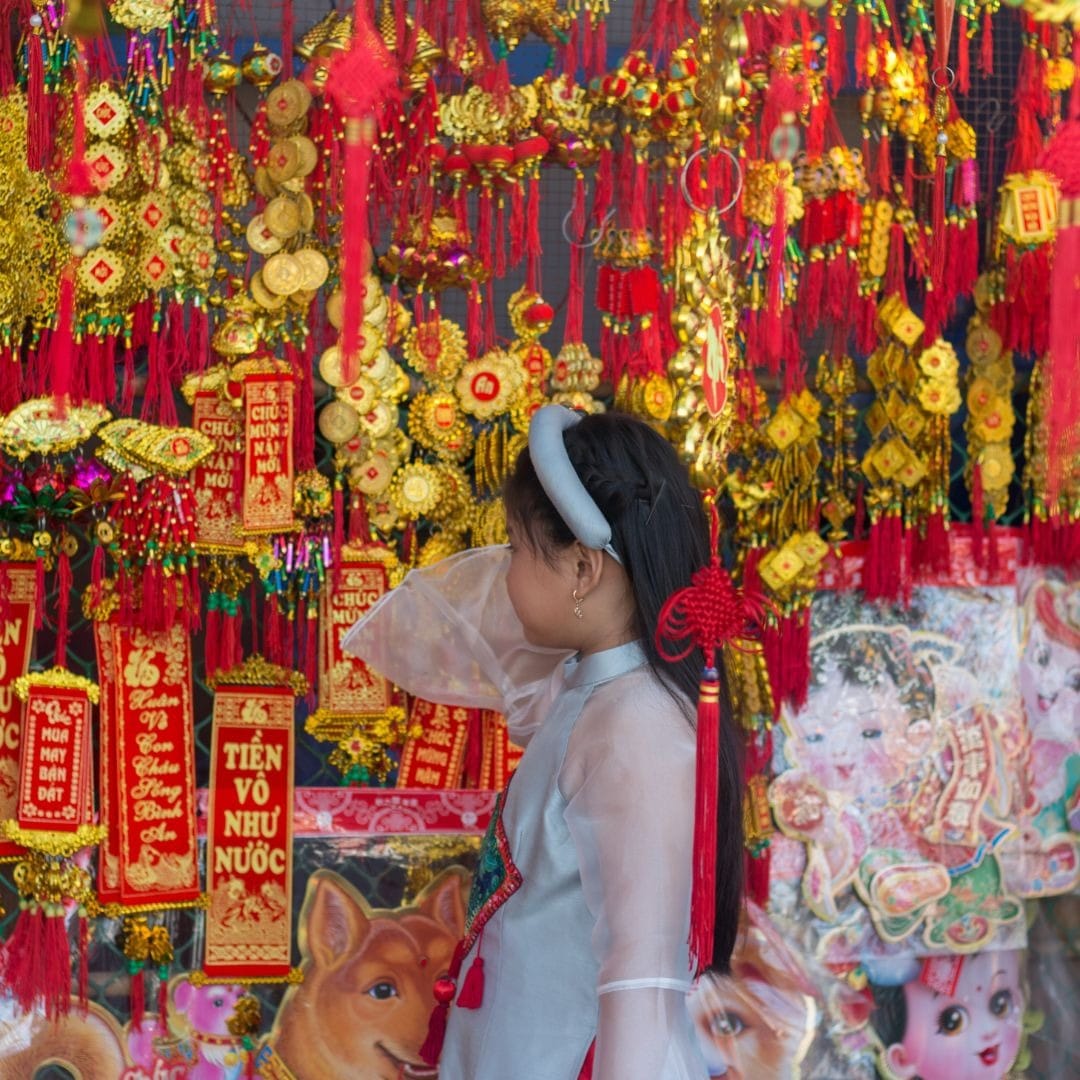
Red Lanterns: These iconic symbols of celebration are hung everywhere, from doorways to streets, creating a warm, festive glow.
Couplets (Chunlian): Red paper scrolls with poetic phrases written in black or gold ink are posted on doorframes. These express wishes for the coming year.
Paper Cuttings: Intricate designs cut from red paper feature the zodiac animal, Chinese characters for fortune and happiness, or traditional patterns.
Kumquat Trees: In southern Chinese and Vietnamese traditions, these miniature trees with golden fruits symbolize prosperity and are displayed in homes.
Zodiac animal figures: decorations show the year's animal, the Goat for 2027.
Flower Arrangements: Certain flowers carry special significance:
- Plum blossoms represent perseverance
- Orchids symbolize refinement
- Peonies signify wealth
- Narcissus flowers bring good fortune
Fu Character: The Chinese character for good fortune (福) is often displayed upside down, as the word for "upside down" sounds like "to arrive" in Chinese, meaning good fortune is arriving.
Lunar New Year Food
Food plays a central role in Lunar New Year celebrations, with each dish carrying symbolic meaning for prosperity, longevity, happiness, and good fortune.
Traditional Foods:
Dumplings (Jiaozi): Shaped like ancient Chinese gold ingots, dumplings symbolize wealth and prosperity. Northern Chinese families often gather to make hundreds of dumplings together.
Spring Rolls: These golden, crispy rolls represent gold bars and wealth.
Whole Fish: Fish is essential at the reunion dinner because the Chinese word for fish (鱼, yú) sounds like the word for surplus. The fish should be left partially uneaten to ensure surplus year after year.
Noodles: Long noodles represent longevity and should never be cut when eating.
Tangyuan: These sweet glutinous rice balls symbolize family unity and togetherness.
Nian Gao: This sticky rice cake's name sounds like "year high," symbolizing growth, progress, and raising children to greater heights.
Mandarin Oranges: The golden color represents wealth, and the word for orange sounds like "gold" in some Chinese dialects.
Sticky Rice Cake (Tikoy in Philippines, Niangao in China): Represents achieving new heights in the coming year.
Korean Lunar New Year Foods:
Tteokguk: Rice cake soup that Koreans eat to symbolically gain a year of age.
Jeon: Pan-fried delicacies made with meat, seafood, or vegetables.
Vietnamese Lunar New Year Foods:
Bánh Chưng: Square sticky rice cakes with pork and mung bean filling, representing the earth.
Pickled Vegetables: Dưa hành (pickled spring onions) and other preserved vegetables.
Mut: Candied fruits and seeds served to guests.
Lunar New Year Festival Activities
Beyond home celebrations, communities organize elaborate festivals featuring:
Parades and Performances
Major cities worldwide host spectacular Lunar New Year parades featuring dragon dances, lion dances, traditional music, acrobatics, and martial arts demonstrations.
Temple Fairs
In China and Taiwan, temple fairs offer traditional performances, folk art, games, and street food, creating a carnival atmosphere.
Flower Markets
Hong Kong, Guangzhou, and other cities host massive flower markets where families select auspicious plants and decorations.
Lantern Festival
The 15-day celebration concludes with the Lantern Festival, featuring elaborate lantern displays, riddle-solving games, and eating tangyuan.
Cultural Exhibitions
Museums and cultural centers host special exhibitions showcasing the history, art, and traditions of the Lunar New Year.
Travelling for Lunar New Year 2027: staying connected
Experiencing Lunar New Year in Asia is a bucket-list worthy adventure. Whether you're planning to witness the vibrant celebrations in Beijing, join family festivities in Saigon, participate in Seollal in Seoul, or island-hop through Southeast Asia during the festival period, staying connected is crucial for an enjoyable and stress-free journey.
Why eSIM Technology is Essential for Lunar New Year Travel
1. Seamless Multi-Country Connectivity
Many travelers visit multiple countries during the extended Lunar New Year holiday period. You might start in Singapore for the Chingay Parade, fly to Vietnam for Tết celebrations, and finish in Taiwan for the Lantern Festival. An eSIM eliminates the hassle of buying new SIM cards at each destination. With a multi-country or regional eSIM plan, you can stay connected across borders without swapping physical cards.
2. Instant Activation
Arriving during the Lunar New Year period means airports and tourist areas are exceptionally crowded. The last thing you want is to wait in long queues at a SIM card kiosk when you land. With an eSIM, you can purchase and activate your data plan before departure or immediately upon arrival using just a QR code. You'll have internet access the moment you step off the plane.
3. Navigate Crowded Festivities
During Lunar New Year, cities transform with parades, temple fairs, and special events happening across town. Real-time navigation is essential for:
- Finding the best viewing spots for dragon dances and fireworks
- Locating authentic local celebrations beyond tourist areas
- Avoiding road closures and transportation changes
- Discovering popup food markets and flower fairs
4. Share Your Experience Instantly
The Lunar New Year offers incredible photo opportunities from spectacular fireworks displays to elaborate temple decorations and colorful street parades. With reliable high-speed data from an eSIM, you can:
- Share photos and videos with friends and family in real-time
- Post to social media without delay
- Video call loved ones to share the experience live
- Upload to cloud storage without worrying about lost memories
5. Access Translation and Cultural Apps
Navigating language barriers becomes easier with instant internet access to translation apps. During the Lunar New Year, you'll encounter:
- Traditional greetings and phrases you'll want to learn
- Menu items at special festive restaurants
- Cultural customs you should understand and respect
- Temple or festival information in local languages
6. Book Last-Minute Experiences
The spontaneous moments often create the best travel memories. With constant connectivity, you can:
- Book same-day cooking classes to learn traditional Lunar New Year recipes
- Reserve tables at popular restaurants (crucial during this busy period)
- Purchase tickets for sold-out cultural performances
- Find accommodation if your travel plans change
7. Stay Safe and Informed
During major festivals, crowds can be overwhelming and situations can change quickly. An eSIM ensures you can:
- Access emergency services if needed
- Receive real-time updates about event changes or weather
- Use ride-sharing apps in unfamiliar areas
- Share your location with travel companions or family back home
8. Cost-Effective Solution
International roaming charges from your home carrier can be exorbitant. A regional eSIM plan specifically designed for Asian countries offers:
- Affordable data packages tailored to your trip length
- No bill shock when you return home
- Flexibility to add more data if needed
- Transparent pricing with no hidden fees
9. Keep Your Primary Number Active
With dual SIM functionality (physical SIM + eSIM), you can:
- Maintain your home number for important calls or two-factor authentication
- Use your eSIM data plan for internet connectivity
- Avoid missing important messages while traveling
- Separate personal and travel communications
Popular destinations for Lunar New Year 2027
The biggest public celebrations are in Hong Kong, Singapore, Taipei, Seoul, Kuala Lumpur, Bangkok, Hanoi and Ho Chi Minh City. Book flights and hotels early: Lunar New Year is one of the busiest travel periods in Asia, and many family-run shops and restaurants close for the first days.
China: Beijing, Shanghai, and Guangzhou host massive celebrations with incredible light displays, temple fairs, and cultural performances.
Vietnam: Hanoi and Ho Chi Minh City (Saigon) offer authentic Tết experiences with flower markets, traditional foods, and family-oriented festivities.
South Korea: Seoul's Seollal celebrations include traditional performances at palaces, folk villages, and cultural centers.
Singapore: Experience one of the world's most modern takes on Lunar New Year with the spectacular Chingay Parade and River Hongbao festival.
Taiwan: Taipei's combination of traditional and contemporary celebrations, culminating in the amazing Pingxi Sky Lantern Festival, is unforgettable.
Hong Kong: Victoria Harbour fireworks, horse racing, and flower markets make Hong Kong a Lunar New Year hotspot.
For a multi-country trip, a regional plan covers several destinations on one eSIM (Asia eSIM plans). MobiMatter offers eSIMs from several vetted carriers per country, so you can pick by data size, validity and network. Install it before you fly and switch it on when you land.
Frequently Asked Questions (FAQs)
When is Lunar New Year 2027?
Lunar New Year 2027 falls on Saturday, 6 February 2027 (Sunday 7 February for Korea's Seollal). The 15-day season ends with the Lantern Festival on 20 February 2027.
What animal is 2027 in the Chinese zodiac?
2027 is the Year of the Goat (Ding-wei, the Fire Goat), from 6 February 2027 to 25 January 2028. 2026 was the Year of the Fire Horse.
Is Lunar New Year the same as Chinese New Year?
While the dates align, "Lunar New Year" is a more inclusive term that encompasses celebrations by Chinese, Vietnamese, Korean, Mongolian, and other Asian cultures. "Chinese New Year 2026" specifically refers to Chinese cultural traditions. Each culture has its own unique customs and names for the festival.
Do Koreans celebrate Lunar New Year?
Yes, Korean Lunar New Year (Seollal) is one of Korea's most important holidays. It's a three-day celebration featuring ancestral rites, traditional foods like tteokguk, wearing hanbok clothing, and playing traditional games. Many Koreans travel to their hometowns for family reunions.
Does Japan celebrate Lunar New Year?
Most of Japan does not celebrate Lunar New Year, as the country adopted the Gregorian calendar in 1873 and now celebrates New Year on January 1st. However, some communities in Okinawa and certain Chinese-Japanese populations still observe the Lunar New Year with traditional celebrations.
What are the traditional colors of Lunar New Year?
Red and gold are the primary colors. Red represents good fortune, joy, and protection from evil spirits. Gold symbolizes wealth and prosperity. These colors appear in decorations, clothing, envelopes, and throughout celebrations.
What should you not do during Lunar New Year?
Avoid cleaning or sweeping on New Year's Day (to prevent sweeping away good luck), breaking things, cutting your hair, wearing black or white clothing, and fighting or using negative words. Debts should be settled before the new year begins.
What is the Lantern Festival?
The Lantern Festival marks the end of the Lunar New Year celebration on the 15th day. People light and release lanterns, solve riddles written on lanterns, eat tangyuan (sweet rice balls), and participate in dragon dances. It's a beautiful conclusion to the festive period.
Why do people give red envelopes during Lunar New Year?
Red envelopes (hongbao) containing money are given to bring good luck and ward off evil spirits. Traditionally, married couples give them to children and unmarried adults. The red color is auspicious, and the money symbolizes the transfer of fortune and blessings.
Can I travel to Asia during Lunar New Year?
Yes, traveling to Asia during Lunar New Year can be an incredible experience, though you should plan ahead as it's a very busy travel period. Book flights and accommodation early, expect higher prices, and be prepared for some businesses to close for several days. Using an eSIM for connectivity will help you navigate the crowds and fully experience the celebrations.
What is the best way to say "Happy Lunar New Year"?
In Mandarin Chinese, say "新年快乐" (Xīnnián kuàilè) or "恭喜发财" (Gōngxǐ fācái - wishing you prosperity). In Vietnamese, say "Chúc mừng năm mới." In Korean, say "새해 복 많이 받으세요" (Saehae bok mani badeuseyo). The English "Happy Lunar New Year" is also widely understood and appreciated.
Conclusion: welcome the Year of the Goat
Lunar New Year 2027 arrives on 6 February. At home or on a trip to see the Year of the Goat begin, it's a time to celebrate renewal, honour tradition and connect with cultures across Asia and the world.
As you prepare for the festivities, whether cooking traditional foods, decorating your home with red lanterns, or booking your flight to experience the celebrations firsthand, remember that the true spirit of the Lunar New Year lies in togetherness, gratitude, and optimism for the year ahead.
For travelers planning to immerse themselves in the spectacular Lunar New Year celebrations across Asia, staying connected enhances every aspect of your journey. From navigating crowded temple fairs to sharing unforgettable moments with loved ones back home, modern connectivity solutions like eSIM technology ensure you never miss a moment of this magical time.
恭喜发财! Chúc mừng năm mới! 새해 복 많이 받으세요! Happy Lunar New Year 2027!
- lunar new year 2026
- Blog
- 2026 lunar new year
- when is lunar new year
- what is the lunar new year
- what is lunar new year
- chinese new year
About the author
Travel & eSIM writer, MobiMatter
Writes MobiMatter's eSIM and destination guides since 2024, for travellers who want data from the moment they land. Before that, SEO consulting and nearly ten years in analytics at IBM.