Top 10 Destinations to Experience the August 2026 Total Solar Eclipse

Top 10 Destinations to Experience the August 2026 Total Solar Eclipse

A Once-in-a-Generation Sky Event: Why August 12, 2026 Is Different

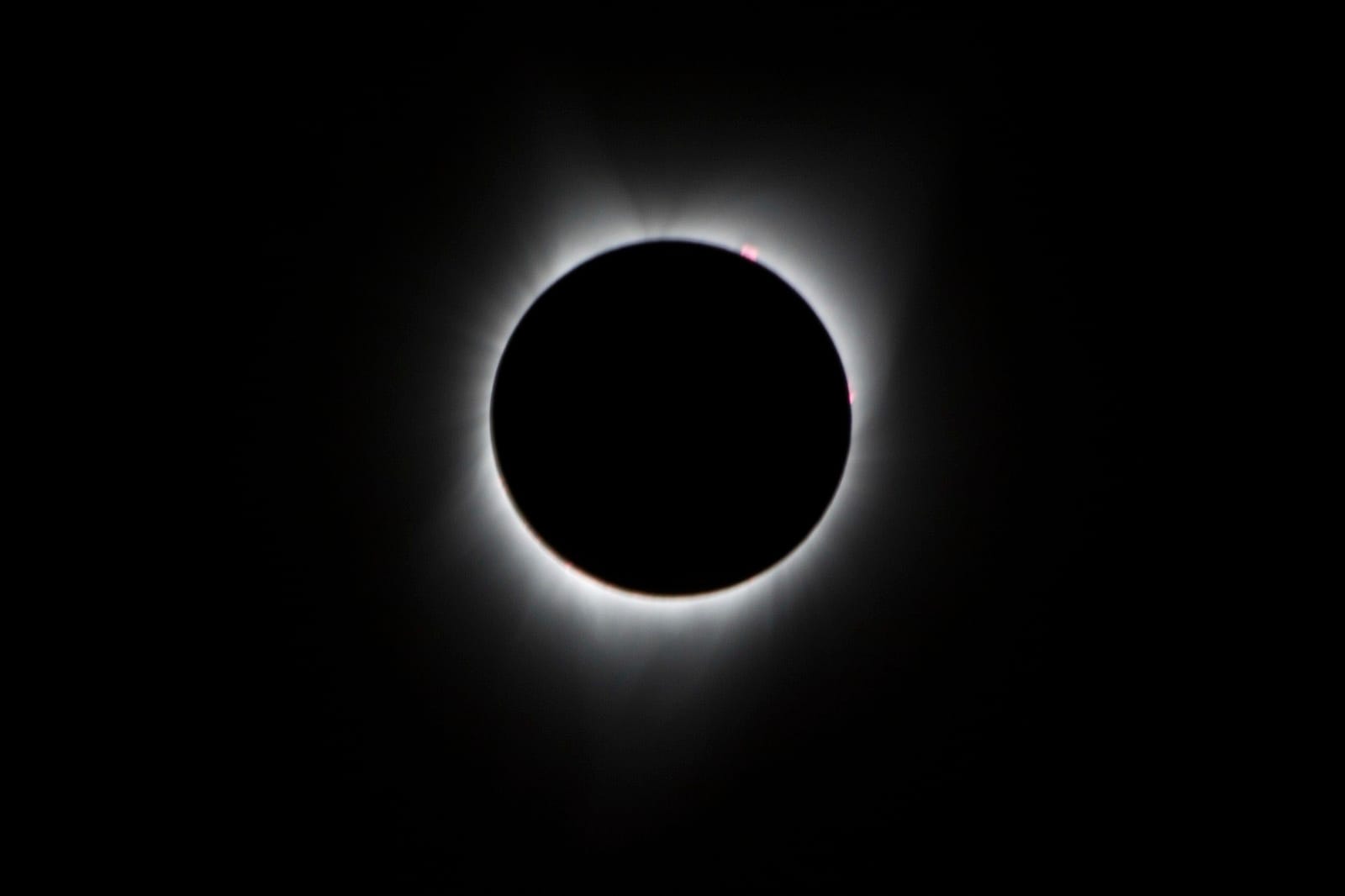
Picture this: you're standing on a black sand beach in southern Iceland, or on a sunbaked hillside outside Zaragoza, and the temperature drops a few degrees in under a minute. Birds go quiet. The horizon turns the color of a bruise. Then, for somewhere between one and two and a half minutes, the sun simply disappears, replaced by a ring of ghostly light that most people only ever see in photographs. That's a total solar eclipse, and on August 12, 2026, it happens over Europe for the first time in 27 years.

Mainland Europe has not seen a total solar eclipse since August 1999, when the path crossed through France, Germany, and parts of Eastern Europe. The next one won't arrive until 2075, which means most people reading this will not get another chance to see totality on this continent in their lifetime. That single fact is why flights and hotel rooms along the 2026 path are already filling up faster than typical August travel dates, and it's why planning early matters more than usual.

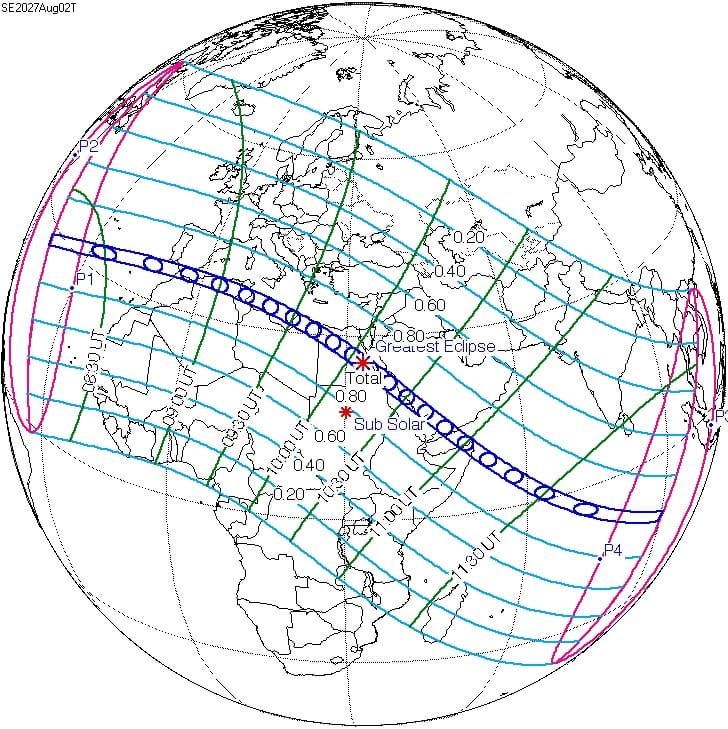
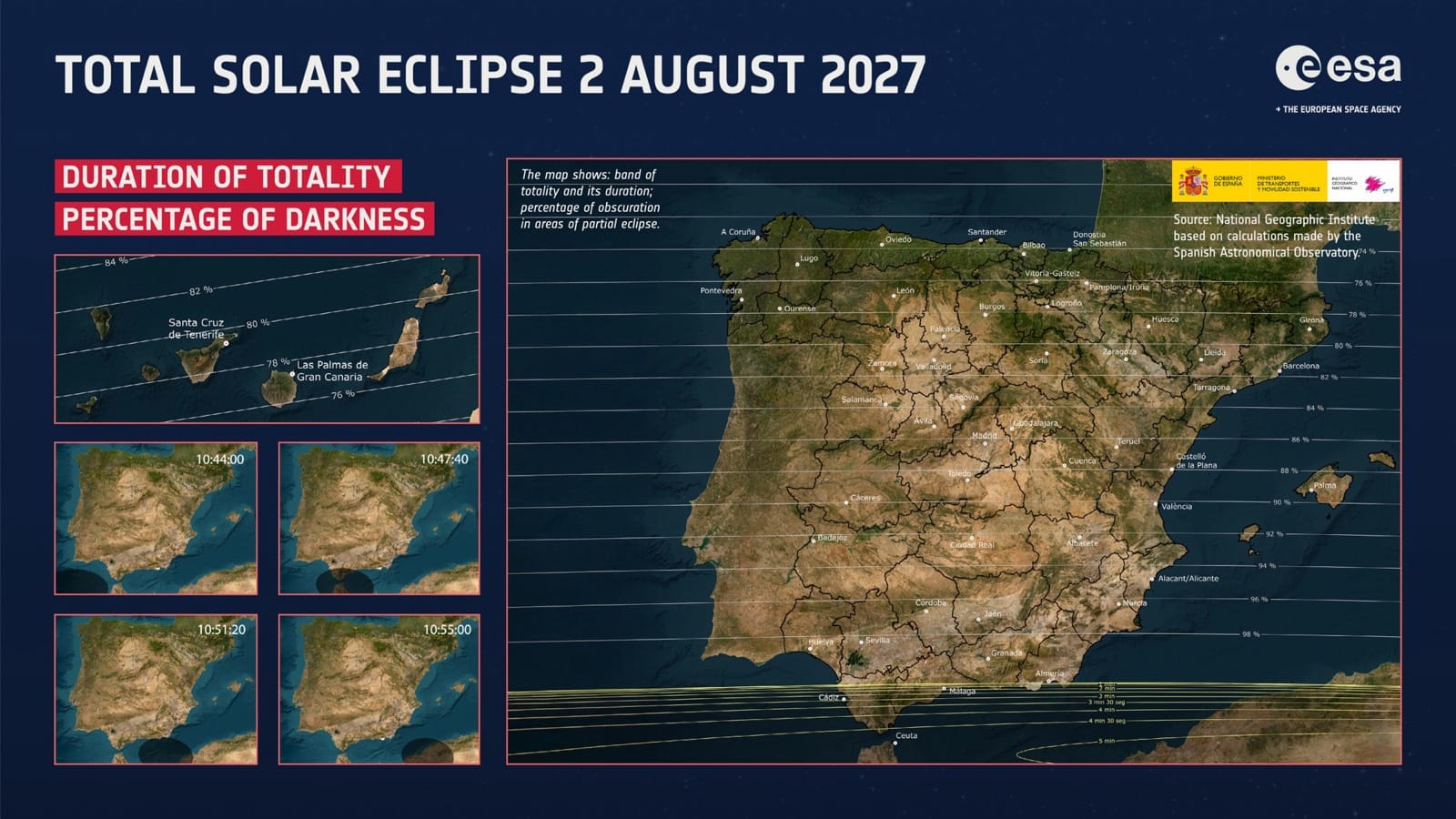
The eclipse itself traces an unusual route. It begins near sunrise over Russia's remote Taymyr Peninsula, arcs up and over the North Pole, crosses Greenland, and sweeps down into Iceland's Westfjords in the late afternoon. From there, the Moon's shadow races south at roughly 3,400 kilometers per hour, crossing northern and eastern Spain before finally exiting over the Balearic Islands just before sunset. If you're already sketching out a Spain trip plan, this is the moment to lock it into your itinerary, since several of the strongest viewing towns sit well outside major city coverage zones.

Two very different trips fall out of this single event: a wilderness eclipse chase across Iceland's volcanic coastline, or a warmer, more social eclipse-and-beach trip through Spain and the Balearics. Below is a breakdown of both, followed by the planning details most eclipse guides skip entirely, from booking timelines to which SIM setup actually works when you're standing in a field with no local carrier signal.

Iceland vs. Spain at a Glance

IcelandSpain
Time of eclipseLate afternoonLate afternoon into early evening
Longest totalityUp to 2 min 18 sec (west of Iceland)Up to 1 min 45 sec (Burgos, Leon)
Sun angle during totalityModerate, over the AtlanticHigh inland, very low near the coast at sunset
Weather riskHigher, coastal cloud cover common in AugustGenerally lower, especially inland
Best forLonger totality, dramatic volcanic sceneryEasier access, warmer weather, beach pairing
AccessFewer flights, rural driving requiredMore flight options, better road and rail network

Neither option is objectively better. Iceland gives you more totality and wilder scenery, while Spain gives you more reliable weather and easier logistics. Many serious eclipse chasers actually build a two-country itinerary, watching a rehearsal partial phase from one location before flying to the other for totality, which is exactly the kind of trip where a single regional data plan starts to matter.

Top 10 Destinations to Experience the August 2026 Total Solar Eclipse

1. Reykjavik and the Westfjords, Iceland

Reykjavik sits inside the path of totality and will experience roughly one minute of totality, making it one of the only capital cities on earth where you can watch a total eclipse without leaving downtown. That alone puts it near the top of most eclipse-chasers' lists, since it pairs the event with a walkable, well-connected capital rather than a remote field or car park.

For longer totality, drive northwest into the Westfjords, where the Moon's shadow first makes landfall at Straumnes Lighthouse and totality stretches past two minutes, more than double what Reykjavik offers. The Westfjords are sparsely populated, with narrow fjord roads and long gaps between towns, so this isn't a spontaneous day trip. It rewards travellers willing to plan a proper route in advance and build in buffer time, since a single closed pass or slow ferry crossing can eat hours out of a day here.

Pairing a night or two in Reykjavik with a drive north gives you the convenience of a capital city and the longer, darker totality window of the remote coast, along with a genuine backup plan if weather rolls in over one region but not the other. Book accommodation in the Westfjords well before summer 2026, since rooms here are limited even in a normal August, and demand for the eclipse is likely to outstrip the region's small lodging capacity entirely.

2. Snaefellsnes Peninsula, Iceland

Often nicknamed "Iceland in miniature," Snæfellsnes sits close to the eclipse centerline, where totality lasts nearest to its maximum duration for this event. Glaciers, black sand beaches, and volcanic craters make this one of the most photogenic backdrops anywhere along the 2026 path, with Snæfellsjökull's ice-capped cone offering a dramatic foreground for anyone hoping to frame the eclipse against something more memorable than open sky.

The peninsula is roughly a two to three hour drive from Reykjavik on a manageable road network, a shorter and easier commitment than the trek north into the Westfjords, which makes it a realistic option for travellers who want centerline duration without giving up a comfortable capital-city base entirely.

Because cloud cover is the biggest risk in August, many eclipse chasers scout two or three viewing points along the peninsula in advance and choose between them on the morning of the eclipse based on the forecast, taking advantage of the compact geography to shift from a coastal spot to higher ground inland within the same short drive.

3. Vik and the Westman Islands, Iceland

Iceland's south coast, particularly around Vík and the Westman Islands, lies within the path of totality and pairs the eclipse with some of the country's most recognizable scenery: black sand beaches, sea stacks, and dramatic basalt cliffs, including Reynisfjara's famous columns just outside town. It's a stretch of coastline that already ranks among Iceland's most photographed even without an eclipse in the sky.

This route draws a different crowd than the Westfjords, since it's closer to Reykjavik and reachable as a long day trip along the well-paved Ring Road, making it a practical choice for travellers who'd rather base themselves in the capital and drive out on the day rather than commit to remote lodging.

Vík is a genuinely small town, and accommodation here tends to book out fast even in a normal summer, so travellers planning this route should lock in lodging well ahead of the date rather than waiting for late summer, particularly since day-trippers from Reykjavik will be competing with everyone hoping to stay closer to the centerline overnight.

4. Palma de Mallorca, Spain

Palma de Mallorca sits fully inside the path of totality and is widely considered the single best all-around destination for the 2026 eclipse, combining roughly 1 minute 36 seconds of totality with reliable August sunshine and strong international flight connections. Few other spots on the path offer that same balance of astronomical quality and holiday-ready infrastructure in one place.

Because the eclipse arrives near sunset here, expect a striking low-angle totality over the Mediterranean rather than a midday blackout, a genuinely different visual experience from an inland eclipse, with the sun's glow likely to paint the sky and water in warm colour as darkness falls. That sunset framing does mean a clear western horizon matters more here than at inland sites, so a beachfront or west-facing viewpoint is worth prioritising over one boxed in by hills or buildings.

Mallorca's mix of accessibility, beach infrastructure, and dependable summer weather makes it the easiest option for travellers who want totality without a wilderness expedition attached to it. If you're combining eclipse viewing with a beach holiday, this is likely your top pick, though that same appeal means booking early matters more here than almost anywhere else on the path.

5. Zaragoza, Spain

Zaragoza offers the best combination of totality duration and mainland accessibility in Spain, sitting almost directly on the eclipse centerline. That central position means totality here lasts noticeably longer than in coastal alternatives, and unlike Mallorca's sunset eclipse, Zaragoza's inland location keeps the sun comfortably higher in the sky, delivering a more classic darkened-midday experience complete with a full 360-degree horizon glow.

The city's location in the Ebro valley also makes it one of the most practical home bases in northern Spain. It sits within easy reach of several alternative viewing spots across open countryside, so travellers who want flexibility can shift position at the last minute if cloud cover threatens the forecast. Add in good rail connections to Madrid and Barcelona, a compact walkable old town, and a lower cost of accommodation than the coastal hotspots, and Zaragoza works well both as a dedicated eclipse-chasing base and as an easy add-on to a wider Spain itinerary.

6. Bilbao and the Basque Country, Spain

Bilbao lies directly in the path of totality, giving travellers the rare chance to pair a total eclipse with the Basque Country's dramatic coastline, striking architecture, and one of Europe's most celebrated food scenes. Beyond the Guggenheim and the old town's pintxo bars, this is a region built for lingering, so an eclipse trip here doubles easily as a proper holiday rather than a quick in-and-out for totality.

The terrain is the real strategic advantage. The mix of Atlantic coast, river valleys, and inland hills gives eclipse chasers several distinct microclimates within a short drive, so a cloudy morning on the coast doesn't have to mean a missed eclipse if you're willing to move inland. Because Bilbao is a major transit hub with strong rail and air connections, it also works well as a flexible base for short day trips to smaller towns closer to the centerline, letting travellers keep their options open on cloud cover right up until the morning of the eclipse rather than locking in a single viewing spot months in advance.

7. Valencia, Spain

Valencia sits within the path of totality and offers a warmer, more urban alternative to the smaller towns along the Spanish coast. Its size works in travellers' favour on the logistics front: more flight options into a well-connected airport, a much deeper pool of hotel and apartment listings, and an easier fallback if plans change late, which matters given how quickly accommodation is expected to sell out across the entire path in the months before August 2026.

It's also simply a good place to spend a few extra days, with the City of Arts and Sciences, the old town, and some of Spain's best paella all within easy reach, so an eclipse trip doubles comfortably as a city break.

Valencia's position along the path puts totality later in the afternoon, similar to Mallorca, so plan for a lower sun angle and softer, warmer light during totality rather than the darkened-midday look you'd get further inland. That lower angle also means scouting a viewing spot with a clear western horizon matters more here than in Zaragoza or Bilbao, since buildings or hills in the wrong direction could clip the view.

8. A Coruña, Spain

A Coruña lies directly in the path of totality on Spain's northwestern Atlantic coast, giving travellers a green, cooler alternative to the sun-drenched Mediterranean stops further along the path. Rolling headlands, Atlantic beaches, and a food scene built around fresh seafood make it a distinctive base for anyone who'd rather skip the crowds further south and pair the eclipse with a quieter corner of Spain.

Galicia's coastal weather can be less predictable in August than inland Spain, with Atlantic cloud systems moving through more freely, so this destination suits travellers who are comfortable treating their viewing spot as flexible rather than fixed, and who are willing to watch the forecast closely and reposition inland if needed.

Its position near the start of the Spanish leg of the path also means slightly longer totality than destinations further southeast, which appeals to eclipse chasers chasing every extra second of darkness. Combined with good motorway links along the Galician coast, that makes it realistic to hold a primary coastal viewing spot while keeping a backup inland site within reach on the day itself.

9. Burgos and Leon, Spain

The Castilian highlands around Burgos and León fall within the path of totality, with totality lasting roughly 1 minute 42 to 45 seconds, noticeably longer than at Mallorca. Beyond the numbers, this is high, dry plateau country, so travellers can also expect a good chance of clear August skies, historically a stronger bet than the coast for avoiding last-minute cloud disappointment.

These inland cities offer a quieter, less touristed alternative to the coastal hotspots, with both Burgos and León bringing genuine Gothic cathedrals and compact, walkable old towns worth a day of sightseeing on their own. The surrounding plains add wide open, unobstructed horizons in every direction, letting viewers watch the shadow approach across the landscape rather than through gaps in buildings or hills.

Travellers hoping to avoid the crowds expected in Mallorca and Reykjavik may find this stretch of northern Spain the easiest place to secure both lodging and a genuinely unobstructed viewing field on eclipse day, with the added benefit of strong road and rail links to Madrid for those wanting to combine the eclipse with a capital city stay.

10. Ibiza and the Balearic Islands

Ibiza and the wider Balearic Islands sit within the path of totality alongside Mallorca, offering a similar sunset eclipse alongside the islands' famous beach clubs, coastline, and nightlife scene. That combination makes it a natural pull for travellers who want the astronomical event wrapped inside a proper summer holiday rather than a dedicated eclipse-chasing trip.

Expect this destination to be one of the most heavily booked along the entire path, since it stacks totality on top of an already packed summer tourism season. Flights, villas, and boat charters across the islands typically fill up well ahead of peak season in a normal year, so an August 2026 eclipse is likely to compress that booking window even further.

Travellers splitting time between islands should confirm ferry schedules early, since inter-island transport tends to run at reduced capacity and higher demand around major events like this one, and a missed connection could mean scrambling for a viewing spot on the wrong island when totality hits.

Booking Timeline: When to Lock In Flights and Hotels

Eclipse tourism follows a predictable pattern, and 2026 is already ahead of schedule because of how rare this event is. Flights into Reykjavik and Palma for the eclipse week were already showing reduced availability months out, and hotel rooms in smaller totality towns like Vik and the Burgos region sell out faster than their city-sized counterparts simply because there are fewer of them to begin with.

As a rough guide: book flights and any Iceland accommodation outside Reykjavik as early as possible, since rural lodging inventory is genuinely limited. Spanish mainland cities like Zaragoza, Bilbao, and Valencia have more capacity and can be booked a bit closer to the date, though prices climb steadily as August 2026 approaches. Mallorca and Ibiza sit somewhere in between, since they have plenty of hotel rooms overall but are competing with a normal high-season beach crowd on top of eclipse travelers.

Eclipse Day Safety and Timing Basics

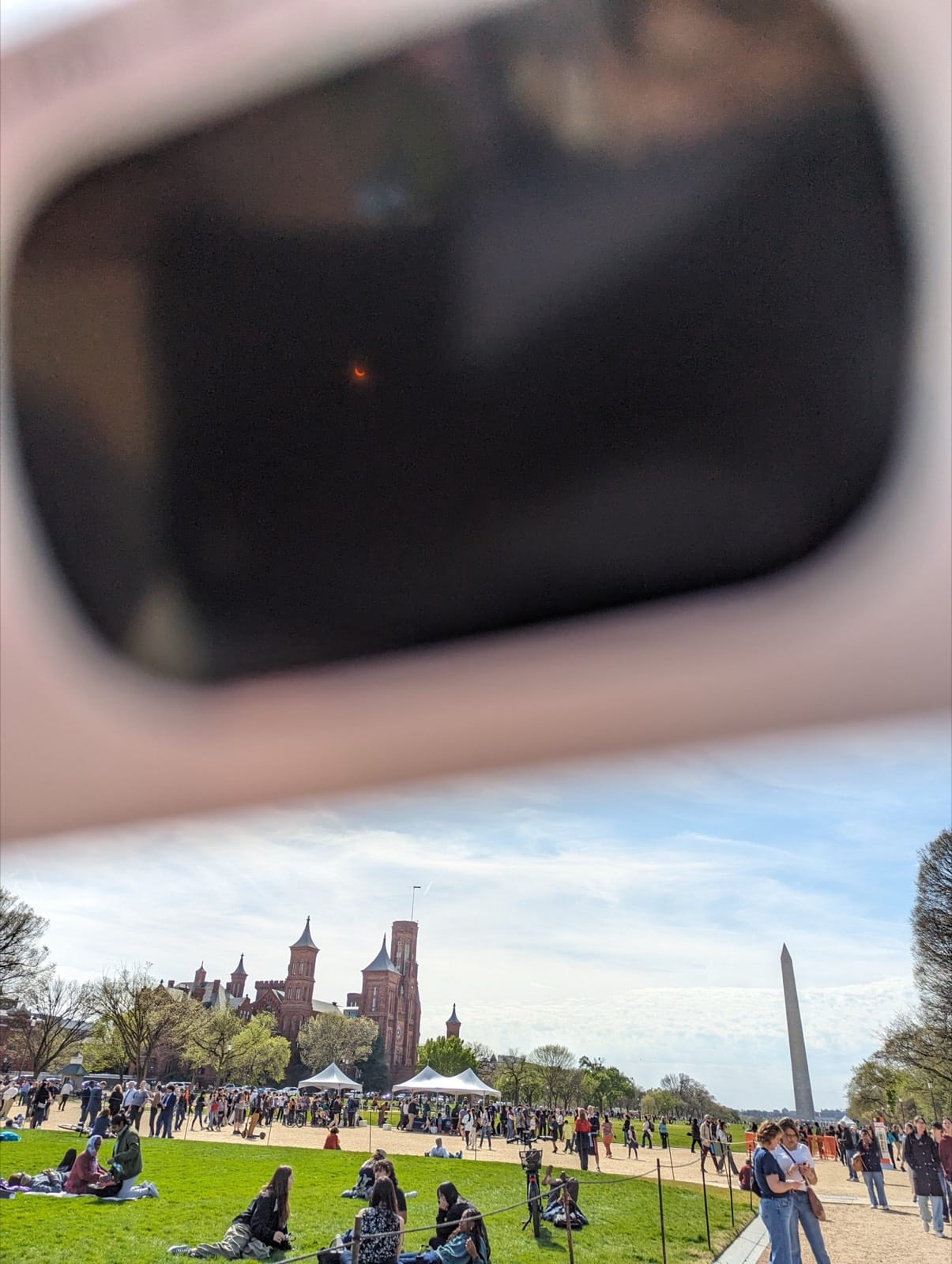
ISO 12312-2 certified eclipse glasses are required during every partial phase of the eclipse, and the only moment you can safely remove them is during totality itself. Regular sunglasses, no matter how dark, do not offer adequate protection and should never be used to view the partial phases directly.

Timing also shifts significantly depending on where you stand along the path. In Iceland, totality falls in the late afternoon, while in Spain it arrives later still, with the western edge of the path seeing the sun eclipsed just before sunset. That means Mallorca and Ibiza travelers should expect a low, warm-toned totality rather than a darkened midday sky, while those in Zaragoza, Bilbao, or the Castilian highlands will see totality with the sun still comfortably above the horizon. Building this into your itinerary matters for photography as much as for choosing where to stand, since a sunset eclipse over the Mediterranean and a higher-angle eclipse over inland Spain are genuinely different visual experiences.

Given that this is the first total solar eclipse to cross mainland Europe since 1999, and the next one will not arrive until 2075, most experienced eclipse chasers recommend arriving at your chosen viewing site at least a day early and keeping a backup location in mind in case of cloud cover.

How to Photograph the 2026 Total Solar Eclipse

You do not need professional gear to bring home a great eclipse photo, but you do need a plan made before you leave home. Astrophotographers who cover these events consistently give the same core advice: a proper front-mounted solar filter is mandatory during every partial phase, on both your camera and your eyes, and the only time it can come off is during totality itself, according to a Forbes interview with astrophotographer David Wright. Wright's biggest piece of advice has less to do with gear and more to do with mindset: program your camera settings ahead of time so you can put the camera down during totality and actually experience the two minutes in front of you.

If you want to plan your exact framing before you travel, tools like PhotoPills' eclipse planner let you drop a pin on your chosen viewing spot and see exactly where the eclipsed sun will sit in the sky at every phase, which is especially useful in a coastal or mountainous location where the horizon isn't flat. For travelers who'd rather keep things simple, a smartphone on a tripod with burst mode enabled captures the atmosphere, the darkening sky, and the reactions of the people around you just as memorably as a telephoto rig captures the corona itself, a point echoed in Live Science's eclipse photography guide.

Whatever setup you choose, rehearse it before eclipse day. Totality here lasts anywhere from about one minute in Reykjavik to just over two minutes at best along the Icelandic centerline, and that window disappears fast if you're still fumbling with camera settings when the sky goes dark.

The Stargazing Travel Hack: Why Night Sky Viewing and Rural Navigation Need Active Data

Eclipse chasing rarely happens in city centers. The best viewing spots above, from Iceland's Westfjords to the plains around Burgos, sit well outside urban coverage areas, and many travelers will be navigating unfamiliar rural roads before dawn or repositioning at the last minute based on cloud forecasts. That makes two things non-negotiable: offline maps loaded in advance, and active mobile data to pull updated weather and cloud-cover forecasts as the morning progresses.

Cloud cover is consistently flagged by eclipse forecasters as the single biggest risk to totality viewing in both Iceland and Spain, which is why many chasers plan two or three backup locations and decide between them on the morning of the eclipse. That decision depends entirely on live data access, not a plan loaded the night before. The same logic applies to stargazing more broadly. Iceland's rural south coast and Spain's inland plains are both popular for night sky photography, and neither offers reliable roadside signal without a working data plan.

This is also where most eclipse itineraries run into a practical snag: Iceland and Spain sit on different mobile networks, and travelers moving between the two, often through a transit hub in mainland Europe, end up either buying two separate local SIMs or paying steep roaming fees on their home carrier at exactly the moment they need connectivity most.

The eSIM Solution for Multi-Country Eclipse Travel

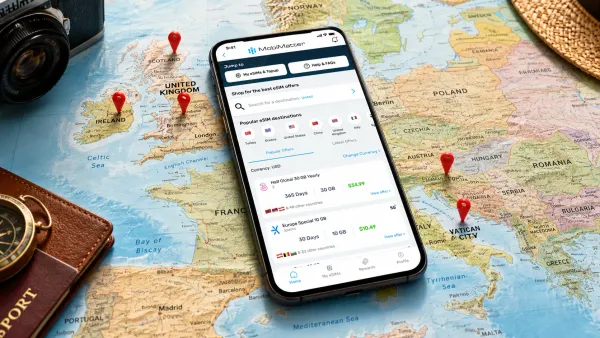
A single regional eSIM profile solves the Iceland-to-Spain connectivity gap without swapping SIM cards mid-trip. The MobiMatter Europe Regional eSIM Plan covers Spain, Iceland, and neighboring transit hubs on one profile, so travelers flying from Reykjavik to Palma or connecting through a mainland European airport stay connected the entire way, without needing a new local number in each country.

For eclipse travel specifically, that means one working data connection for checking cloud forecasts in the Westfjords, navigating rural roads near Zaragoza, and staying in touch with travel companions across a multi-country itinerary, all without hunting for a local SIM vendor in an airport on the morning of a major astronomical event. Setup happens digitally before departure, so the profile is ready to activate the moment you land, which matters when your first stop might be a rural viewing site rather than a city with easy SIM shops.

If your route includes an Icelandic leg on its own, pairing this with MobiMatter's Iceland eSIM options for the Westfjords or Snaefellsnes portion of the trip keeps that leg covered specifically. And if this is your first time buying a travel eSIM at all, MobiMatter's beginner's guide to eSIM travel plans walks through activation and device compatibility before you land.

Frequently Asked Questions

Where is the best place to see the August 12, 2026 total solar eclipse? Palma de Mallorca is widely considered the most accessible top destination, combining full totality with reliable weather and strong flight connections, though Zaragoza offers a higher sun angle for a more traditional midday eclipse experience.

How long will totality last during the 2026 eclipse? Totality lasts up to 2 minutes 18 seconds over the ocean west of Iceland, roughly 1 minute 42 to 45 seconds in northern Spanish cities like Burgos and Leon, and about 1 minute 36 seconds at Palma de Mallorca near sunset.

Is Reykjavik inside the path of totality? Yes, Reykjavik sits inside the path of totality and will see approximately one minute of totality, making it one of the only capital cities where the eclipse is visible without traveling outside city limits.

Can I see the 2026 eclipse from the United States? No, the total phase is not visible from the United States, though parts of the country will see a partial eclipse, with cities like Boston and New York reaching a partial magnitude well below full totality.

Do I need special glasses even if I'm just watching, not photographing? Yes. ISO 12312-2 certified eclipse glasses are required during every partial phase for anyone looking at the sun, and they can only be removed during the brief window of totality itself.

When should I book flights and hotels for the 2026 eclipse? As early as possible, especially for Iceland outside Reykjavik and for smaller Spanish towns near the centerline like Vik or the Burgos region, where lodging inventory is limited and fills up faster than in larger cities.

Why do I need mobile data for eclipse viewing if I'm just watching the sky? Cloud cover is the biggest risk to seeing totality, and many travelers reposition to backup viewing spots based on live weather forecasts on the morning of the eclipse, which requires active data rather than a plan set the night before.

Do I need separate SIM cards for Iceland and Spain? Not if you use a regional eSIM profile covering both countries, such as MobiMatter's Europe Regional plan, which keeps you connected across Iceland, Spain, and transit hubs in between without switching profiles.

Read more