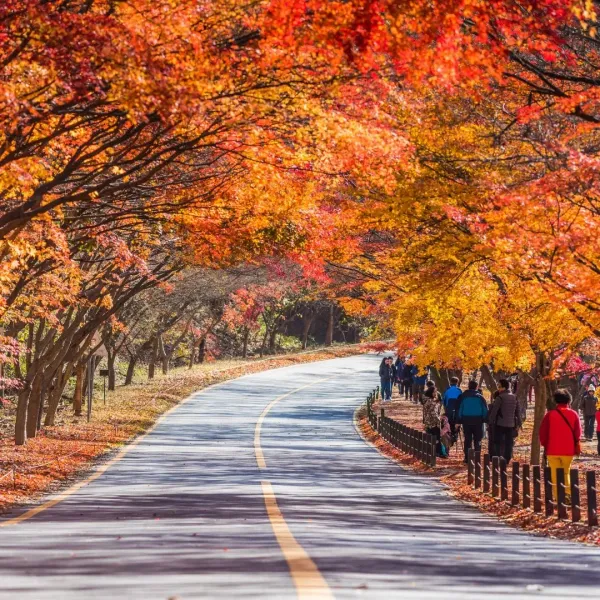
The 20 Best Places to See Autumn Foliage in October 2026
By Abhishek Aggarwal (Travel & eSIM writer, MobiMatter)
· 43 min read
Why October 2026 is the Best Month to Chase Autumn Colour
October is the only month in which the northern hemisphere's three great foliage regions overlap. Japan's mountain interior, the Alpine and Carpathian belt across central Europe, and the North American maple corridor all carry colour somewhere within the same thirty-one days. No other month gives a traveller that choice, and the practical consequence is that a single trip can be planned around colour rather than around a holiday calendar. The month also sits in the trough between two demand peaks. Summer crowds have cleared, the Christmas market season has not begun, and mountain infrastructure is still running. Cable cars in the Dolomites, buses to Arashiyama, and the shuttle system in the Oirase Gorge are all operating in October, while many of them shut or reduce service in November. That combination of accessible transport and thin crowds is what makes October the strongest month of the year for this kind of travel.
There is one condition attached. October rewards precision and punishes vagueness. The window in any single valley is short, and the difference between an unforgettable week and a wasted flight is often nine days.

What actually triggers autumn colour
Autumn colour is triggered by temperature, not by the calendar. Leaves turn when night-time minimums fall below roughly 8C for about five consecutive nights, at which point chlorophyll breaks down faster than the plant can replace it and the underlying carotenoids and anthocyanins become visible. That threshold is why a ridge and the valley beneath it can be two weeks apart in the same county. Elevation therefore moves colour faster than latitude does. Colour descends a mountainside at roughly a day and a half per 100 metres of drop. On a practical trip this means a traveller who arrives too early can simply drive uphill, and one who arrives too late can drive down. A destination with 1,500 metres of accessible vertical range effectively gives you a three-week window instead of a nine-day one.
Rainfall matters as well, though less predictably. A wet, mild September dulls the reds because anthocyanin production depends on bright days and cold nights in combination. A single autumn storm at peak can strip a valley in a day. This is why every credible foliage forecast is published as a range with a confidence band rather than as a date.
Why 2026 is running late
Above-normal summer temperatures have pushed the foliage front later for several consecutive years, and 2026 is following that pattern. The Japan Meteorological Agency forecast above-normal temperatures nationwide through August 2026, and the working expectation is that peak colour across the Kanto and Kansai regions will arrive three to five days later than the historical average, at the back end of each region's usual window rather than the middle.
The same drift applies in Korea, where research from Seoul National University's Graduate School of Environmental Studies and the Korea National Arboretum has documented a progressive delay in peak foliage timing. The Korea Meteorological Administration and the Korea Forest Service publish their annual foliage forecast in September, which as of late August 2026 had not yet been released. The planning consequence is specific. Book the accommodation at the historically reliable date, but build a two-day buffer on the late side of your window, and choose destinations with vertical range so that a late season can be chased uphill.
The shoulder-season cost argument, stated honestly
October accommodation is usually cheaper than August accommodation in the same place, but the size of that gap is routinely overstated in travel content. The figure varies enormously by destination and by week, and in the specific valleys covered in this guide, foliage season is itself a peak. Kyoto's peak fortnight is the single most expensive lodging window of the Japanese year. Stowe in Vermont during the second week of October, which coincides with the Columbus Day weekend, is the busiest and priciest stretch of the New England season. Meanwhile Lake Bled, Transylvania and the Tatras genuinely do fall to shoulder-season rates in October, because their peak is summer.
| Destination type | October pricing behaviour | Practical implication |
|---|---|---|
| Famous foliage sites (Kyoto, Stowe, Hallstatt) | Foliage season is peak season. Rates rise, availability collapses. | Book 10 to 12 weeks out. Ryokan and boutique inns at Nikko and central Kyoto fill months before the forecast is published. |
| Alpine lake and mountain towns (Bled, Zakopane, Brasov) | Genuine shoulder season. Summer is peak, October is quiet. | Book 3 to 5 weeks out. Weekday rates fall further than weekend rates. |
| Major cities used as gateways (Porto, Munich, Seoul, Milan) | Mild seasonal softening only, driven by conference calendars rather than tourism. | Book 4 to 6 weeks out. Watch for trade-fair weeks, which spike rates without warning. |
| National parks with limited beds (Plitvice, Oirase, Triglav) | Low inventory rather than low price. Rates hold, rooms disappear. | Book 8 weeks out. Consider staying one valley away and driving in at dawn. |
Treat any single percentage figure for shoulder-season savings with suspicion, including the ones that circulate widely in autumn travel content. The honest statement is that October is cheaper than August in most of Europe and considerably more expensive than September in the specific towns that sell foliage.
The 20 Destinations at a Glance
The table below is the fastest way to match a fixed set of travel dates to a destination that will actually be in colour. Peak windows are typical ranges adjusted for the late-running 2026 season, not guarantees, and every one of them should be checked against the relevant national forecast in the fortnight before departure. Read the rightmost column carefully. Four of the twenty entries are included because readers expect to see them, not because they peak in October, and each is labelled accordingly.
| # | Destination | Country | Typical 2026 peak | Best for | October verdict |
|---|---|---|---|---|---|
| 1 | Nikko and Lake Chuzenji | Japan | 10 to 28 October | Waterfalls, shrines, hairpin roads | Peaks in month |
| 2 | Oirase Gorge and Lake Towada | Japan | 15 October to 5 November | Stream walking, Tohoku quiet | Peaks in month |
| 3 | Kamikochi and the Northern Alps | Japan | 1 to 20 October | High alpine larch, river valleys | Peaks in month, closes 15 November |
| 4 | Kyoto | Japan | 20 November to 7 December | Temple maples, evening illuminations | Too early in October |
| 5 | Seoraksan National Park | South Korea | 15 to 31 October | Ridge hiking, cable car, coastal pairing | Peaks in month |
| 6 | Odaesan National Park | South Korea | 12 to 28 October | Temple forest, gentler trails | Peaks in month |
| 7 | Alishan | Taiwan | Mid October to late November | Cloud forest, narrow-gauge railway | Early colour in month |
| 8 | Annapurna foothills and Pokhara | Nepal | 1 to 31 October | Post-monsoon clarity, trekking | Peaks in month |
| 9 | Berchtesgaden and the Bavarian Alps | Germany | 5 to 25 October | Lake Konigssee, alpine pasture | Peaks in month |
| 10 | Lake Bled and Lake Bohinj | Slovenia | 8 to 28 October | Larch, lake reflections, Julian Alps | Peaks in month |
| 11 | Transylvania and the Fagaras range | Romania | 5 to 30 October | Beech forest, fortified villages | Peaks in month |
| 12 | Bohemian Switzerland and Cesky Krumlov | Czechia | 10 to 30 October | Sandstone arches, river bends | Peaks in month |
| 13 | Salzkammergut and Hallstatt | Austria | 5 to 25 October | Lake towns, salt-mine history | Peaks in month |
| 14 | Tatra Mountains and Zakopane | Poland | 1 to 20 October | Golden larch, mountain huts | Peaks in month |
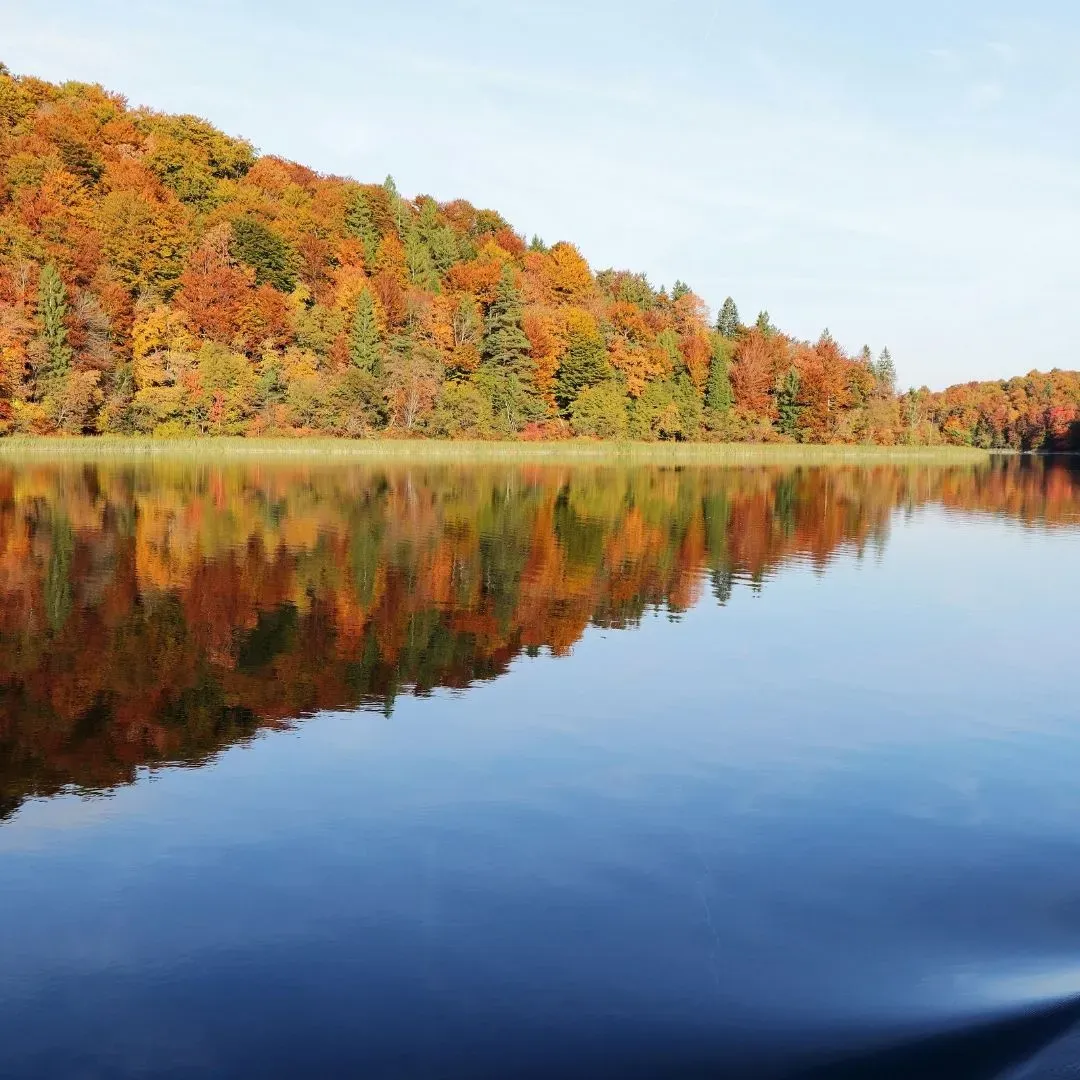
| 15 | Plitvice Lakes | Croatia | 15 October to 5 November | Beech and terraced waterfalls | Peaks in month |
| 16 | Douro Valley | Portugal | 20 October to 15 November | Terraced vines turning gold, harvest tail | Late colour in month |
| 17 | Dolomites, Val Gardena and Alpe di Siusi | Italy | 8 to 28 October | Larch against limestone | Peaks in month |
| 18 | Perthshire | United Kingdom | 12 October to 2 November | Big-tree woodland, accessible from Edinburgh | Peaks in month |
| 19 | Vermont and the Green Mountains | United States | 4 to 12 October | The classic maple corridor | Peaks in month |
| 20 | Blue Ridge Parkway | United States | 1 October to 5 November by elevation | A five-week rolling window on one road | Peaks in month |
Kyoto is number four on the list and it is the one entry that will not be in colour while you are there. It stays because it is the destination most readers arrive expecting, and because knowing when not to go is worth more than another paragraph of praise.
East Asia and the Himalaya: Where the Colour Lands First
East Asia gets the earliest reliable colour of the three regions in this guide, and it gets the most dramatic. Japan's foliage front, the moving line of peak colour known as the koyo front, begins in Hokkaido in the second half of September and rolls south for roughly two and a half months. October catches it across Tohoku, the Northern Alps and the Kanto highlands, which is precisely the part of Japan that most first-time visitors skip. Korea runs about two to three weeks behind Japan's mountain interior on the same latitude band, and moves north to south at roughly one kilometre per hour. Taiwan and Nepal sit outside the temperate maple story altogether and offer something different: cloud forest and post-monsoon Himalayan clarity.
Nikko and Lake Chuzenji, Japan
Why it works
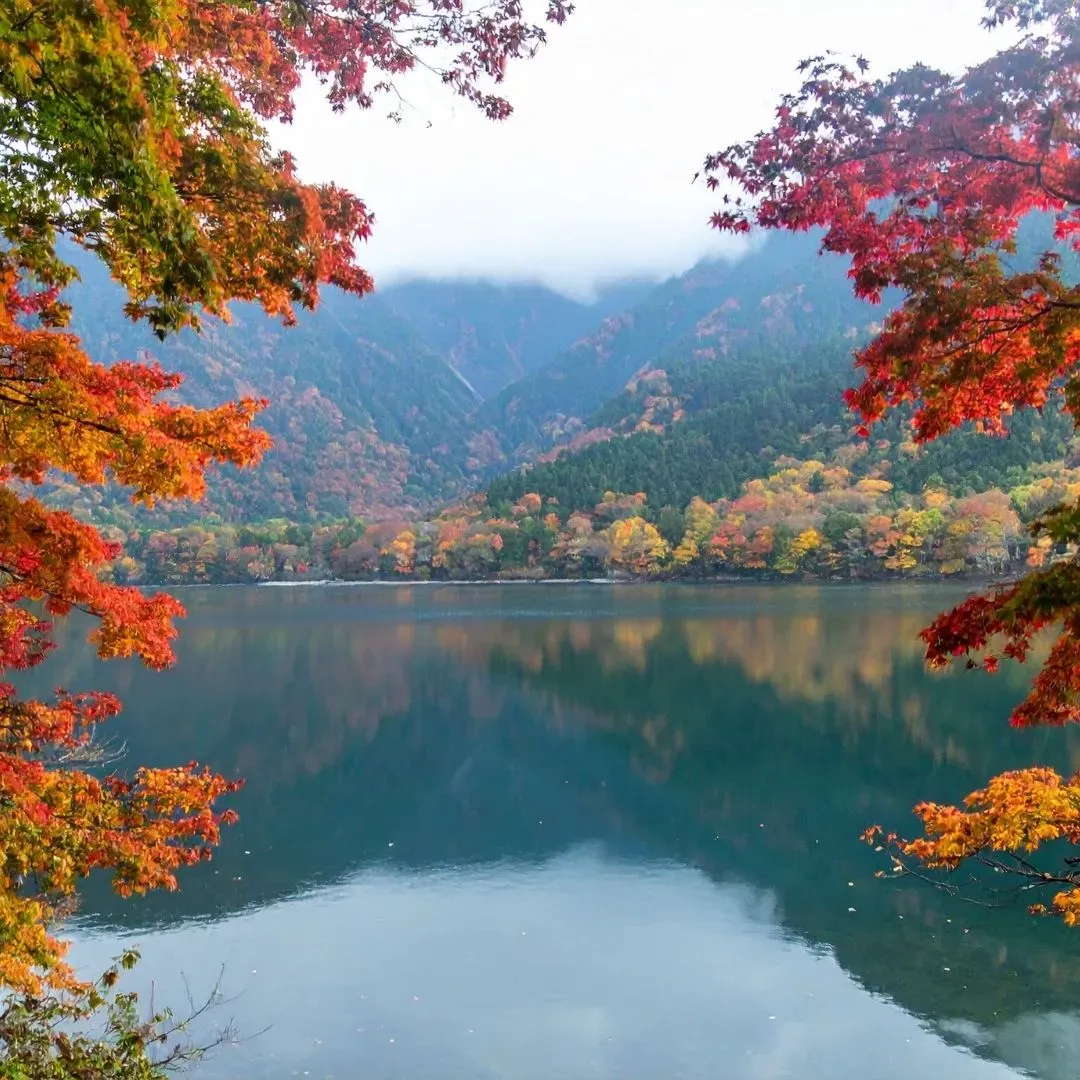
Nikko compresses three separate landscapes into a single day trip from Tokyo, which is rare enough on its own to justify the trip: the lacquered shrine complex at the base, the Irohazaka switchback road climbing 440 metres through dense forest, and the high plateau around Lake Chuzenji, where Kegon Falls drops 97 metres beside it in a way photos consistently undersell. Most first-time visitors treat these as three separate stops when planning, but they sit close enough together that a single well-timed day covers all three without feeling rushed. The detail first-timers miss is that Irohazaka is actually two separate one-way roads, an ascending route and a descending route, with 48 numbered hairpin bends split between them. Each bend carries a character from the Japanese syllabary in sequence, which is the actual origin of the road's name, a small piece of trivia that makes the drive itself feel like part of the destination rather than just the way there.
The practical picture
Budget roughly JPY 14,000 to JPY 24,000 per night for a mid-range Western-style hotel in Nikko town in October 2026, and considerably more for a ryokan at Chuzenji or Kinugawa Onsen, where lakeside or onsen-facing rooms carry a noticeable premium over standard town lodging. The Tobu Nikko Line from Asakusa runs the fastest approach at around two hours by limited express, which makes Nikko realistic as either a long day trip or a relaxed overnight without eating into a broader Tokyo itinerary. Day visitors should treat the Nikko Pass as a default purchase rather than a decision to weigh, since between the shrine complex, the bus corridor, and the climb up to Chuzenji, the pass tends to pay for itself well before the day is over.
Access and permits
No permit is required for any part of this trip. The World Heritage shrine complex charges separate admissions per temple rather than a single combined ticket, so it's worth deciding in advance which temples actually matter to you rather than paying for entry to all of them by default. The Chuzenji-Yumoto bus corridor is the practical way to move around the plateau without a car, running frequently enough that waiting for the next bus rarely costs more than a few minutes. Verify current fares with Tobu Railway before travelling, since they were last revised in 2025 and are the kind of detail that changes without much notice.
Connectivity reality
Coverage on the plateau is good on NTT Docomo and KDDI au, noticeably thinner on Rakuten Mobile, and the specific failure mode to plan around is the Irohazaka corridor itself. Signal drops in and out through the forested switchbacks exactly when navigation matters most, right as the road narrows into blind hairpin turns where a missed cue actually matters. October weekend traffic compounds the problem, holding cars on the ascent for over an hour while mapping apps re-route constantly, sometimes contradicting themselves as signal flickers in and out. Download the offline map before you leave town, and carry a data plan rather than relying on hotel Wi-Fi, since coverage on the mountain has nothing to do with what's available back at the hotel: Japan eSIM plans run on the same domestic networks that hold signal through the bends, which matters more here than almost anywhere else on a typical Japan itinerary.
Watch out for
Nikko in peak October is one of the worst traffic bottlenecks in eastern Japan, and it's easy to underestimate until you're sitting in it. The Irohazaka ascent has been known to take three hours on a fine autumn Sunday, turning what should be a 30-minute drive into most of a morning. If your dates are fixed to a weekend, take the train and the bus rather than a hire car, or start before 07:00, since both options sidestep the worst of the congestion rather than trying to outlast it.
Oirase Gorge and Lake Towada, Japan
Why it works
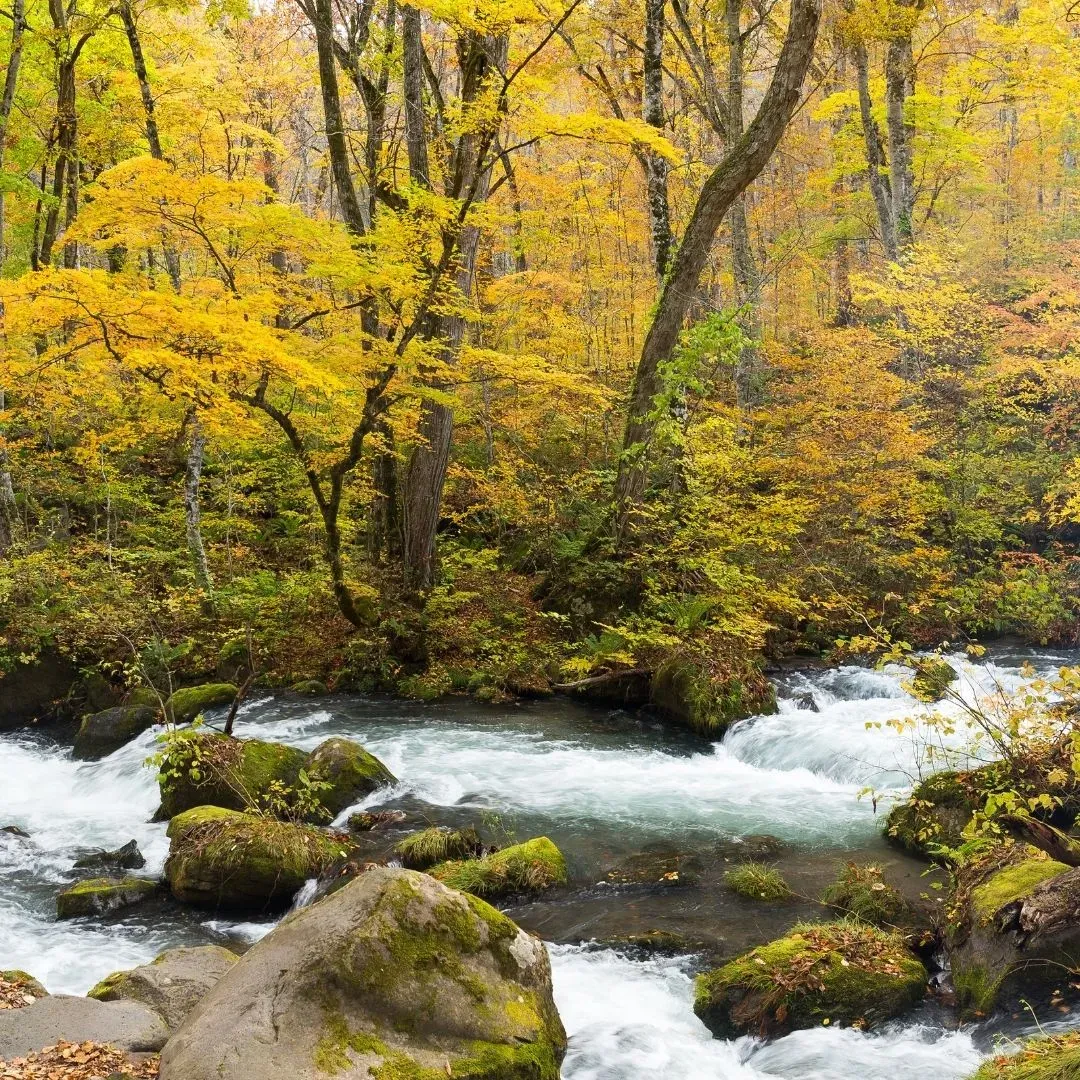
The Oirase Gorge is a 14-kilometre stream walk in Aomori Prefecture where the path runs directly alongside the water for its entire length, past a sequence of named waterfalls including Choshi Otaki, the only one that falls across the full width of the stream. Because the gorge is narrow and the canopy closes overhead, the colour is experienced from underneath rather than from a viewpoint. That is a materially different experience from every other entry in this guide.
The practical picture
Expect JPY 11,000 to JPY 20,000 per night around Lake Towada in October, with onsen ryokan at the higher end. The gorge is reached by bus from Aomori or Hachinohe, and the standard approach is to walk downstream from Nenokuchi to Ishigedo, roughly nine kilometres, then take the bus back. Allow four hours at a photographer's pace.
Access and permits
No permit. The area sits inside Towada-Hachimantai National Park, and parking at trailheads is limited enough that the shuttle bus is usually faster than driving.
Connectivity reality
This is the weakest coverage of any Japanese entry here. The gorge walls block signal for long stretches, and there are sections of the middle path where no carrier holds a usable connection. Tohoku's rural cell density is genuinely lower than Kanto's. Plan for offline navigation, tell someone your route, and treat the data plan as insurance for the ends of the walk rather than the middle. If you are weighing suppliers before you fly, compare eSIM providers side by side rather than defaulting to the first brand you find.
Watch out for
Bear activity is a genuine consideration in Tohoku in autumn, and 2025 saw an unusually high number of encounters reported nationally. Carry a bell, walk in company, and check current advisories with the park authority before setting out.
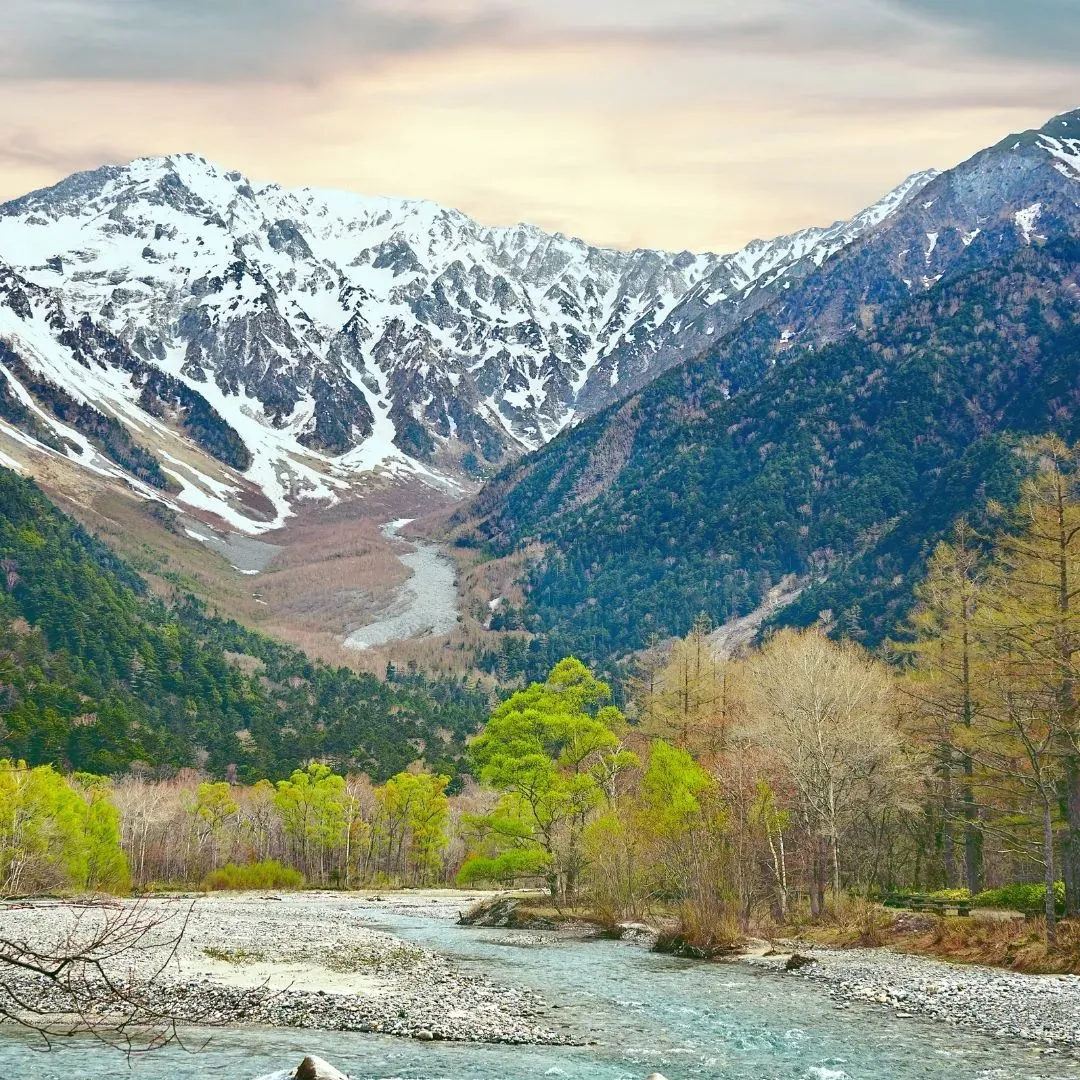
Kamikochi and the Northern Japanese Alps
Why it works
Kamikochi is a flat river valley at 1,500 metres surrounded by 3,000-metre peaks, which means you get true alpine scenery without any climbing. The Azusa River runs milky turquoise from glacial sediment, and in the first three weeks of October the larch turns gold against it. The detail most visitors do not know: private vehicles have been banned from the valley since 1975, so the whole basin is quieter than any comparable landscape in Europe.
The practical picture
Budget JPY 15,000 to JPY 30,000 per night for the limited lodging inside the valley, which sells out months ahead, or stay at Hirayu Onsen and take the first bus in. Access is by bus from Matsumoto or Takayama via the Kama Tunnel.
Access and permits
No permit for the valley floor. The valley closes for the winter on 15 November 2026 and reopens in late April, so October is effectively the last full month of the season.
Connectivity reality
Coverage is reliable around the Kappa Bridge and the main lodges, and degrades quickly upstream past Myojin Pond. All three major carriers have improved the valley floor in recent years, but the side trails have not. Because the day is long and mapping runs continuously, this is a valley where people arrive back at the bus stop with a flat battery and no way to check the return schedule. Carry a power bank, and check your remaining data before you set out rather than at the end of the walk.
Watch out for
The valley sits high enough that first snow in mid-October is common, and it can arrive while the larch is still gold. That combination photographs beautifully and makes the trails genuinely slippery. Bring boots with grip, not trainers.
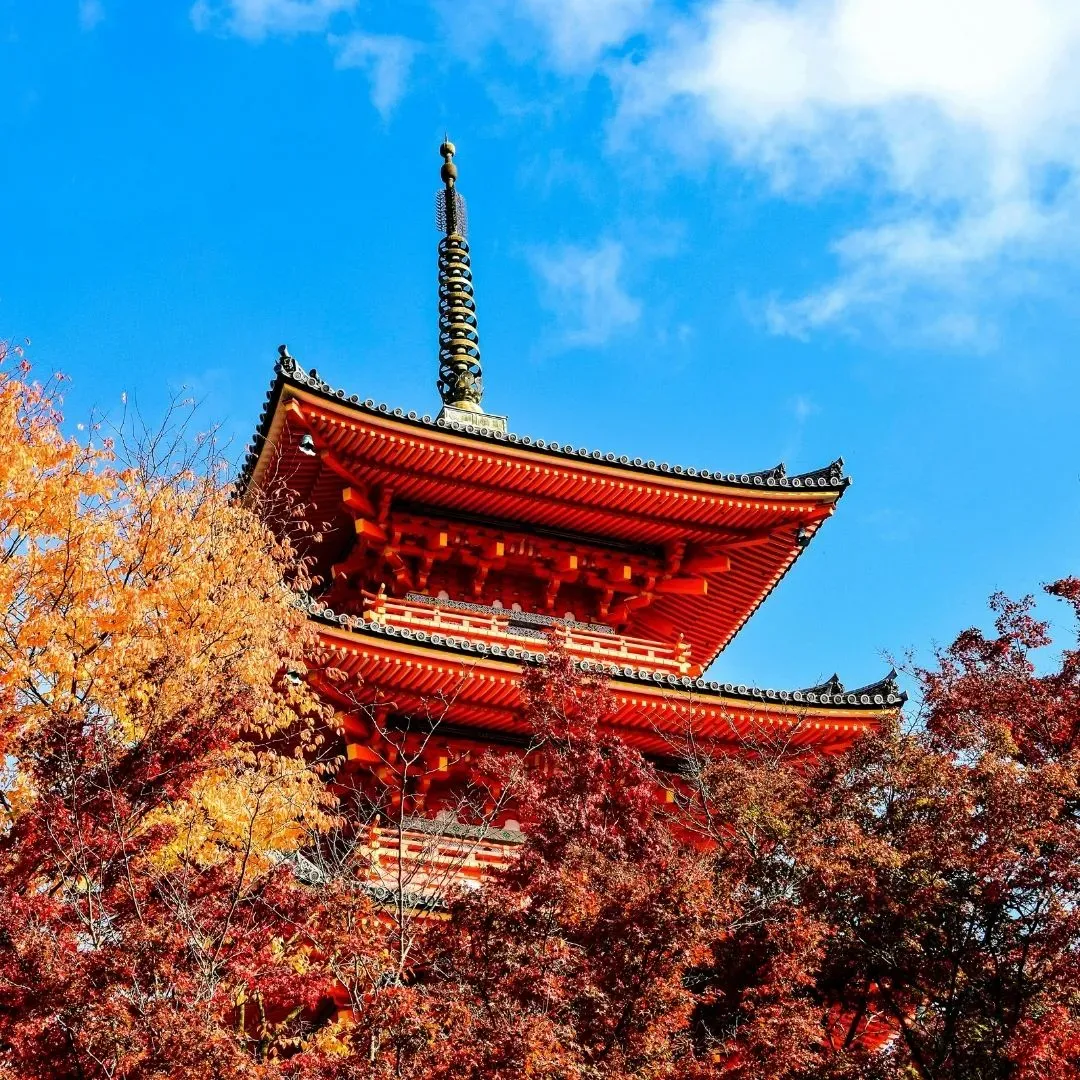
Kyoto, Japan
Why it works
Kyoto is the most famous autumn destination on earth for a reason: roughly 2,000 maples at Tofuku-ji alone, evening illuminations at Eikando, and a temple density that lets you see six distinct compositions in a day. It is included here because it appears on every competing list, and because the single most useful thing this guide can tell you is when not to go.
The practical picture
Kyoto's peak fortnight is the most expensive lodging window of the Japanese year. Four and five-star hotels should be booked around twelve weeks ahead for that window, against roughly eight weeks for other Japanese regions in the same season. Rates in the same properties in mid-October are materially lower, because the maples are still green.
Access and permits
No permit. Several temples apply higher seasonal admission and separate evening-illumination tickets during peak. Tofuku-ji enforces a photography ban on the Tsutenkyo bridge during peak foliage hours to keep the lookout moving, which surprises a large number of visitors every year.
Connectivity reality
Kyoto has excellent coverage and a congestion problem. During illumination evenings, cells around Higashiyama and Arashiyama carry crowd densities they were not dimensioned for, and throughput drops even where the signal bars look full. The practical effect is failed ride-hailing requests and slow map loads at exactly the hour you need them. A plan with a generous allowance and the ability to top up without reinstalling is worth more here than a marginally cheaper one.
Watch out for
Kyoto will not be in autumn colour in October 2026. The realistic planning window is 20 November to 7 December 2026, and a warm season could push the best days into the first week of December. If your travel dates are locked to October, go to Nikko, Kamikochi or Tohoku instead and save Kyoto for a different year.
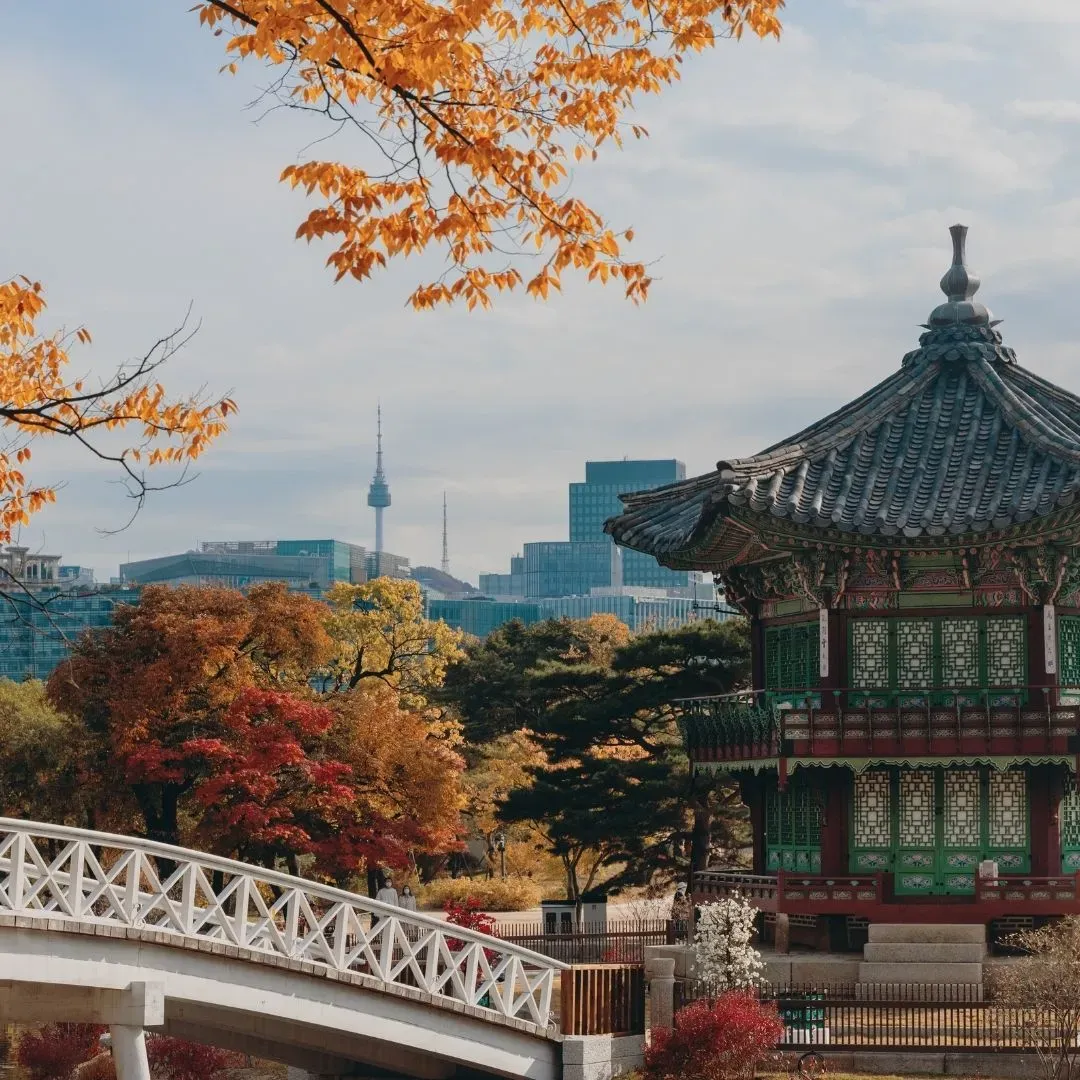
Seoraksan National Park, South Korea
Why it works
Seoraksan is where Korea's autumn starts. It is a granite massif in the north-east that combines a cable car to the Gwongeumseong fortress ruins, the Ulsanbawi rock formation reached by roughly 800 steel steps, and the gentler Biseondae valley walk, all inside one park boundary. The detail worth knowing is that the park sits close enough to the East Sea that you can pair a morning of ridge colour with an afternoon on the beach at Sokcho, which is not true of any other major foliage site in this guide.
The practical picture
Budget KRW 90,000 to KRW 180,000 per night in Sokcho in late October, which is high season locally. Express buses from Seoul reach Sokcho in around two and a half hours, and the park entrance is a short local bus ride further. Park admission is modest and the cable car is ticketed separately, with queues that exceed two hours on peak weekends.
Access and permits
No permit for day hiking on the main routes. Some ridge trails operate seasonal closures, and the Korea National Park Service publishes closures and daily conditions in English. Check before committing to a specific route.
Connectivity reality
Korea has among the densest mobile infrastructure in the world, and SK Telecom, KT and LG U+ all cover the park approaches and the main valley well. The failure mode is not coverage, it is the cable car queue and the trailhead car park, where several thousand people share a small number of cells and everything slows down. Because reservation and ticketing systems in Korea are heavily app-based, a stalled connection at the ticket window is a real problem. A Korean eSIM data plan on a major domestic network avoids the added latency of an international roaming route.
Watch out for
Seoraksan on the last two weekends of October is genuinely crowded, and the mountain saw its first snow of the 2025 season on 20 October. Snow at the top while the valleys are still red is a real possibility, and the upper routes can close with little notice.
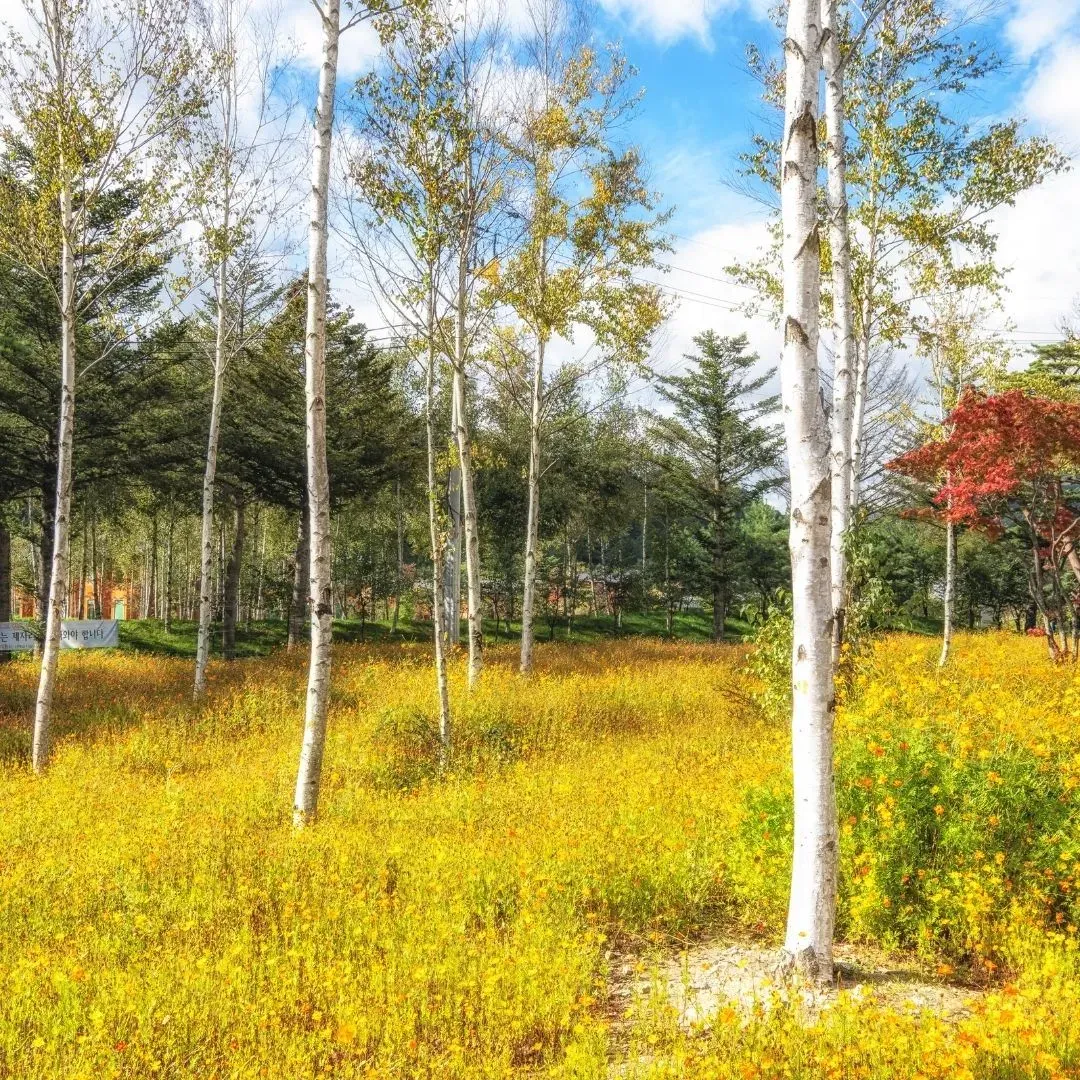
Odaesan National Park, South Korea
Why it works
Odaesan is the quieter alternative to Seoraksan, an hour south-west and about a week behind it. Its signature is the approach to Woljeongsa temple, a straight avenue of tall fir trees roughly a kilometre long that is dark and cool even at midday, opening onto a temple compound with a nine-storey octagonal stone pagoda. The gradients are gentler than Seoraksan's, which makes it the better choice for anyone travelling with less mobile companions.
The practical picture
Expect KRW 70,000 to KRW 140,000 per night in Jinbu or Pyeongchang, notably cheaper than Sokcho at the same date. The area is reachable by KTX to Jinbu station, which was built for the 2018 Winter Olympics and cuts the journey from Seoul to roughly ninety minutes.
Access and permits
No permit. Woljeongsa charges a small admission. Temple-stay programmes run through the autumn and book out early in October.
Connectivity reality
Coverage along the temple road and around the visitor centre is solid. It thins on the Sangwonsa road and on the higher trail sections towards Birobong. The specific practical issue is that Korean navigation depends on domestic apps rather than the ones most visitors arrive with, and those apps are data-hungry. Before you fly, confirm your handset can take a second profile at all: this list of eSIM-compatible devices covers the models where a carrier lock still blocks it.
Watch out for
Odaesan is thinner on food and accommodation than Seoraksan, and options close early in the evening outside the main season. Do not plan on finding dinner at 21:00 in Jinbu in October.
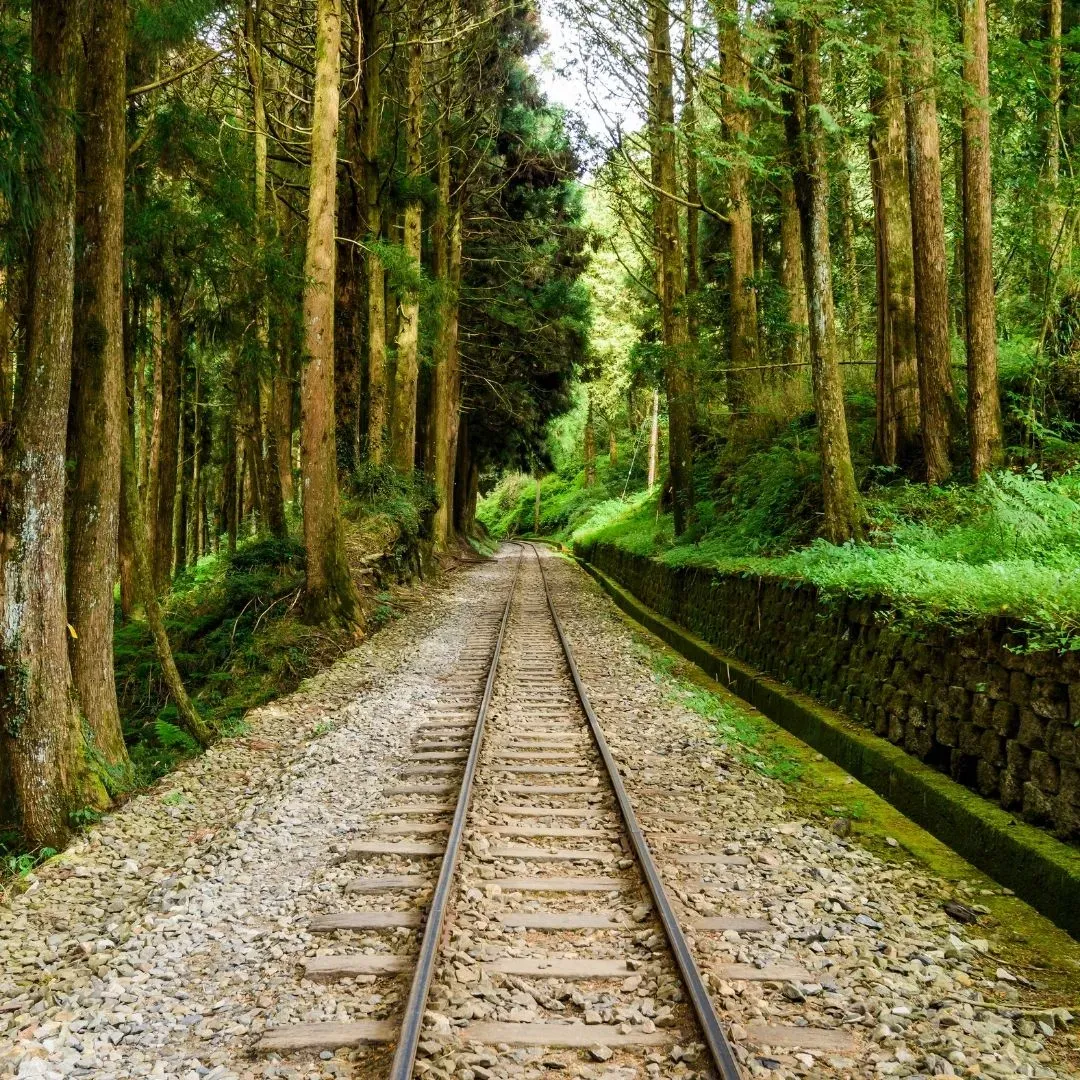
Alishan, Taiwan
Why it works
Alishan is a high-altitude forest reserve at around 2,200 metres reached by a narrow-gauge railway built by the Japanese colonial administration for logging, which now climbs through three distinct climate zones in under three hours. The autumn draw is not maple but the combination of maple, cherry and cypress against near-permanent cloud, plus the sunrise sea of clouds viewed from Zhushan. The colour season is longer and less concentrated here than anywhere else in this guide.
The practical picture
Budget TWD 2,500 to TWD 5,500 per night inside the recreation area, less in Chiayi at the bottom of the mountain. The forest railway operates on a partial schedule, so check which sections are running before planning around it, and the bus from Chiayi is the reliable fallback at roughly two and a half hours.
Access and permits
No permit. There is a national forest recreation area entrance fee, and the sunrise train requires a separate ticket usually bought the previous evening.
Connectivity reality
Chunghwa Telecom has the strongest coverage on the mountain, with Taiwan Mobile and FarEasTone weaker above the village. Persistent cloud and dense cypress attenuate signal noticeably on the trail loops, and the pre-dawn sunrise crowd at Zhushan creates a short, sharp congestion spike every morning. A Taiwan eSIM that rides the strongest local network matters more here than raw allowance.
Watch out for
Alishan is genuinely wet. Cloud cover means a meaningful proportion of visitors never see the sunrise they came for, and the colour is muted under grey skies. Build two mornings into the plan rather than one, and treat the railway as an experience rather than as transport.
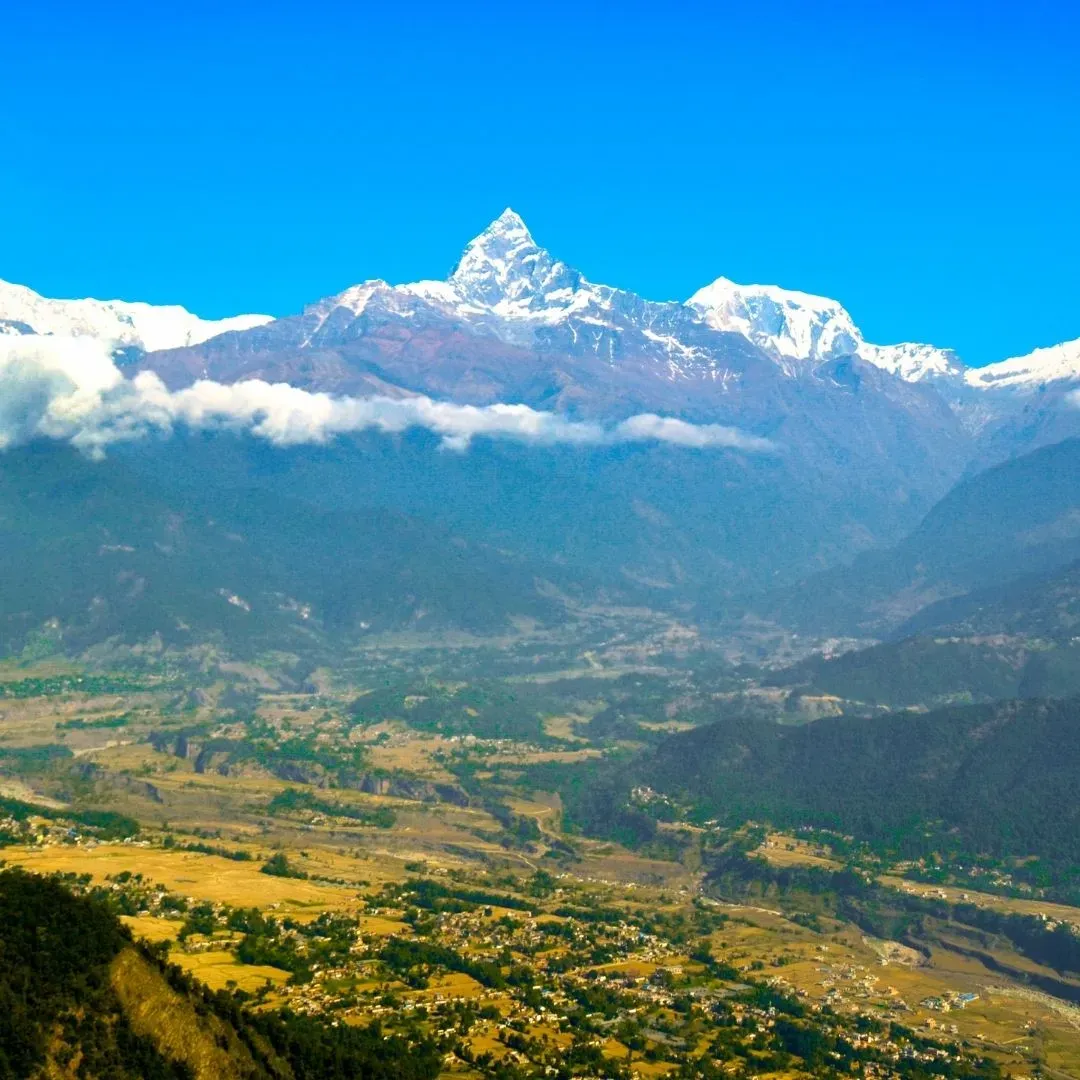
The Annapurna Foothills and Pokhara, Nepal
Why it works
Nepal's October is not a foliage season in the maple sense. It is the post-monsoon clearing, when the air goes glass-clear and the Annapurna range appears above Pokhara with a definition it does not have at any other time of year. The lower forest carries rhododendron and oak in muted golds, terraced fields turn from green to straw, and the Ghandruk and Poon Hill routes deliver mountain views at trekking-lodge prices. It belongs on an October list because October is unambiguously the best month in the Nepali year for it.
The practical picture
Pokhara lakeside guesthouses run roughly USD 20 to USD 70 per night in October, which is peak season and priced accordingly. Teahouses on the Ghorepani and Ghandruk circuits typically cost USD 8 to USD 25 per night plus meals. Flights from Kathmandu take 25 minutes and are cancelled often; the road takes six to eight hours and is the reliable option.
Access and permits
Trekking in the region requires an Annapurna Conservation Area Permit issued by the National Trust for Nature Conservation, and route rules for independent trekkers have changed more than once in recent years. Confirm current requirements with the Nepal Tourism Board before departure rather than relying on older guidance.
Connectivity reality
Ncell and Nepal Telecom both cover Pokhara well and both thin out sharply with altitude. Nepal Telecom generally holds signal further into the hills. On the Poon Hill circuit expect usable data at the larger villages and nothing between them. Teahouse Wi-Fi exists, is often paid, and is frequently slower than a phone connection. A Nepal eSIM is worth having simply so that the lodge Wi-Fi is not your only option.
Watch out for
October is the busiest trekking month of the Nepali year, and the Ghorepani route in particular can feel like a queue at sunrise on Poon Hill. Book teahouses ahead, and be honest with yourself about altitude: Poon Hill is 3,210 metres and people do get sick there.
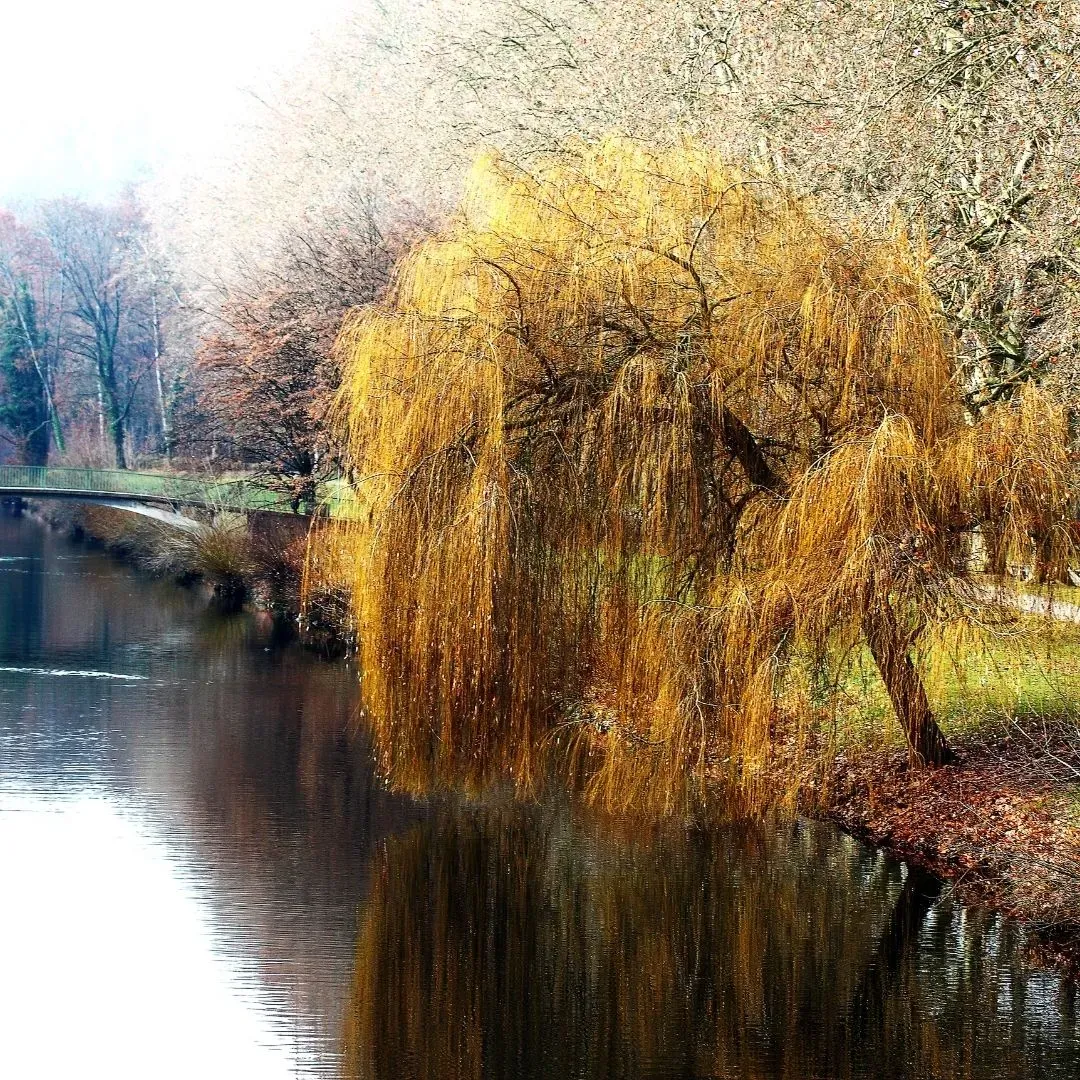
Central and Eastern Europe: Castles, Lakes and Larch
Central and Eastern Europe is the value case in this guide. The Alpine and Carpathian belt delivers colour of the same quality as Japan at a fraction of the flight cost for European travellers, and unlike Kyoto or Stowe, most of these places treat October as a quiet month rather than a peak one.
The region also has a structural advantage that matters more than it sounds. Retail roaming surcharges are banned across the EU and EEA under Regulation (EU) 2022/612, which has been extended to 2032, so an EU resident crossing from Austria into Slovenia into Croatia pays nothing extra. Every other traveller pays full international rates in exactly the same valleys, which is the single most expensive assumption in autumn travel.
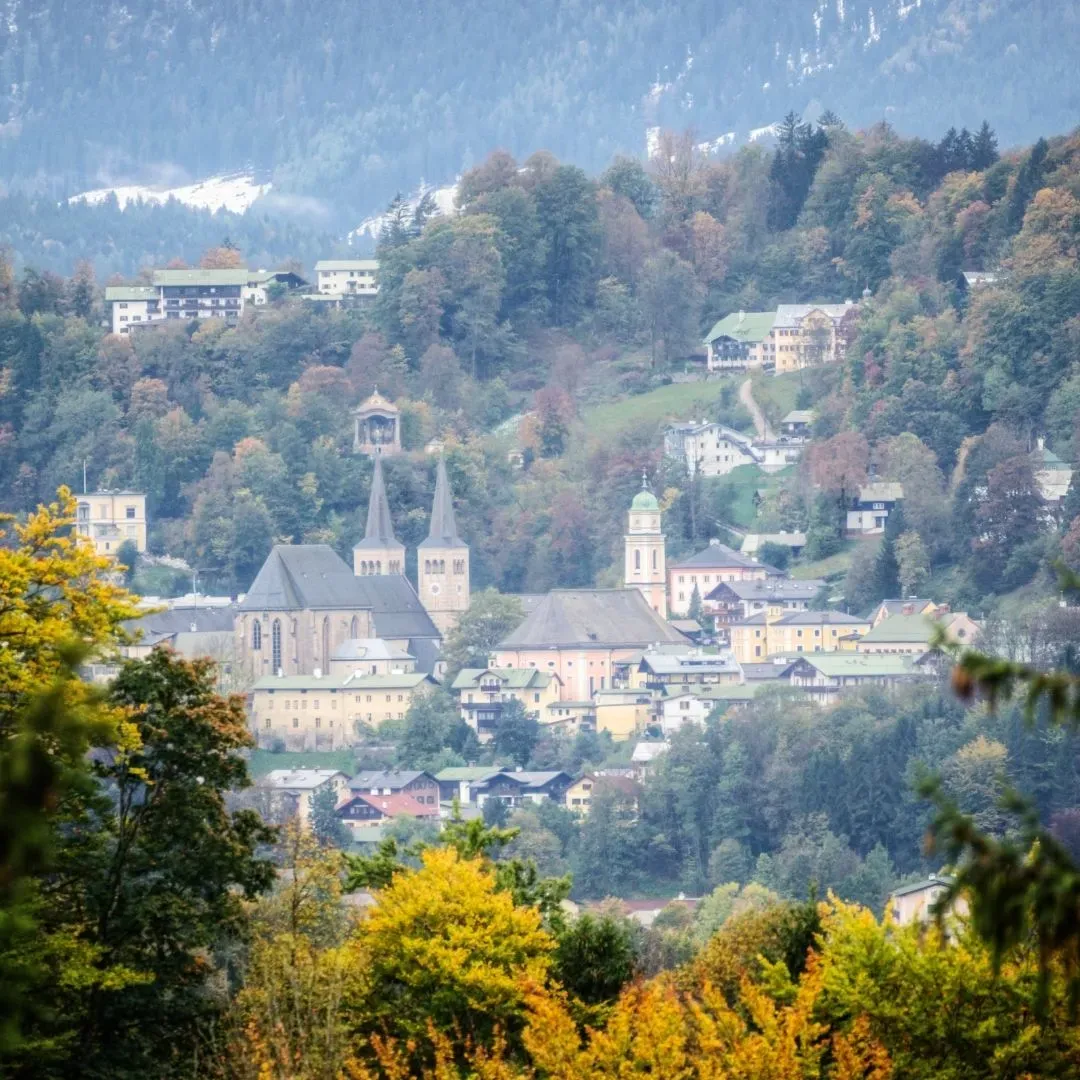
Berchtesgaden and the Bavarian Alps, Germany
Why it works
Berchtesgaden National Park is the only German national park in the Alps, and its centrepiece is the Konigssee, a fjord-like lake hemmed by the east face of the Watzmann. The boats that cross it have been electric since 1909, which is why the lake is silent enough that the boatman traditionally stops mid-water to play a flugelhorn against the rock wall. Larch and beech turn along the shoreline in the first three weeks of October while the peaks above take early snow.
The practical picture
Budget EUR 90 to EUR 180 per night in Berchtesgaden or Ramsau in October, which is genuine shoulder pricing after the summer peak. The area is roughly two and a half hours by train from Munich with a change at Freilassing, and a car is useful but not essential given the RVO bus network.
Access and permits
No permit. The Konigssee boat is ticketed per leg, and the Jennerbahn cable car runs through October with a maintenance window that varies by year. Check the operator's schedule before building a day around it.
Connectivity reality
Telekom, Vodafone and O2 all cover the valley floor and the towns well. The failure mode is the classic Alpine one: the lake is a trench with 1,500-metre walls, and coverage on the water and in the Wimbachklamm gorge is patchy to absent. Anyone relying on live navigation for the drive over the Rossfeld Panoramastrasse should download the route first. For non-EU visitors, a Germany eSIM is the difference between paying local rates and paying international roaming for the same cell.
Watch out for
Berchtesgaden's weather is genuinely unstable in October and the Konigssee can sit under cloud for days. The Jenner summit view is the first thing lost. If you have three days, keep the cable car flexible rather than pre-booking a specific morning.
Lake Bled and Lake Bohinj, Slovenia
Why it works
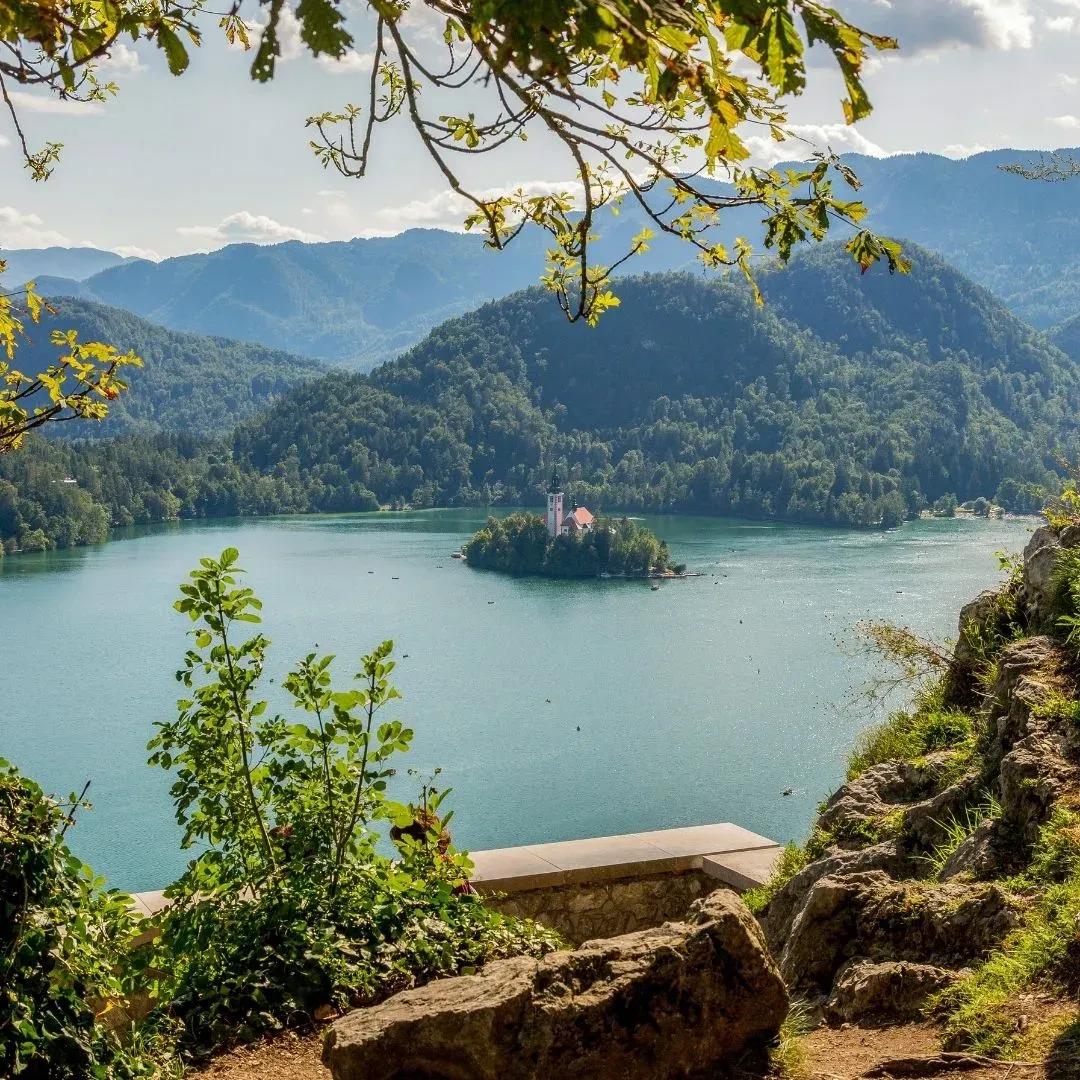
Bled gives you the postcard, and Bohinj gives you the country. The island church on Bled is reached by pletna, a flat-bottomed boat rowed standing, a licence for which still passes through a small number of local families. Twenty-six kilometres further into the Julian Alps, Bohinj is four times larger, has almost no hotel development on its shoreline, and sits at the foot of the Vogel cable car. The colour comes from beech and larch, and the larch is the later of the two.
The practical picture
Expect EUR 70 to EUR 150 per night around Bled in October, appreciably below the July rate. Ljubljana airport is 35 minutes away and the bus from the capital takes about an hour. A car makes the Pokljuka Plateau and the Soca Valley accessible, which is where the trip stops being a postcard.
Access and permits
No permit for the lakes. Vintgar Gorge operates timed entry with a daily cap and closes for the winter, typically at the end of November. Triglav National Park has its own access rules for some valleys.
Connectivity reality
Slovenia's fixed broadband ranks among the fastest in the world on Ookla's Speedtest Global Index, while its mobile median sits mid-table, and that gap is exactly what a traveller experiences. Telekom Slovenije, A1 and Telemach all cover Bled comfortably. Signal degrades on the Pokljuka Plateau, in the Vintgar and Mostnica gorges, and along the upper Soca. A Slovenia eSIM data plan is the cheap fix for non-EU visitors; EU residents can simply use their domestic allowance here.
Watch out for
The beech turns and drops fast. Visitors in late October regularly find the northern Julian Alps beech already bare while the larch above Pokljuka is still burning orange. If beech is what you came for, aim for the second week of October rather than the fourth.
Transylvania and the Fagaras Range, Romania
Why it works
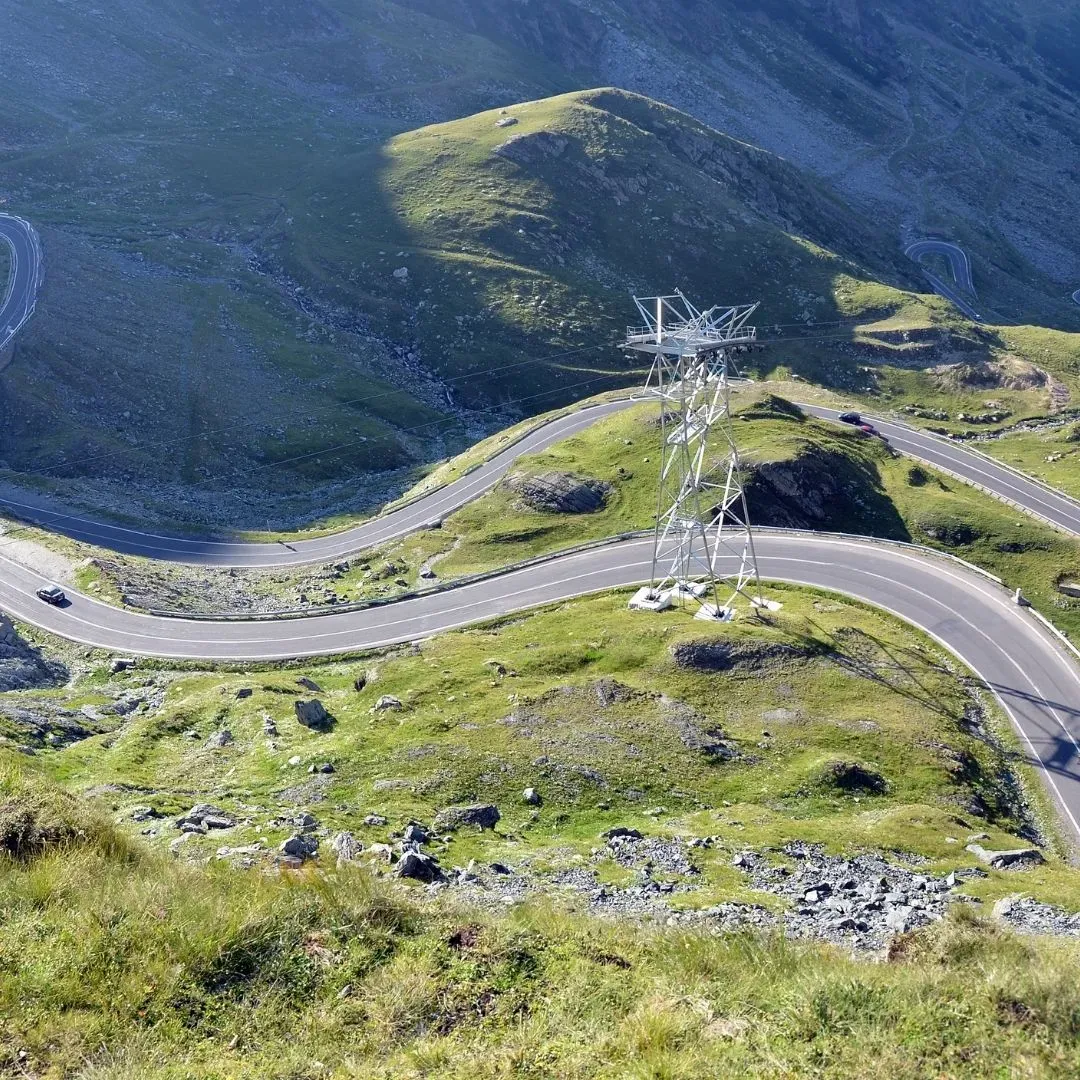
Transylvania offers the largest contiguous ancient beech and mixed forest in temperate Europe, and it wraps that forest around fortified Saxon villages, painted churches and a genuinely wild carnivore population. The Fagaras Mountains are the highest section of the Southern Carpathians, and Piatra Craiului is a single 25-kilometre limestone ridge that reads as a wall from the valley floor. October turns the beech copper across the whole range.
The practical picture
Romania is the cheapest destination in this guide. Guesthouses in Brasov, Sibiu or the Saxon villages run roughly EUR 40 to EUR 90 per night in October. Flights into Bucharest, Cluj or Sibiu are frequent, and a hire car is close to essential for the village circuit.
Access and permits
No permit. The Transfagarasan, the high mountain road across the Fagaras, is seasonal and normally closes to through traffic around the start of November, sometimes earlier after snow. Confirm status before planning a crossing.
Connectivity reality
Romania has unusually strong telecoms for its income level, with Orange, Vodafone, Digi and Telekom Romania all competing hard, and fixed broadband speeds that sit near the top of the European table. Mobile coverage in the Saxon villages is better than visitors expect. Where it fails is the forest roads in Piatra Craiului and the upper Fagaras, which is also where you are most likely to need it. A Romanian eSIM costs a fraction of what a non-EU roaming day pass costs for the same week.
Watch out for
Romania has Europe's largest brown bear population and habituated bears near roadside feeding spots are a real hazard, not a folk tale. Do not stop to photograph bears from a car window, and choose accommodation that briefs you properly on rubbish storage.
Western and Southern Europe: Harvest Gold and Atlantic Light
The three entries below sit outside the Alpine and Carpathian belt and turn later or differently. They are worth the space because they solve two specific problems: what to do if your October dates fall in the last week rather than the first, and what to do if you want autumn colour without a mountain road.
The Douro Valley, Portugal
Why it works
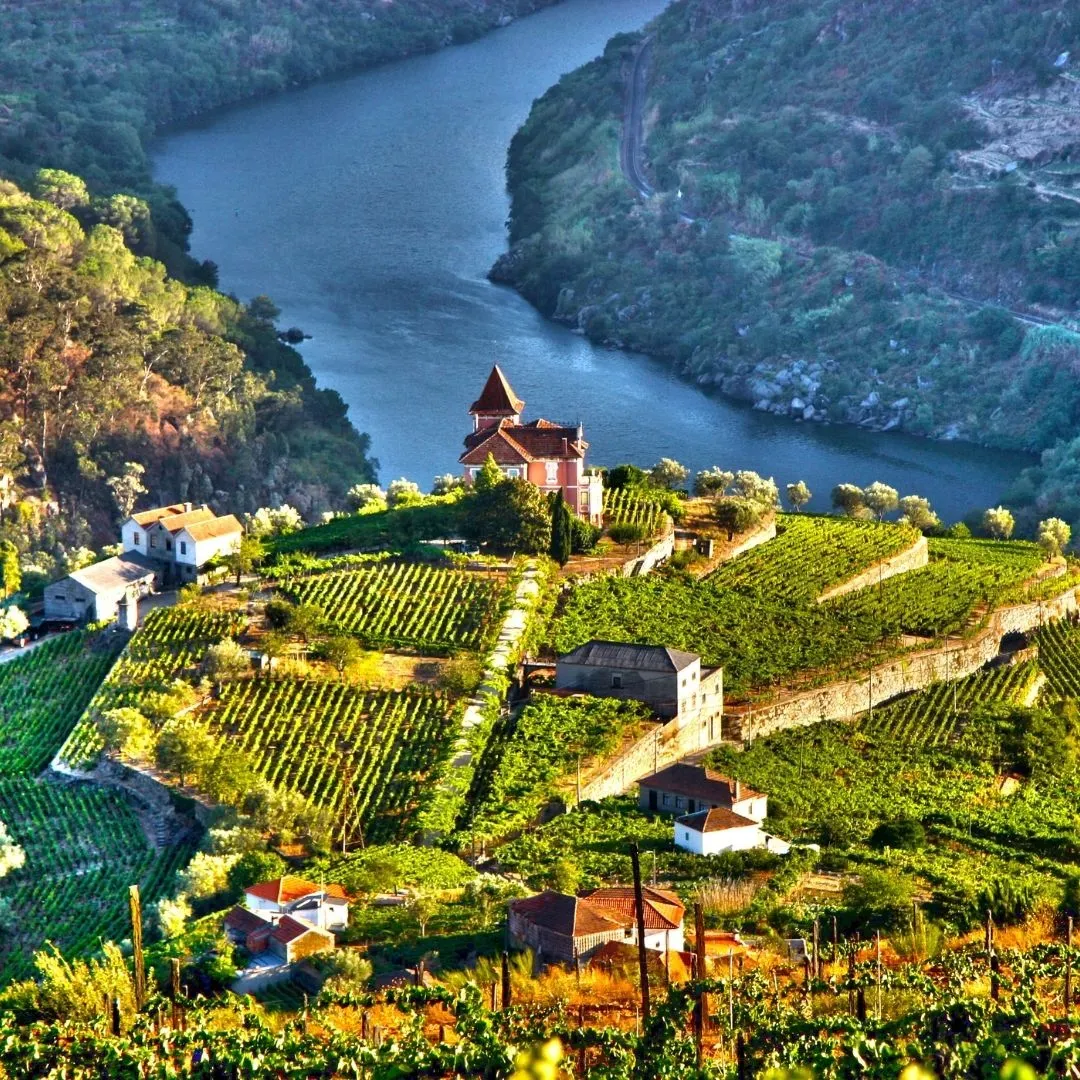
The Douro is the oldest demarcated wine region in the world, established in 1756, and its terraces are cut into schist so steep that much of the harvest is still carried by hand. In late October the vines turn through yellow, copper and deep red in bands that follow the contour lines, which produces a striped hillside effect you will not see in a forest. The river cuts through the middle of it, and the train line from Porto runs along the water for the final stretch.
The practical picture
Quintas and guesthouses in the Pinhao and Peso da Regua area run roughly EUR 90 to EUR 220 per night in late October. Porto is the gateway, ninety minutes by car or two and a half hours on the scenic Linha do Douro. Harvest tourism ends in early October, so late-month visitors get the colour without the crowds.
Access and permits
No permit. Quinta visits and tastings are usually by appointment in the autumn, when many estates reduce hours after the harvest. Book two weeks ahead rather than turning up.
Connectivity reality
MEO, NOS and Vodafone Portugal cover the valley towns and the main N222 road well. The failure mode is the terrace roads themselves, which switchback into rock cuttings where signal drops, and the river gorge sections between Pinhao and Tua. Anyone driving the N222 for the views should expect navigation to lose its fix repeatedly. A Portugal eSIM is straightforward for non-EU visitors.
Watch out for
The Douro turns late and unpredictably. A warm October can leave the vines green into November, and a wet one can strip them early. This is the least reliable entry in this guide for a fixed date, and it should be chosen by travellers who want a wine valley with autumn as a bonus rather than the reverse.
The Dolomites, Val Gardena and Alpe di Siusi, Italy
Why it works
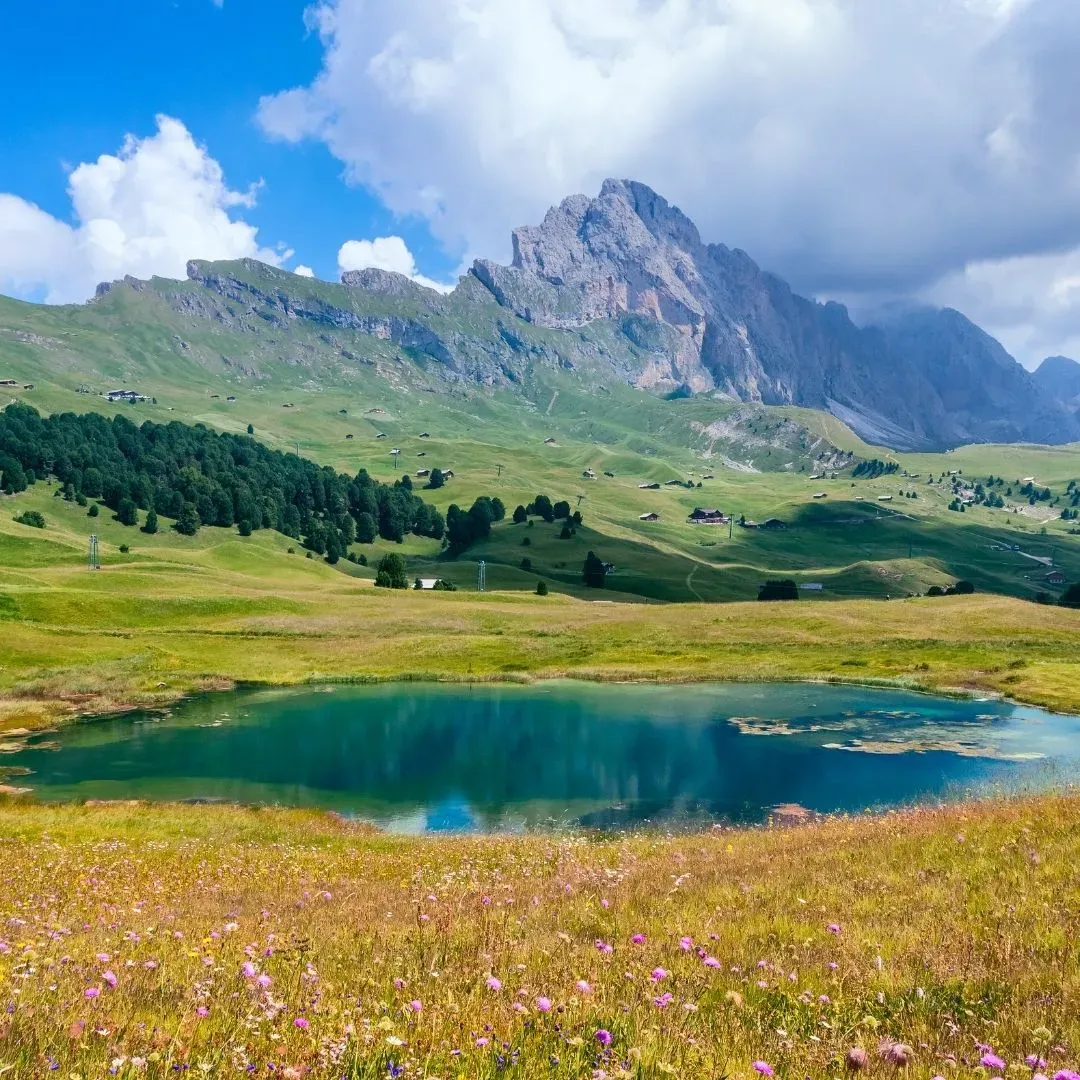
The Dolomites give you the single most photographed autumn effect in Europe: golden larch against pale limestone towers, usually with early snow on the summits. Larch is a deciduous conifer, which is why it turns at all, and it ripens through gold to amber to a distinct tangerine-orange between mid and late October. Alpe di Siusi is the largest high alpine meadow in Europe, and Val Gardena is one of the few valleys where cable cars and buses run through the whole of October.
The practical picture
Expect EUR 110 to EUR 250 per night in Ortisei or Selva in October. Verona, Venice, Innsbruck and Bolzano are all viable gateways, with Bolzano the shortest drive. A car is useful, but the Val Gardena bus network genuinely works, which is unusual in the range.
Access and permits
No permit. Alpe di Siusi restricts private vehicle access during daytime hours, so the cable car from Ortisei is the practical route. Many rifugi and some lifts close in late September, and Val Gardena is one of the reliable exceptions.
Connectivity reality
TIM, Vodafone Italia and WindTre cover the valley floors and the major lifts. The failure point is the high plateau, where cells are sparse and the terrain shadows them: Alpe di Siusi has usable signal near the lift stations and much less on the far side of the meadow, and the Tre Cime loop is patchy for most of its length. An Italy eSIM covers the driving and the valleys, but download the trail maps before you go up.
Watch out for
October weather in the Dolomites swings hard. Fresh snow can close the higher trails and the Tre Cime toll road with a day's notice, and the tourist infrastructure in many side valleys shuts between the summer and winter seasons. Confirm your specific lift and refuge are open for your dates rather than assuming the valley is.
Perthshire, Scotland
Why it works
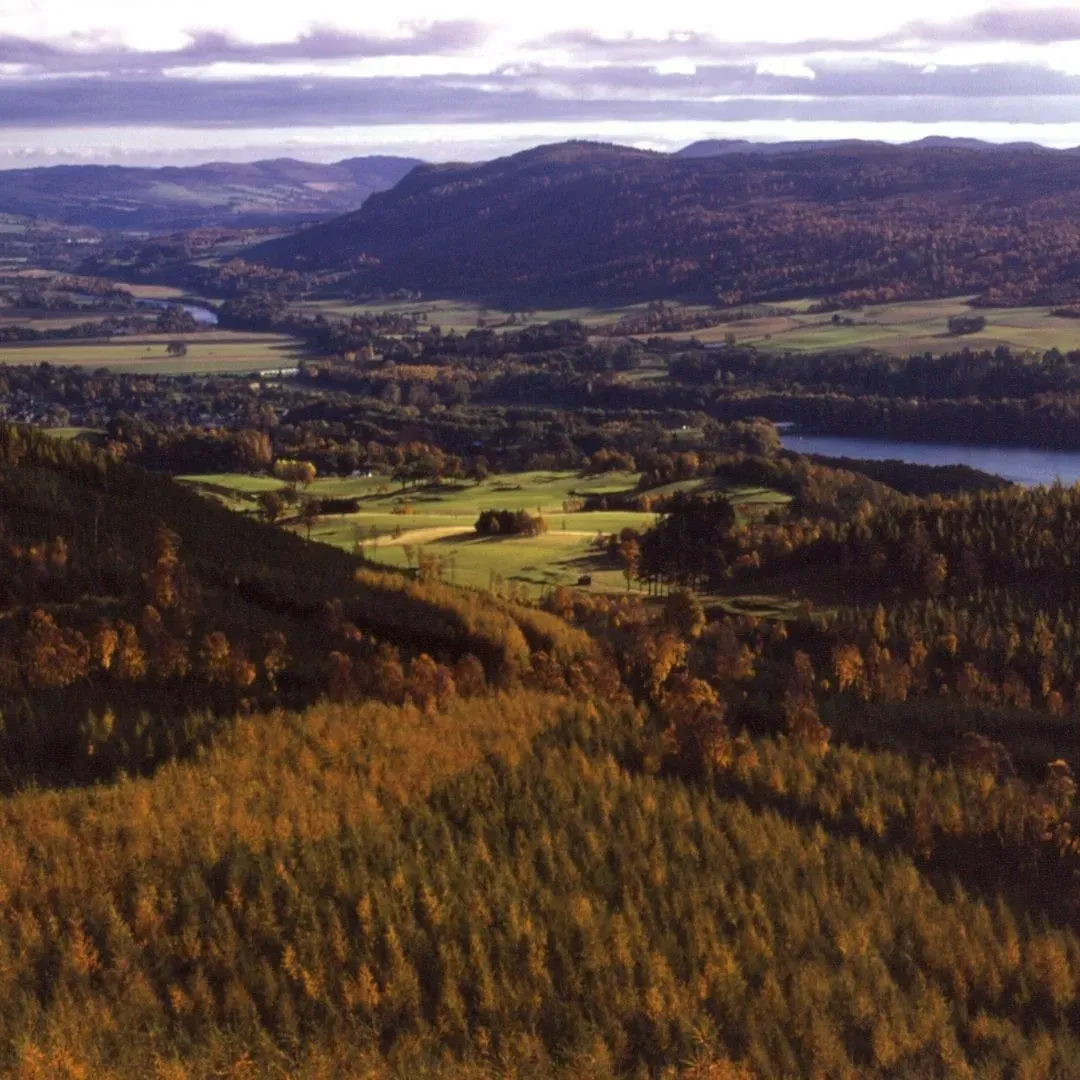
Perthshire markets itself as Big Tree Country and the claim survives scrutiny: the Fortingall Yew is one of the oldest living things in Europe, the Hermitage at Dunkeld holds Douglas firs over 60 metres tall, and the Birnam Oak is the last survivor of the wood Shakespeare wrote into Macbeth. The colour is birch, beech, oak and larch rather than maple, so the palette is gold and russet rather than scarlet. It is also the most accessible entry here: Dunkeld is under ninety minutes from Edinburgh by train.
The practical picture
Budget GBP 90 to GBP 180 per night in Dunkeld, Pitlochry or Aberfeldy in October. The rail line from Edinburgh and Glasgow to Pitlochry is direct, and the Loch Tummel and Loch Rannoch road gives you the region's best drive without a hire car being essential for the core sites.
Access and permits
No permit. Several woodland sites are managed by the National Trust for Scotland or Forestry and Land Scotland and charge for parking rather than entry. The Enchanted Forest sound and light event at Faskally runs through October and sells out weeks ahead.
Connectivity reality
The United Kingdom left the EU roaming area, and most major UK carriers reintroduced roaming charges for EU travel between 2022 and 2024, which cuts both ways: EU visitors to Scotland now pay international rates too. EE has the best rural Highland coverage, with Vodafone, O2 and Three weaker in the glens. The Loch Rannoch road and the upper Tay have long dead stretches. A UK eSIM removes the post-Brexit roaming question entirely for European visitors.
Watch out for
Perthshire in October is wet, and daylight is shortening fast: sunset in Dunkeld falls before 18:00 by the end of the month. Plan photography for the middle of the day rather than the golden hour, and accept that two of your five days will probably be washed out.
North America: The Maple Corridor and the Blue Ridge
The client brief for this piece is European and Asian, and North America earns its two entries anyway, because Vermont is the reference standard against which every other foliage destination on earth is measured, and because the Blue Ridge Parkway solves the timing problem better than anywhere else in this guide.
Vermont and the Green Mountains, United States
Why it works
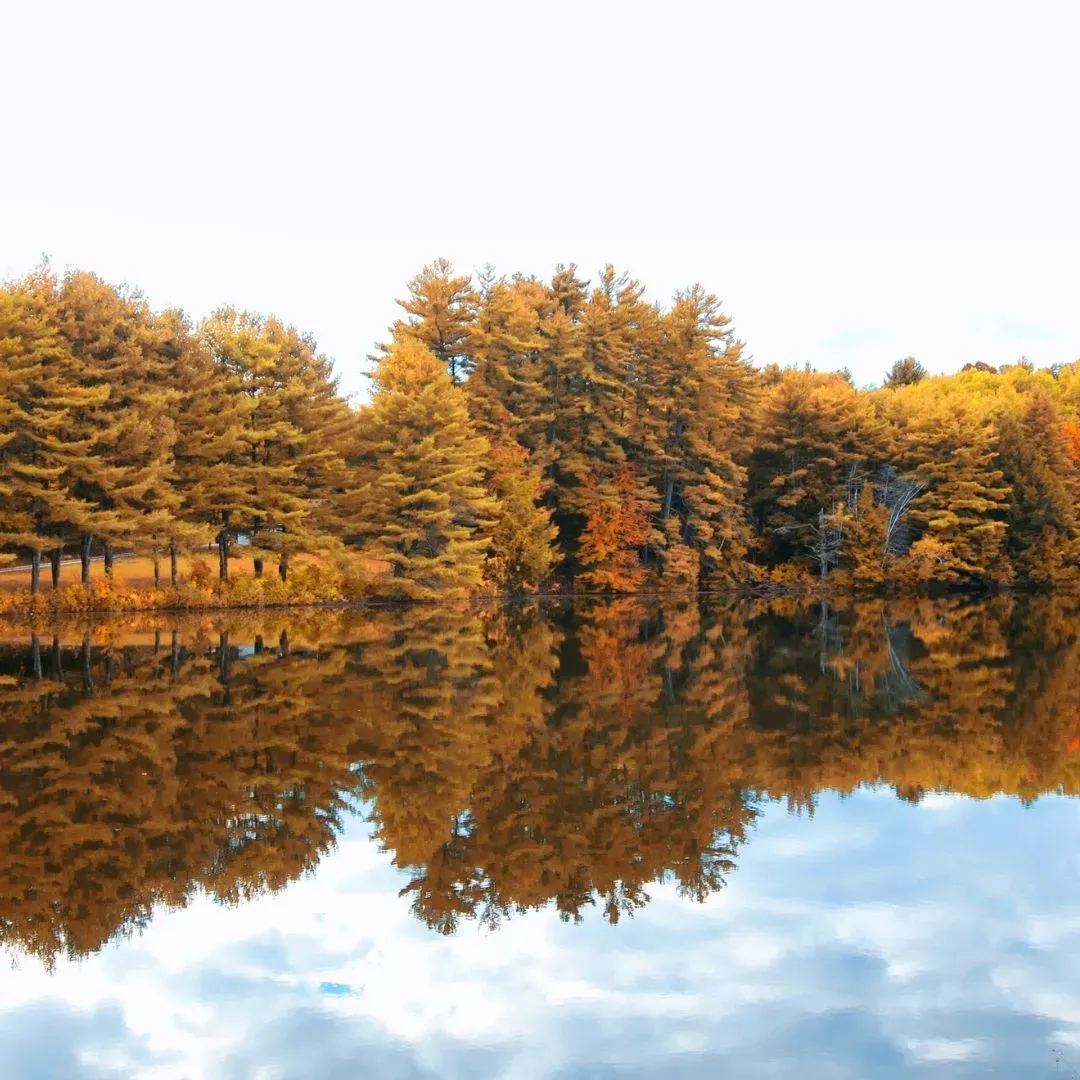
Vermont is roughly three-quarters forested, and the specific mix of sugar maple, birch and beech against dark spruce is what produces the scarlet-and-gold effect that people picture when they think of autumn. Route 100 runs the length of the state through the Green Mountains, and Smugglers' Notch on Route 108 threads the narrowest mountain pass in Vermont. The state's Department of Forests, Parks and Recreation publishes a foliage report through the season written by foresters rather than by a tourism office, which makes it more useful than most.
The practical picture
Expect USD 200 to USD 450 per night in Stowe or Woodstock during peak week, which is the most expensive stretch of the Vermont year. Burlington and Manchester, New Hampshire are the practical airports. Peak colour in 2026 is forecast around 9 October, arriving first in Essex County around 4 October and last in Addison County around 12 October.
Access and permits
No permit. Some state parks charge day-use fees, and the Stowe Gondola and Mount Mansfield Toll Road operate seasonally with weather closures.
Connectivity reality
Vermont has the thinnest rural mobile coverage of any destination in this guide, and that is not a small caveat. Verizon has the best statewide reach, AT&T is workable on the interstates and weak in the Northeast Kingdom, and T-Mobile is patchy outside the towns. Dead zones on Route 100 and in the Notch are routine. For non-American visitors the arithmetic is stark: an eSIM for the USA costs a few dollars against roughly USD 12 per day for a carrier travel pass.
Watch out for
Peak week overlaps with the Columbus Day weekend, the busiest and most expensive travel stretch of the New England autumn. Rooms in Stowe are booked out months ahead and rates roughly double. Travelling on the two weekdays either side of that weekend gets you the same trees for materially less money.
The Blue Ridge Parkway, United States
Why it works
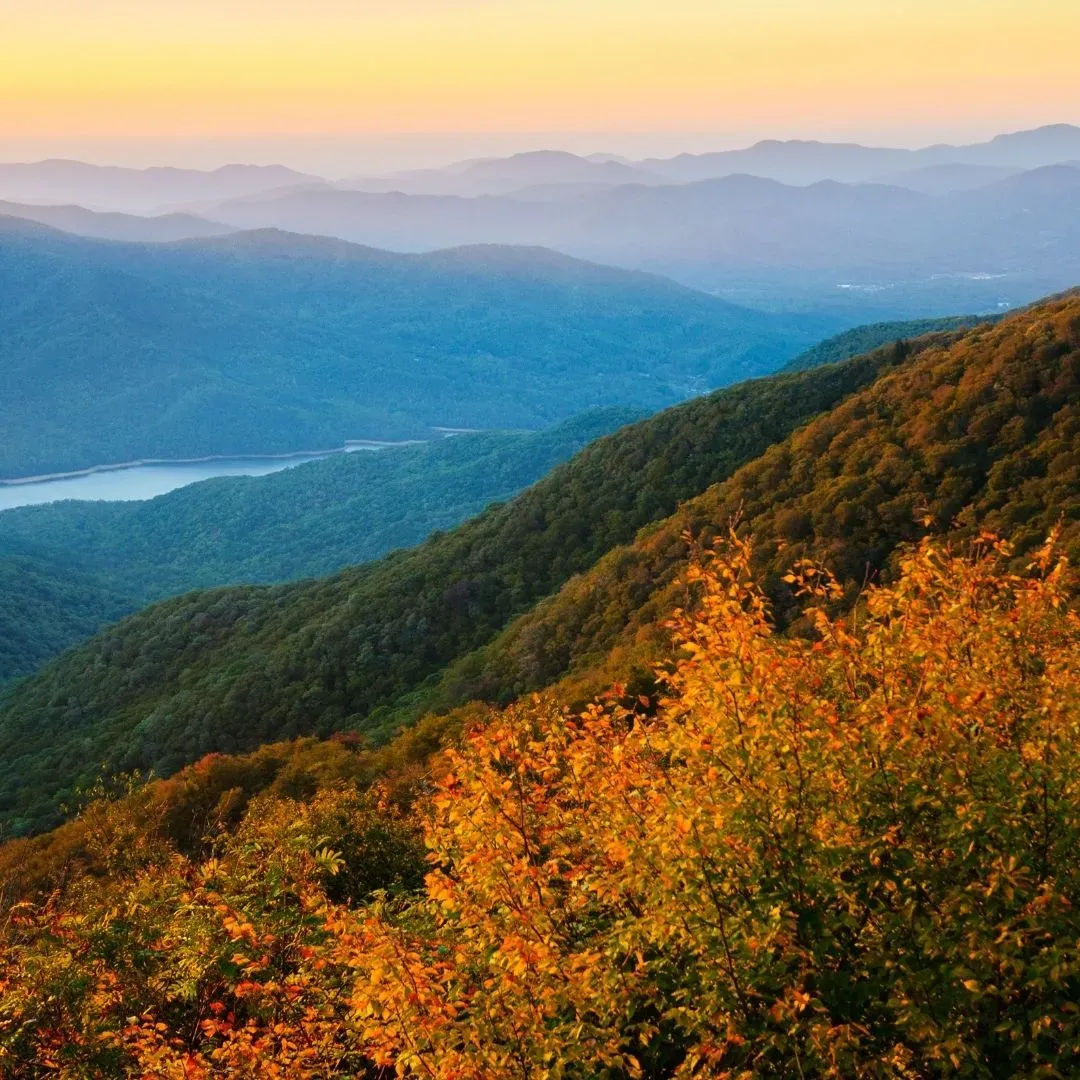
The Blue Ridge Parkway is a 469-mile road with no traffic lights and no commercial traffic, running along a ridge from Virginia to the Great Smoky Mountains. Its advantage over every other entry in this guide is elevation range. Colour begins above 6,000 feet in the first days of October and works down to the 2,000-foot foothills by early November, which turns a nine-day window into a five-week one. If your dates are fixed, you drive up or down the ridge until you find peak.
The practical picture
Budget USD 130 to USD 280 per night in Asheville, Boone or Roanoke in October. Asheville Regional and Roanoke are the closest airports, with Charlotte the cheaper long-haul option. Graveyard Fields and Rough Ridge turn earliest and most vividly; Asheville itself and the lower Parkway sections peak late October into early November.
Access and permits
No entrance fee for the Parkway itself. Sections close for weather, rockfall and maintenance without much notice, and the National Park Service publishes live closure maps.
Connectivity reality
The Parkway runs along a ridge, which sounds good for signal and is not: the road is deliberately routed away from development, and long stretches in Virginia and the Pisgah section have no usable coverage on any carrier. Verizon holds signal longest. Overlook parking areas near towns are the reliable places to reload a map. For international visitors, this is another place where a domestic-rate plan pays for itself in a day, and the month-by-month guide to travelling the USA is a useful companion for building the rest of the route.
Watch out for
The Parkway has no fuel stations along most of its length and cell coverage to match. Fill the tank whenever you drop into a town, and do not rely on finding help at an overlook. Section closures also mean the road is rarely drivable end to end in a single trip.
The October Trap: Why Most Autumn Foliage Trips Miss
Most failed foliage trips are not failures of destination choice. They are failures of resolution. The traveller picks a country and a month, both of which are correct, and then discovers on arrival that the correct answer was a valley and a nine-day window. Peak colour in any single location lasts roughly 7 to 10 days, and a warm autumn or one storm can move or end it.
The second failure is quieter and more expensive. Autumn colour happens on mountain roads, in gorges and above the tree line, which is precisely where mobile coverage thins and where a phone burns data fastest on continuous mapping. The traveller who solved the timing problem then spends the trip re-routing on a dying signal, or discovers the bill afterwards.
The five ways an autumn trip goes wrong
Each of these has an obvious test that people apply, and each obvious test misses the real problem. That is why they keep happening to careful travellers.
| What is happening | Why the obvious test misses it |
|---|---|
| Arriving a week before peak, with everything still green | The traveller checked the destination's "autumn season" (September to November) rather than the specific valley's peak week. The season is correct and useless. |
| Arriving a week after peak, with bare branches | Last year's peak date was used as this year's forecast. Warm summers have pushed peaks progressively later, and 2026 is running 3 to 5 days behind average in Japan. |
| Colour is present but dull and brownish | The traveller checked temperature but not the day and night pattern. Reds need bright days and cold nights together; a mild wet September produces muted colour on schedule. |
| Peak is correct, but the viewpoint is unusable | Crowd density, not colour, was the constraint. Peak week concentrates every visitor into the same six hours at the same four viewpoints. |
| Peak and crowds are both handled, but the day falls apart on the road | Coverage was assumed from the country's headline network statistics. National medians describe cities. The trip happens in gorges, on switchbacks and above the tree line. |
The fifth row is the one nobody plans for. Japan, South Korea and Slovenia all sit high in global network rankings, and every one of them has valleys in this guide where no carrier holds a usable connection. A national median is a statement about where people live, not about where autumn happens.
What the connectivity failure actually costs
The costs are not abstract, and they arrive in three forms: the roaming bill, the lost day, and the missed booking.
The roaming bill is the largest and the most avoidable. AT&T and Verizon publish a pay-per-use international data rate of USD 2.05 per megabyte in most European countries, which works out at approximately USD 2,099 per gigabyte. Verizon publishes USD 2.99 per megabyte for Japan. Daily travel passes are the intended alternative at roughly USD 12 per day on AT&T and Verizon and USD 15 on T-Mobile's international pass, which prices a fourteen-day trip at USD 168 to USD 210 before a single call.
United Kingdom travellers face a version of the same arithmetic in reverse. Most major UK carriers reintroduced EU roaming charges between 2022 and 2024, and rest-of-world day passes commonly sit around GBP 6 per day. Meanwhile EU and EEA residents pay nothing extra inside the bloc under Regulation (EU) 2022/612, which was extended through 2032, and that protection does not extend to Japan, Korea, Taiwan, Nepal, the United Kingdom or the United States.
| What is happening | Why the obvious test misses it |
|---|---|
| Arriving a week before peak, with everything still green | The traveller checked the destination's "autumn season" (September to November) rather than the specific valley's peak week. The season is correct and useless. |
| Arriving a week after peak, with bare branches | Last year's peak date was used as this year's forecast. Warm summers have pushed peaks progressively later, and 2026 is running 3 to 5 days behind average in Japan. |
| Colour is present but dull and brownish | The traveller checked temperature but not the day and night pattern. Reds need bright days and cold nights together; a mild wet September produces muted colour on schedule. |
| Peak is correct, but the viewpoint is unusable | Crowd density, not colour, was the constraint. Peak week concentrates every visitor into the same six hours at the same four viewpoints. |
| Peak and crowds are both handled, but the day falls apart on the road | Coverage was assumed from the country's headline network statistics. National medians describe cities. The trip happens in gorges, on switchbacks and above the tree line. |
The lost day is harder to price and easier to feel. A missed cable-car booking at Vogel or Kasprowy, a re-routed drive that costs two hours of light on the Transfagarasan, or a sold-out timed entry at Vintgar because the booking page would not load at the trailhead: none of these appear on a bill, and all of them cost a day of a trip that only had seven.
The layered fix, and the layer everyone skips
Serious travellers already run the first two layers of this and almost never run the third.
Layer one is the forecast. Check the national source rather than a blog: the Japan Meteorological Agency and the Japan Meteorological Corporation for koyo, the Korea Meteorological Administration and Korea Forest Service for Korean foliage, and Vermont's Department of Forests, Parks and Recreation for New England. These publish in September and update through the season.
Layer two is flexibility by geography. Choose a destination with vertical range or a road that spans elevations, so that being early or late is a driving decision rather than a ruined trip. This is why the Blue Ridge Parkway and Val Gardena are more forgiving than a single named viewpoint.
Layer three is connectivity, and it is the one that gets skipped because it feels like a detail rather than a dependency. It is not a detail. Every element of layers one and two is delivered through a phone: the updated forecast, the live park closure, the rerouted drive, the timed ticket, the shuttle timetable. A traveller with a dead connection in a gorge has lost the ability to act on everything they planned. Getting a local-rate data plan installed before departure costs less than one night's parking in Stowe and removes the entire category of failure.
How to Stay Connected Across a Multi-Country Autumn Route
An autumn foliage trip is unusually demanding on mobile data for three reasons: it happens outside cities, it runs on continuous navigation, and it generates far more photo and video upload than a city break. Planning the allowance properly takes about five minutes and removes the most common cause of a mid-trip top-up panic.
How much data an autumn trip actually uses
Start from activity, not from instinct. The figures below are working estimates for planning purposes rather than measured guarantees, and real consumption varies with settings, signal quality and app behaviour.
| Activity | Approximate data per hour | Notes for a foliage trip |
|---|---|---|
| Live turn-by-turn navigation | 5 to 15 MB | Rises sharply on poor signal as the app re-requests tiles |
| Map browsing and re-routing | 20 to 40 MB | The switchback problem: constant re-routing multiplies this |
| Social messaging with photos | 30 to 80 MB | Photo-heavy trips sit at the top of this range |
| Uploading photos to cloud backup | 500 MB to 2 GB | The single largest line item, and usually unintentional |
| Standard-definition video streaming | 500 MB to 700 MB | Evening use in a lodge, often on Wi-Fi instead |
| Video calling | 500 MB to 900 MB | A 30-minute call to home is roughly 250 to 450 MB |
The arithmetic for a typical fourteen-day autumn trip runs like this. Two hours of navigation per day at 10 MB is 280 MB across the trip. An hour of map browsing and re-routing per day at 30 MB is 420 MB. Messaging and light social use at 50 MB per day is 700 MB. Two video calls home at 400 MB each is 800 MB. That totals roughly 2.2 GB of deliberate use.
Then add the thing that breaks budgets: automatic photo backup. A fortnight of enthusiastic autumn photography can easily produce 8 to 15 GB of images, and if cloud sync is left on cellular, all of it uploads over your travel plan. Turn cloud backup to Wi-Fi only before you fly, and a 5 GB plan is comfortable. Leave it on, and 20 GB will not be enough.
Which tier to buy
| Tier | Allowance and validity | Who it suits |
|---|---|---|
| Entry | 3 to 5 GB over 15 days | One country, navigation and messaging, photo backup on hotel Wi-Fi only |
| Standard | 10 to 20 GB over 30 days | A two or three-country route, daily mapping, moderate social use, occasional video calls |
| Heavy | 25 to 50 GB over 30 to 90 days | Multi-country circuits, hotspot use, working while travelling, or uploading photos and video daily |
Most autumn travellers are Standard. The people who genuinely need Heavy are the ones tethering a laptop, running a camera backup to the cloud, or moving through four or more countries in a month.
The feature people forget to check
Hotspot capability is the one specification that decides whether a plan works for a real trip, and it is the one nobody checks before buying. Not every travel data plan permits tethering, and the ones that do not will simply fail silently when you try to share the connection.
It matters on this kind of trip more than most. Autumn travel is frequently a group activity in a hire car, where one phone runs navigation and the others need data. It matters in mountain lodges where the guest Wi-Fi is a single overloaded access point. It matters for anyone who needs to open a laptop to move a booking after a road closure. Confirm hotspot support on the plan's specification page before you buy, not after you land.
The second overlooked check is device compatibility for eSIMs and it is a two-part question: does the handset support eSIM at all, and is it carrier-unlocked? A locked phone can support the technology and still refuse the profile. Both questions are answered before departure or not at all.
Your pre-departure checklist
- Check your handset supports eSIM and is carrier-unlocked, using the settings menu rather than assuming from the model year.
- Check your route against the relevant national foliage forecast, published in September for Japan and Korea.
- Decide country, regional or global based on how many borders your route crosses, not on trip length.
- Confirm the plan supports hotspot use if anyone else in your party will need the connection.
- Buy and install the profile at home on Wi-Fi, several days before departure, so a failed installation is a support ticket rather than an emergency.
- Set cloud photo backup to Wi-Fi only, and download offline maps for every gorge, pass and national park on the route.
- On landing, switch the travel profile on and turn data roaming off on your home line so nothing leaks onto the expensive one.
- Save the top-up and usage pages to your phone's home screen so a mid-trip refill takes thirty seconds at a trailhead.
Frequently Asked Questions
When is peak autumn foliage in October 2026?
There is no single peak date, because peak colour is triggered by temperature rather than by the calendar. Across the destinations in this guide, the earliest reliable peaks fall in the first week of October at Kamikochi in Japan, in the Tatra Mountains and in northern Vermont. The latest fall in the first days of November at Plitvice, in the Douro Valley and on the lower Blue Ridge Parkway. Any single location holds peak for roughly 7 to 10 days.
Where can I see Japan autumn leaves in October 2026?
Nikko, the Oirase Gorge, Lake Towada, Kamikochi and the wider Tohoku region all carry peak colour inside October 2026. Nikko typically runs 10 to 28 October, the Oirase Gorge from mid-October into early November, and Kamikochi through the first three weeks of the month before the valley closes for winter on 15 November. Hokkaido peaks earlier, from mid-September at altitude. Kyoto, Osaka and Tokyo do not turn until late November at the earliest.
Is Kyoto worth visiting for autumn leaves in October?
Kyoto is worth visiting in October, but not for autumn leaves. The city's maples are forecast to peak between 20 November and 7 December 2026, and a warm season could push the best days into early December. In October the trees are still green. If your dates are fixed to October and Japan is the destination, redirect to Nikko, the Japanese Alps or Tohoku, all of which are genuinely at peak, and save Kyoto for a November trip.
What is the best place in Europe for autumn colour in October?
For reliability, the Dolomites and Lake Bled are the strongest choices, both peaking between roughly 8 and 28 October with larch and beech turning together against alpine backdrops. For value, Transylvania and the Polish Tatras deliver comparable colour at roughly half the accommodation cost. For accessibility without a car, Perthshire in Scotland is reachable from Edinburgh in under ninety minutes by rail and holds colour from mid-October into early November.
When does Seoraksan peak in 2026?
Seoraksan National Park typically reaches peak colour between 15 and 31 October, with the upper slopes turning from late September and the valleys following two to three weeks later. As of late August 2026 the Korea Meteorological Administration and Korea Forest Service had not yet published the official 2026 foliage forecast, which is normally released in September. Treat the third and fourth weeks of October as a provisional booking window and confirm against the official forecast once it appears.
Is October a good month for European shoulder season travel?
October is one of the strongest months for European shoulder season travel. Summer crowds have cleared, mountain transport is still running, and accommodation in most of the continent is materially cheaper than in July or August. The exception is the small number of towns that sell autumn colour directly, such as Hallstatt and the Val Gardena resorts, where foliage season functions as a second peak. Cities used as gateways soften only slightly, driven by conference calendars rather than tourism.
How long does peak foliage actually last in one place?
Roughly 7 to 10 days in a single location, occasionally longer in a cool, dry, still autumn. A storm at peak can strip a valley in a day, and a hard early frost can end the season abruptly. Across a whole region the peak spans two weeks to more than a month, because elevation staggers it: colour descends a mountainside at approximately a day and a half per 100 metres of drop.
Why is autumn foliage running late in 2026?
Successive warm summers have pushed the foliage front progressively later, and 2026 continues the pattern. The Japan Meteorological Agency forecast above-normal temperatures nationwide through August 2026, and peak colour across the Kanto and Kansai regions is expected three to five days later than the historical average. Korean researchers at Seoul National University and the Korea National Arboretum have documented the same delay. The planning response is to add a two-day buffer on the late side of your window.
What actually makes leaves change colour?
Leaves turn when night-time minimum temperatures fall below roughly 8C for about five consecutive nights. Chlorophyll then breaks down faster than the tree can replace it, revealing the yellow and orange carotenoids already present in the leaf, while anthocyanins produced in bright daylight create the reds. This is why bright days combined with cold nights produce the most intense colour, and why a mild, overcast September yields a dull season even when the timing is right.
Is Vermont or New Hampshire better for autumn foliage?
Vermont has the higher concentration of sugar maple, which produces the scarlet tones most people associate with New England, and it peaks marginally earlier, with 2026 forecast around 9 October. New Hampshire's White Mountains offer more dramatic elevation and the Kancamagus Highway. In practice they peak within days of each other and are two hours apart, so the better strategy is to base yourself between them and drive to wherever the colour has arrived.
When does the Blue Ridge Parkway peak?
The Blue Ridge Parkway does not have a single peak; it has a rolling five-week window governed by elevation. Colour appears above 6,000 feet in the first days of October at spots such as Graveyard Fields and Rough Ridge, reaches the 4,000 to 5,000 foot sections in mid-October, and works down to the 2,000 to 3,000 foot foothills around Asheville and Roanoke by late October into early November. That range makes it the most forgiving destination in this guide for fixed dates.
Do I need a hire car for a foliage trip?
It depends on the destination rather than the region. Nikko, Seoraksan, Perthshire, Plitvice and Val Gardena all work on public transport, and in Nikko and Hallstatt the train and bus are genuinely faster than driving at peak. Transylvania, the Douro Valley, Vermont and the Blue Ridge Parkway are effectively car destinations. Where a car is needed, mountain navigation is the reason a reliable data plan matters more than usual.
How much does an autumn trip cost in October 2026?
Nightly accommodation across these destinations ranges from roughly EUR 40 in rural Romania to USD 450 in Stowe during peak week. Romania and Poland are the cheapest entries, Slovenia, Croatia and Czechia sit in the middle, and Vermont, the Dolomites and Kyoto's late-November window are the most expensive. Budget separately for mountain transport, which is often ticketed per leg, and for timed park entry at Plitvice, Vintgar and the Tatra trailheads.
Do I need a visa for these destinations?
Requirements depend entirely on your nationality, so check the destination government's own immigration portal rather than a travel blog. Several of these countries also require an online pre-travel authorisation that is not a visa but is mandatory, and the European Union's own entry systems for non-EU nationals have been changing. Confirm the current position for your passport at least six weeks before departure, because processing times lengthen sharply in autumn.
What is an eSIM and how does it work?
An eSIM, or embedded SIM, is a digital SIM profile built into the phone under the GSMA specification rather than a plastic card you insert. You buy a plan online, receive a QR code by email, scan it to install the profile, and switch it on when you land. Most modern phones can hold several profiles at once, so your home number stays active for calls and messages while the travel profile carries the data. Nothing physical is posted or swapped.
How much data do I need for a two-week foliage trip?
Around 10 GB covers a typical fourteen-day trip with daily navigation, messaging, moderate social use and a couple of video calls home, provided cloud photo backup is set to Wi-Fi only. If backup runs over cellular, a fortnight of autumn photography can add 8 to 15 GB on its own. Travellers tethering a laptop, uploading video, or crossing four or more countries should plan for 20 GB or more.
Will my phone work in the mountains?
Partly, and the gaps are predictable. Towns, main roads and cable-car stations are generally well covered across every destination here. Gorges, forest switchbacks and high plateaux are not: the Oirase Gorge, the Irohazaka bends, the Kamenice gorge in Czechia, the Loch Rannoch road in Scotland and long sections of the Blue Ridge Parkway all have stretches where no carrier holds a usable connection. Download offline maps for every one of them before you set out.
Is roaming or a travel eSIM cheaper for fall foliage trips?
A travel eSIM is substantially cheaper outside the EU. AT&T and Verizon publish pay-per-use international data at USD 2.05 per megabyte, approximately USD 2,099 per gigabyte, and their daily travel passes run around USD 12 per day, which prices a fortnight at USD 168 or more. A regional travel plan covering the same fortnight typically costs USD 15 to USD 40. Inside the EU and EEA, residents roam at no extra charge under Regulation (EU) 2022/612.
Can one eSIM cover several countries?
Yes, if you buy a regional or global plan rather than a country plan. A regional plan holds one profile that works across every country in its coverage list, so crossing from Austria into Slovenia into Croatia requires no reinstallation and no settings change. Country plans are cheaper per gigabyte but stop at the border. Global plans span continents and suit itineraries that combine, for example, Japan and central Europe in a single trip.
What should I pack for autumn mountain travel in October?
Waterproof boots with real grip, because wet leaves on boardwalks and gorge paths are the most common cause of injury on these trips. Layers rather than a single heavy coat, since valley and summit temperatures can differ by 10C. A power bank, because continuous navigation and cold weather drain batteries roughly twice as fast as normal use. A head torch, since sunset arrives before 18:00 in Scotland and northern Japan by late October.
Book the Window, Not the Month
The thing that ruins an autumn trip is almost never the destination. Every place in this guide is worth the flight. What ruins it is resolution: a month chosen instead of a week, last year's peak date used as this year's forecast, and a phone that stops working on the one road where the re-route mattered. Colour is a nine-day event happening in a gorge, and both halves of that sentence need planning.
MobiMatter is a marketplace rather than a single carrier. It aggregates more than 500 prepaid data packages from 25 to 30 suppliers across 200 or more destinations, so you compare price, allowance, validity and network side by side on one page instead of guessing between five brand sites and hoping the coverage list is honest.
| Your trip | What to buy | Where |
|---|---|---|
| One country, 30 days | 20 to 30 GB country plan | The relevant country page, linked throughout this guide |
| Multi-country, 30 to 90 days | 25 to 50 GB regional plan | Europe regional plans or Asia-Pacific regional plans |
| Unpredictable route | Global plan, 25 GB over 90 days | Global plans on the marketplace |
- Instant delivery: the QR code arrives by email, you install the profile before you fly, and you activate it on landing.
- Compare across suppliers on price, allowance, validity and underlying network in one place, rather than one brand at a time.
- Top up mid-trip without reinstalling anything, which takes about thirty seconds at a trailhead.
- Check compatibility and get answers before you travel through the MobiMatter Help Desk and the country eSIM guides.
Pick your plan on the travel eSIM marketplace and match it to your route on the destinations page before you book the flight. Get the window right, get the data sorted, and the rest of an autumn trip mostly takes care of itself.
- Autumn Travel Guide
- Blog
- USA
- europe
About the author
Travel & eSIM writer, MobiMatter
Writes MobiMatter's eSIM and destination guides since 2024, for travellers who want data from the moment they land. Before that, SEO consulting and nearly ten years in analytics at IBM.