Asian Games 2026 Nagoya: Travel Guide & Venue Tips
By Abhishek Aggarwal (Travel & eSIM writer, MobiMatter)
· · 17 min read
The 20th Asian Games (Aichi-Nagoya 2026) runs September 19 to October 4, 2026, with select events starting as early as September 10, across roughly 53 venues in Aichi Prefecture and Nagoya, Japan. Expect 43 sports, 469 gold medals, and athletes from 46 nations. The fastest way in is the Tokaido Shinkansen: about 94 minutes from Tokyo and 47 minutes from Shin-Osaka on the Nozomi service. Between sessions, Nagoya Castle, the Sakae shopping district, and the city's food scene fill the gaps easily. For connectivity at packed stadiums and on bullet trains, a Japan Local eSIM from MobiMatter running on SoftBank and KDDI networks keeps maps, tickets, and uploads working without hunting for airport SIM counters.
Quick Stats: Asian Games 2026 at a Glance
| Detail | Figure |
|---|---|
| Official dates | September 19 to October 4, 2026 |
| Early competition days | From September 10, 2026 (per official schedule v5) |
| Host region | Aichi Prefecture and Nagoya, Japan |
| Sports | 43 sports, 70 disciplines |
| Gold medal events | 469 |
| Competing nations | 46 (expected) |
| Venues | 53 to 54 competition venues |
| Main venue | Paloma Mizuho Stadium (Nagoya City Mizuho Park Athletic Stadium) |
| Last time Japan hosted | Hiroshima, 1994 (32 years ago) |
| Tokyo to Nagoya (Nozomi Shinkansen) | About 94 minutes, roughly JPY 11,300 |
| Osaka to Nagoya (Nozomi Shinkansen) | About 47 to 50 minutes, roughly JPY 6,680 to 6,880 |
This is the first Asian Games hosted in Japan since Hiroshima in 1994, and the first time the Asian Para Games (October 18 to 24, 2026) have been held in the country at all. If you are planning a trip around either event, the logistics below cover getting in, getting around, and staying connected for the full three weeks.
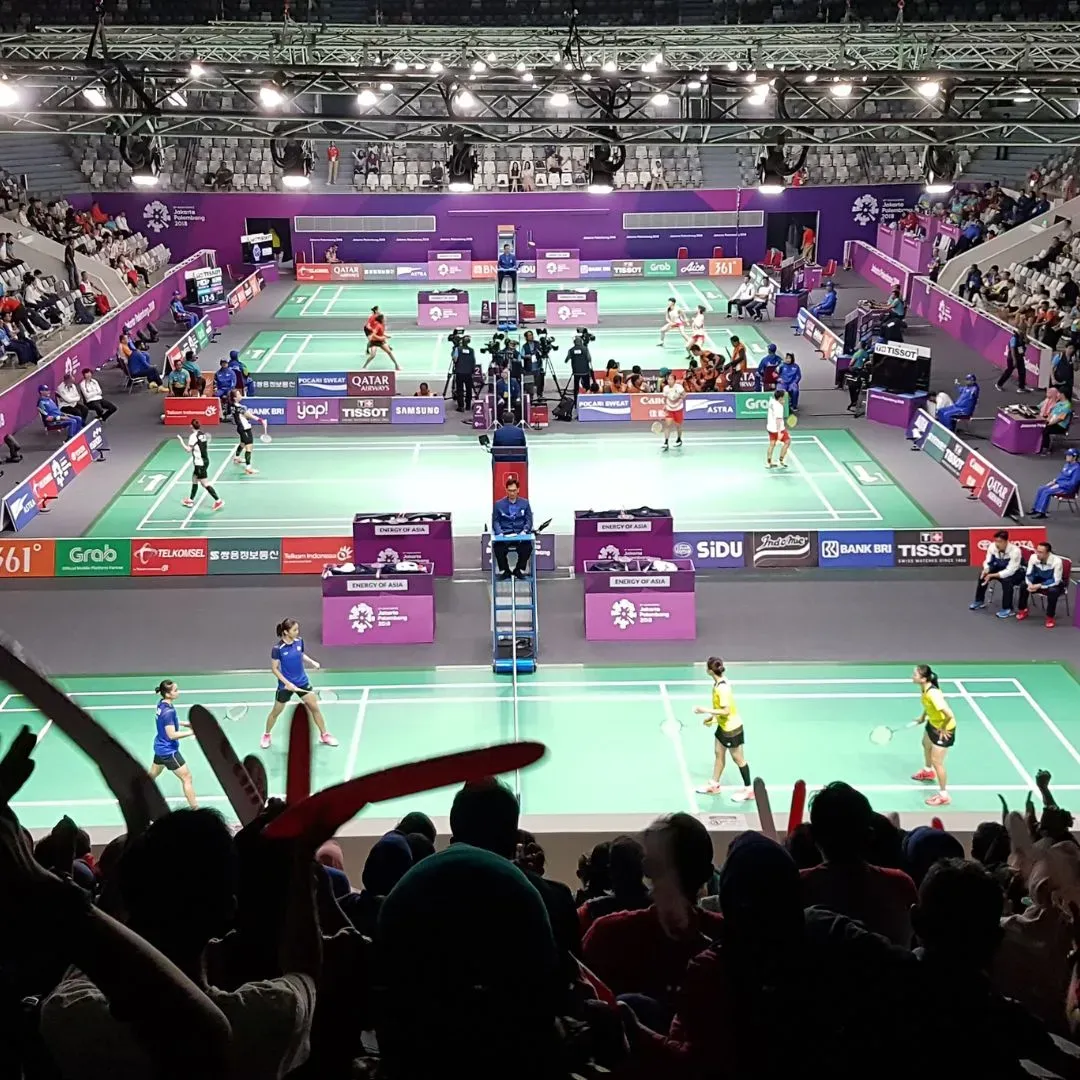
I. Introduction: What to Expect at the 20th Asian Games
The 20th Asian Games Aichi-Nagoya 2026 takes place from September 19 to October 4, 2026, spread across Aichi Prefecture with Nagoya as the central hub. It is the world's second largest multi-sport event after the Summer Olympics, run every four years by the Olympic Council of Asia. The opening ceremony is set for 18:00 Japan time on September 19 at Paloma Mizuho Stadium, with select competitions such as volleyball and softball beginning earlier, from around September 10 to 16.
The Games carry the motto "Imagine One Asia" and will feature 43 sports across 70 disciplines, competing for 469 gold medals. Athletes from an expected 46 nations will compete at venues spread across Nagoya and surrounding Aichi cities including Toyota, Okazaki, Ichinomiya, and Anjo. Because the competition footprint covers an entire prefecture rather than a single city, understanding which venue cluster you are visiting matters more than it would for a single-stadium event.
Two sports worth noting for first-time visitors: jiu-jitsu, rooted in Japanese martial tradition, and wushu, tracing back to Chinese martial arts, both feature at these Games as part of the broader 43-sport program.
Public tickets for overseas buyers are sold first-come, first-served through the official Aichi-Nagoya 2026 website until each session sells out, so locking in seats for marquee events early is worth doing before booking transport and hotels around them.
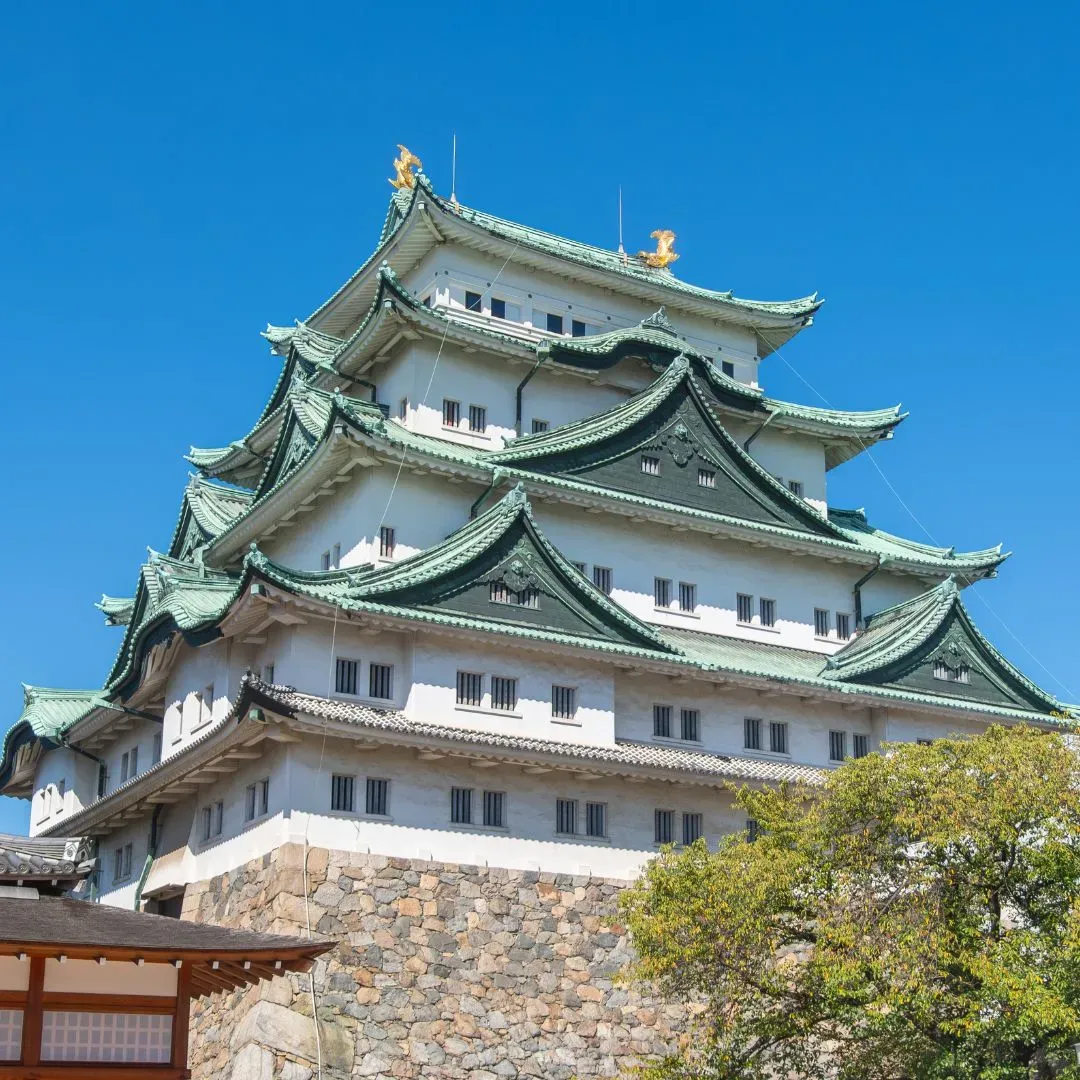
II. Venue & Transit Guide: Getting to Aichi and Nagoya
Nagoya sits on the Tokaido Shinkansen line, Japan's busiest bullet train corridor, which makes it one of the easiest Asian Games host cities to reach. From Tokyo, the Nozomi service covers the roughly 366 km trip in about 94 minutes for around JPY 11,300 reserved. From Osaka (Shin-Osaka Station), it is even quicker at 47 to 50 minutes for about JPY 6,680 to 6,880. Trains run every few minutes during the day, so same-day changes to your schedule are realistic if a session runs long or a ticket opens up.
From Tokyo to Nagoya
| Train | Travel time | Reserved fare (approx.) | Notes |
|---|---|---|---|
| Nozomi | ~94 minutes | JPY 11,300 | Fastest, stops only at Shin-Yokohama; JR Pass holders need a supplement |
| Hikari | ~110 minutes | Similar to Nozomi | Covered by the Japan Rail Pass |
| Kodama | ~170 minutes | Cheapest reserved fare | Stops at every station, covered by the Japan Rail Pass |
If you are flying into Haneda or Narita, the simplest route is straight to Tokyo Station and onto the Tokaido Shinkansen rather than sightseeing in the capital first. Flying between Tokyo and Nagoya is rarely worth it once airport transfers and security are factored in.
From Osaka to Nagoya
| Train | Travel time | Reserved fare (approx.) |
|---|---|---|
| Nozomi | ~47 to 50 minutes | JPY 6,680 to 6,880 |
| Hikari / Kodama | ~55 to 70 minutes | JPY 6,670, JR Pass eligible |
Travelers basing themselves in Kyoto or Osaka for a broader Japan trip can treat Nagoya as a comfortable day trip or a short overnight stop, since the ride is shorter than most subway commutes in Tokyo.
Getting Around Aichi Prefecture
Because venues are spread across Nagoya, Toyota City, Okazaki, Ichinomiya, and Anjo, plan transit by venue cluster rather than assuming everything is walkable from Nagoya Station:
- Nagoya venues (Paloma Mizuho Stadium, IG Arena, Nippon Gaishi Hall, Rainbow Pool): connected by the Nagoya subway network and the Aonami Line.
- Toyota Stadium (football) and the Aichi Prefectural General Shooting Gallery: reachable via Meitetsu Railway lines from central Nagoya, roughly 30 to 45 minutes.
- Okazaki and Ichinomiya venues (archery, badminton): best accessed by connecting through Nagoya Station via JR or Meitetsu regional lines.
A general rule for the Games period: book accommodation near the venue cluster with the most sessions on your itinerary, then treat any other city as a single planned trip rather than crossing the prefecture between tightly timed events. Make sure your data eSIM connection is sorted to access maps, transportation easily.
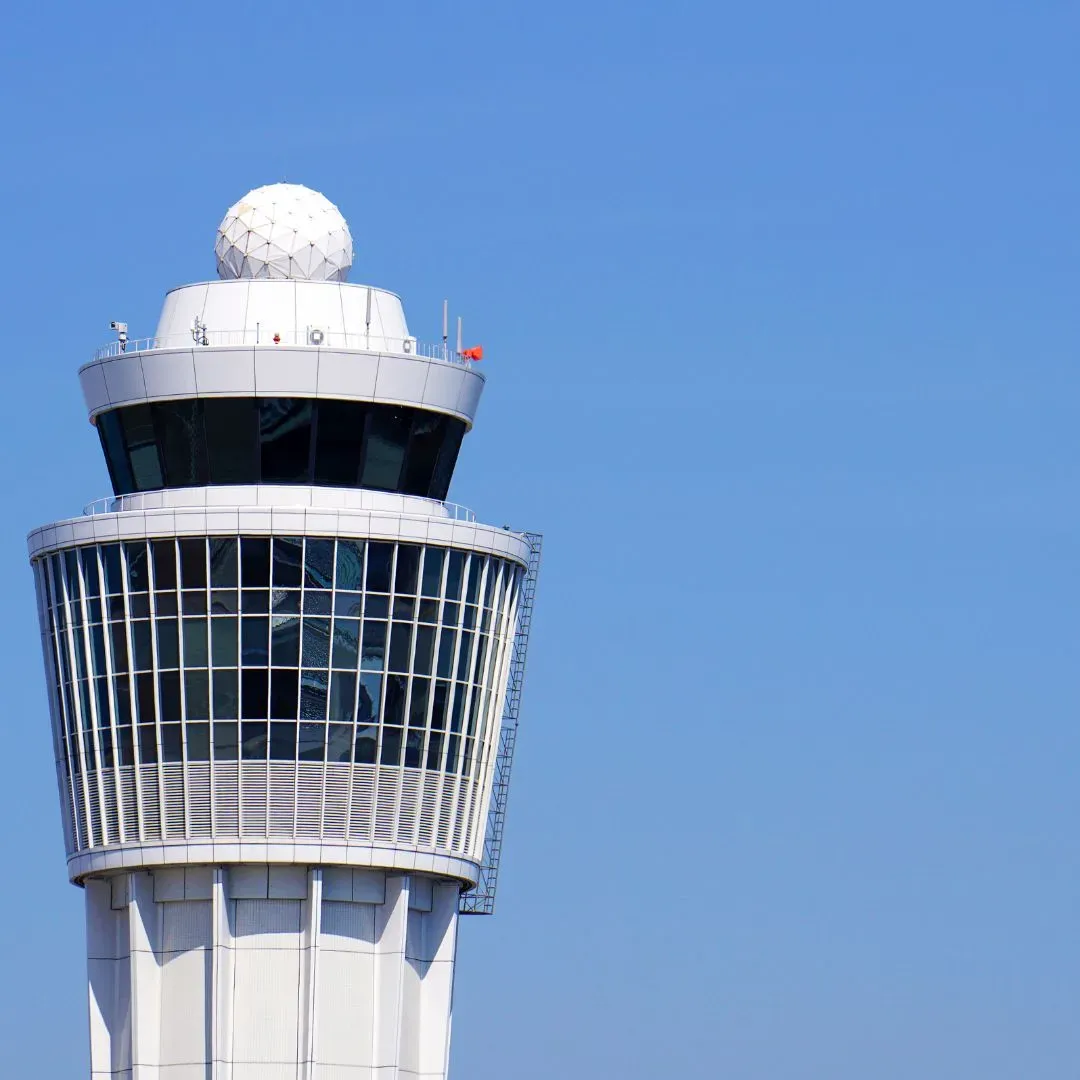
Flying Directly into Nagoya: Chubu Centrair Airport
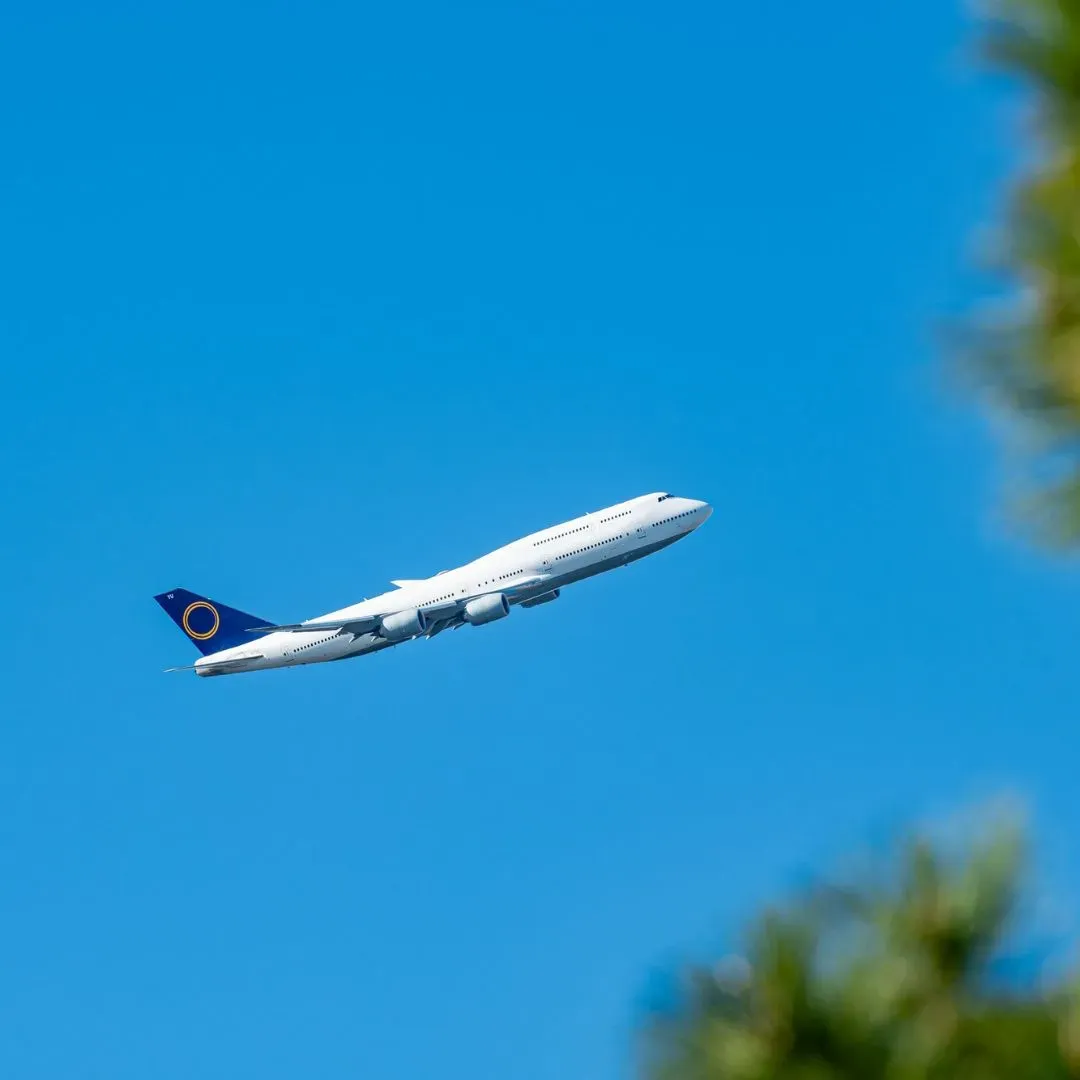
If Nagoya and Aichi are your only stops in Japan, flying directly into Chubu Centrair International Airport (NGO) often beats routing through Tokyo or Osaka first. Centrair sits on an artificial island in Ise Bay and connects to Nagoya Station in about 28 to 35 minutes on the Meitetsu Limited Express, making it one of the more convenient airport-to-city links in Japan. Centrair has direct international connections from several major Asian hubs, including Seoul, Taipei, Bangkok, and Shanghai, along with a smaller number of long-haul routes. For travelers coming from within Asia specifically to attend the Games, checking Centrair routes before defaulting to Narita or Haneda can save a domestic connection entirely. If your only option is a Tokyo or Osaka arrival, the Shinkansen routes above remain the fastest onward connection.
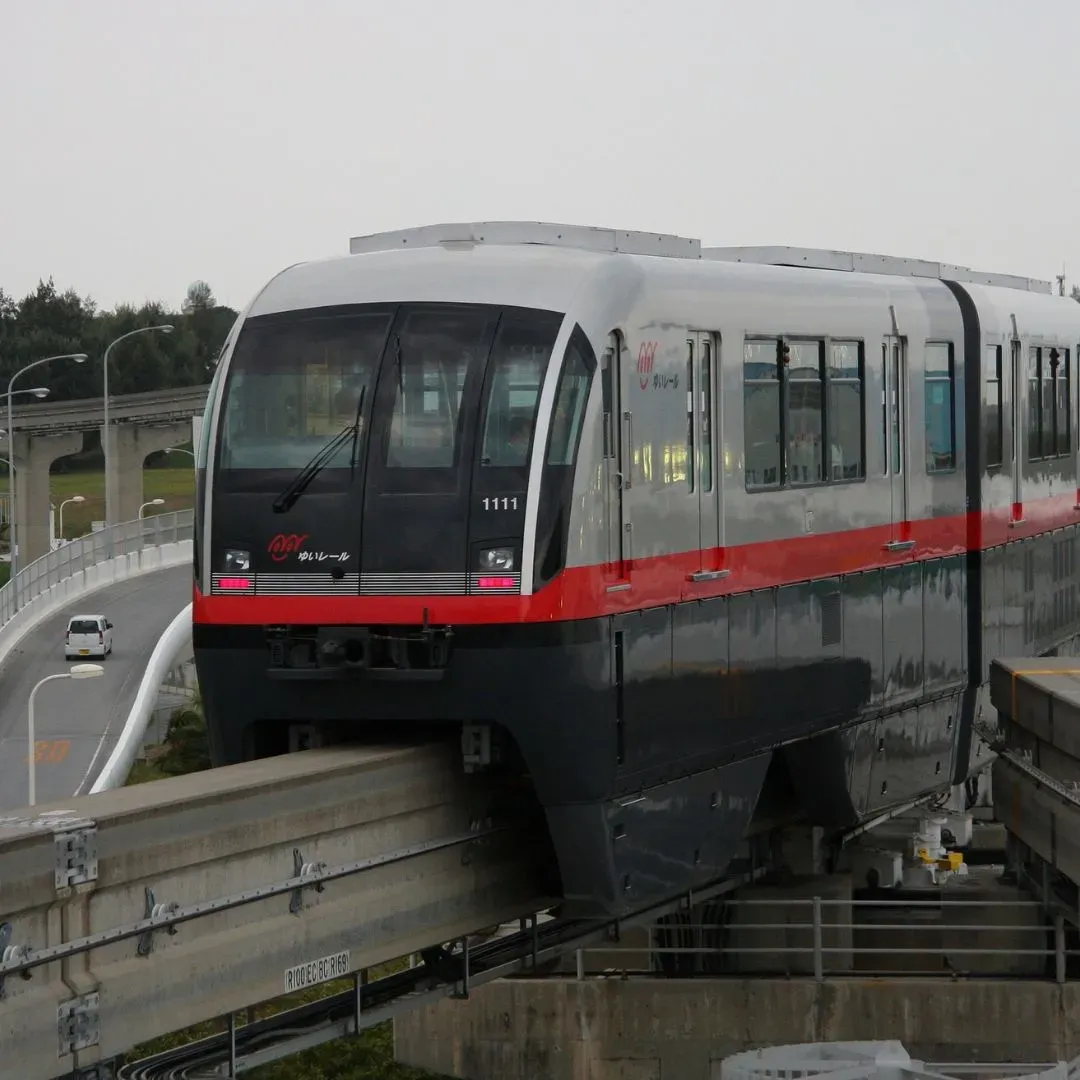
Do I Need a Japan Rail Pass?
For a trip focused mainly on Nagoya and Aichi, a Japan Rail Pass is often not worth it. The pass pays off on multi-city itineraries covering Tokyo, Kyoto, Osaka, and Hiroshima, but a single point-to-point Nozomi ticket from Tokyo or Osaka is usually cheaper than a multi-day pass if Nagoya is your only major stop. If your trip extends into a wider loop through Tokyo, Kyoto, and Osaka around the Games, run the numbers on a 7 or 14-day pass before booking individual tickets, since the Hikari and Kodama services (both pass-eligible) still get you to Nagoya in under two hours from either city.
Ticket Buying Tips for Overseas Visitors
Public tickets for overseas buyers are sold first-come, first-served through the official Games website, with tickets released and sold per session rather than in one central batch, so there is no fixed on-sale date that guarantees better availability the closer you wait to the event. That structure rewards early, organized buyers and quietly punishes anyone assuming they can sort tickets out a few weeks out, since popular sessions can sell through their entire allocation well before then. A few practical habits make a real difference:
- Buy priority sessions first. Opening and closing ceremonies, and marquee finals, tend to sell out earliest.
- Record venue, city, and session time separately. With 53 venues spread across five or more Aichi cities, it is easy to assume two events share a location when they do not.
- Recheck details before departure. Session times, venue assignments, and ticket formats have changed during the run-up to past Games as schedules are finalized, so confirm again a few days before you fly.
- Use official spectator transport guidance for event days, rather than assuming normal train and bus schedules apply, since shuttle services and temporary station exits are common at major multi-sport events.
Weather and What to Pack
Late September into early October in Aichi is early autumn: daytime temperatures typically sit in the low-to-mid 20s Celsius (mid-70s Fahrenheit), dropping into the mid-teens Celsius in the evening, with a real chance of rain from the tail end of typhoon season. Pack layers, a compact rain jacket, and comfortable shoes for a mix of stadium seating and long transit days. Humidity can still be noticeable in the first half of the window, easing as the Games move into October.
III. Top Things to Do in Nagoya Between Events
With 16 days of competition spread across morning and evening sessions, most visitors will end up with gaps of several hours, and in some cases a full rest day, without a scheduled event to build the day around. Rather than defaulting to a long day trip that eats into that time, three options within Nagoya itself cover most of it comfortably. Nagoya Castle anchors the historical side of the city, with grounds large enough for a relaxed few hours even for visitors who aren't especially drawn to castles as a category. The Sakae district covers the opposite end of the spectrum, a dense shopping and entertainment area built for an afternoon or evening when the goal is simply to unwind rather than sightsee with any real structure.
Food fills the remaining gaps just as naturally. Nagoya's local specialties, centered on hitsumabushi (grilled eel served over rice, traditionally eaten in three different ways across one meal) and miso katsu, give visitors a reason to seek out a specific restaurant rather than eat wherever happens to be closest to the venue. Together, these three options, castle, city center, and food, cover the bulk of the in-between time without requiring visitors to leave Nagoya or plan around a long transit connection on a day that's supposed to be a break.
Nagoya Castle
Nagoya Castle
Nagoya Castle is one of Japan's most historically significant castles, originally completed in 1612 as a stronghold for the Tokugawa shogunate and later rebuilt after being destroyed during World War II, a rebuilding effort that itself reflects how central the castle remains to the city's identity. The main keep still anchors the skyline much as it did centuries ago, while the more recently restored Honmaru Palace sits alongside it, rebuilt using traditional joinery techniques rather than modern shortcuts, down to the wood joints and construction methods used in the original structure. Both the keep and the palace are open to visitors, and together they give a fuller picture of the site than either building offers alone, one showing the castle's defensive scale, the other its ceremonial and residential side.
Getting there requires no special planning, which makes it an easy fit for a half-day gap between event sessions. The castle sits a short subway ride from Nagoya Station on the Meijo Line, with Shiyakusho Station putting visitors within a few minutes' walk of the main gate.
Sakae Shopping and Entertainment District
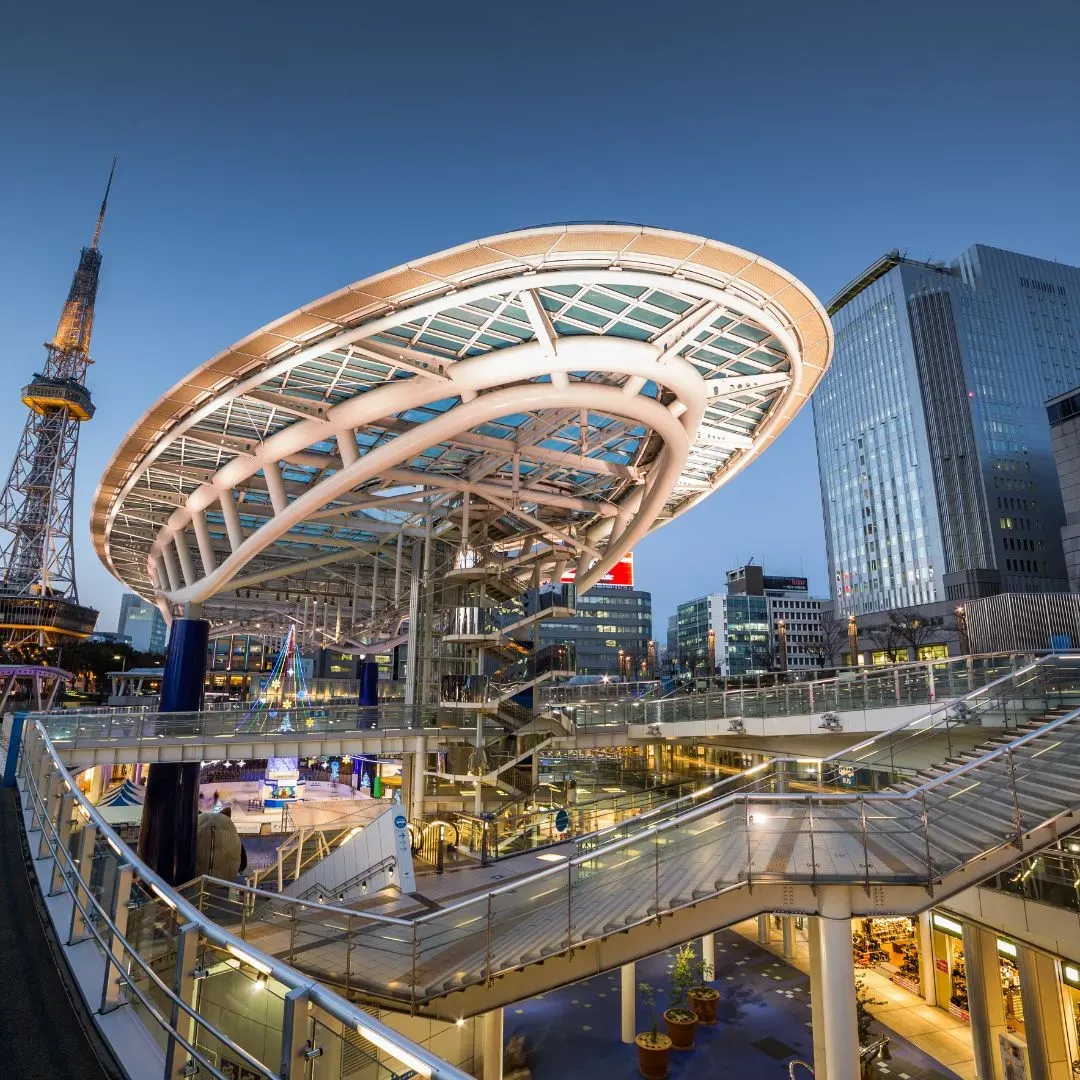
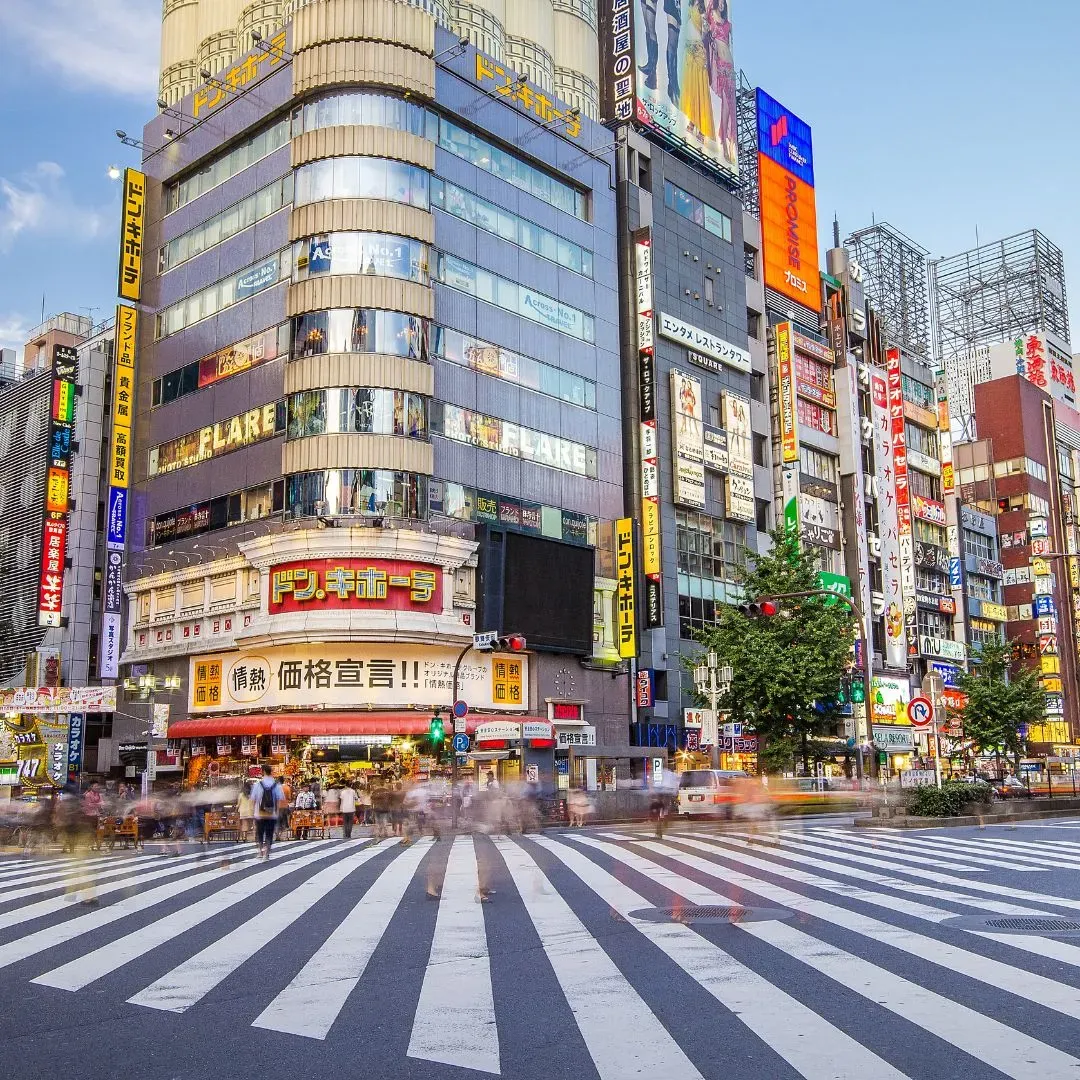
Sakae is Nagoya's answer to Shinjuku or Namba, a dense, walkable core of department stores, restaurants, and nightlife built for exactly the kind of unstructured evening a multi-day event schedule tends to leave open. The Nagoya TV Tower rises above the district as a easy landmark to navigate by, while Oasis 21, a glass-roofed public plaza that doubles as a bus terminal, gives the area a distinct architectural centerpiece rather than just another shopping street. Around both, restaurants and izakayas cluster closely enough that choosing where to eat becomes a matter of walking a block or two rather than committing to a single destination in advance.
What makes Sakae particularly practical for a trip built around event sessions is how little planning it demands. There's no need to research a specific restaurant or attraction ahead of time, since the district is dense enough that wandering for twenty minutes typically turns up several reasonable options. It also sits directly on the Higashiyama subway line, connecting back to Nagoya Station in under 10 minutes, which makes it realistic to head there straight after an evening session without losing much of the night to transit.
Local Food Spots
- Hitsumabushi: grilled eel over rice, traditionally served three ways in one meal, a Nagoya specialty best tried at long-running specialist restaurants near Atsuta Shrine or in the Osu district.
- Miso katsu: breaded pork cutlet with a rich red miso sauce, found at casual counters throughout Sakae and Nagoya Station's underground dining floors.
- Tebasaki: Nagoya-style fried chicken wings, a common izakaya order and a good pairing with a post-event beer.
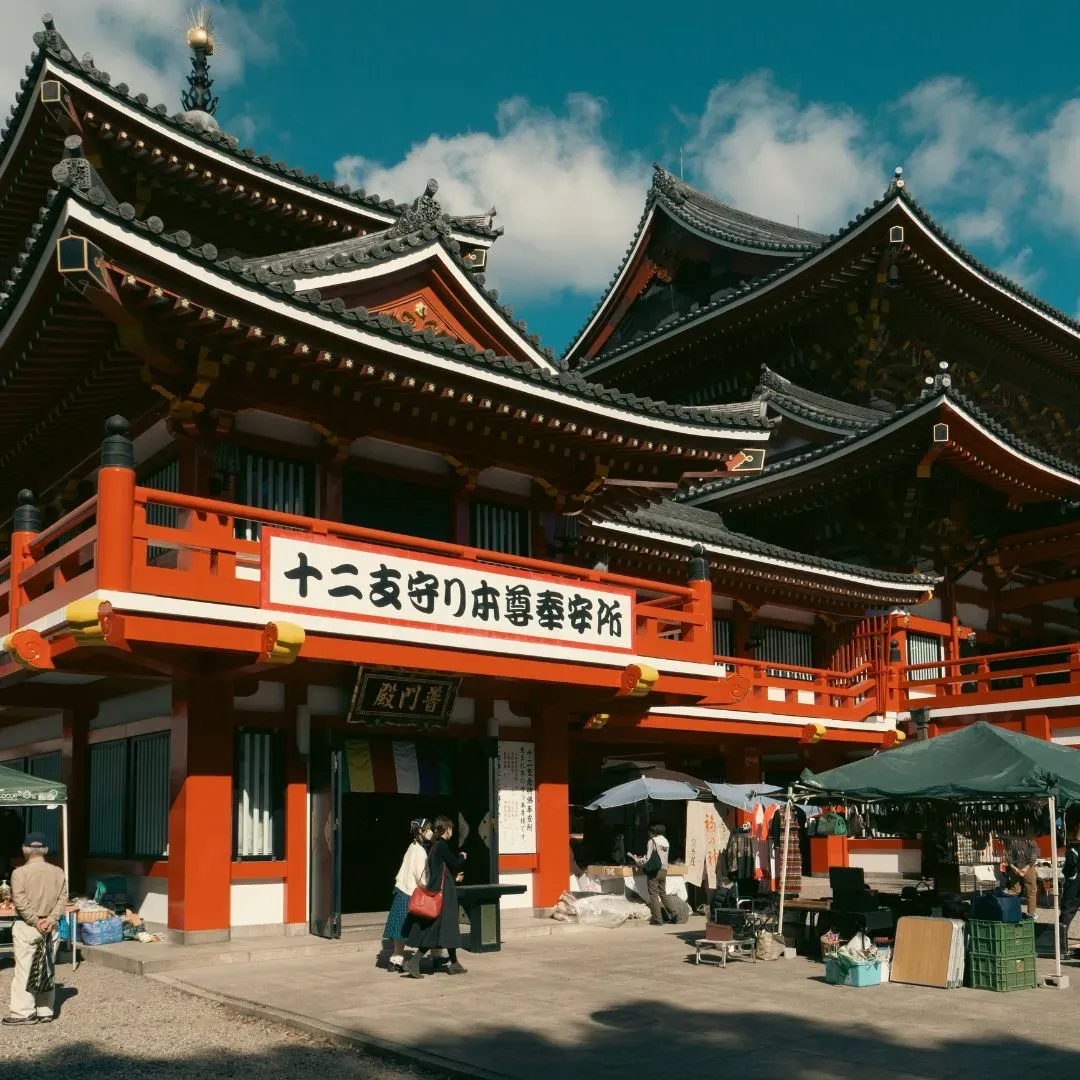
- Osu Shopping Street: a covered arcade near Osu Kannon Temple mixing retro electronics shops, street food stalls, and vintage clothing, worth an hour or two on a lighter day.
Day Trip Option: Toyota and the Automotive Heartland
If your schedule includes a session at Toyota Stadium, the trip is a natural opportunity to see the industry that shaped the entire region, rather than just passing through it for a single event. The Toyota Kaikan Museum sits close enough to the stadium that a visit fits comfortably into a pre-match or post-match window, without turning into a separate day trip on its own. Inside, exhibits cover the company's manufacturing history alongside current vehicle technology, giving visitors a sense of how a single industry reshaped an entire city's economy and identity over the decades.
What makes this pairing work is the timing rather than the distance. Toyota City sits close enough to central Nagoya that combining the stadium session with the museum doesn't require restructuring the rest of the day around it, unlike destinations elsewhere on this list that call for a half-day or full-day commitment. For visitors whose only reason to be in Toyota City is the match itself, the museum turns an otherwise single-purpose trip into something with a bit more substance.
SCMAGLEV and Railway Park
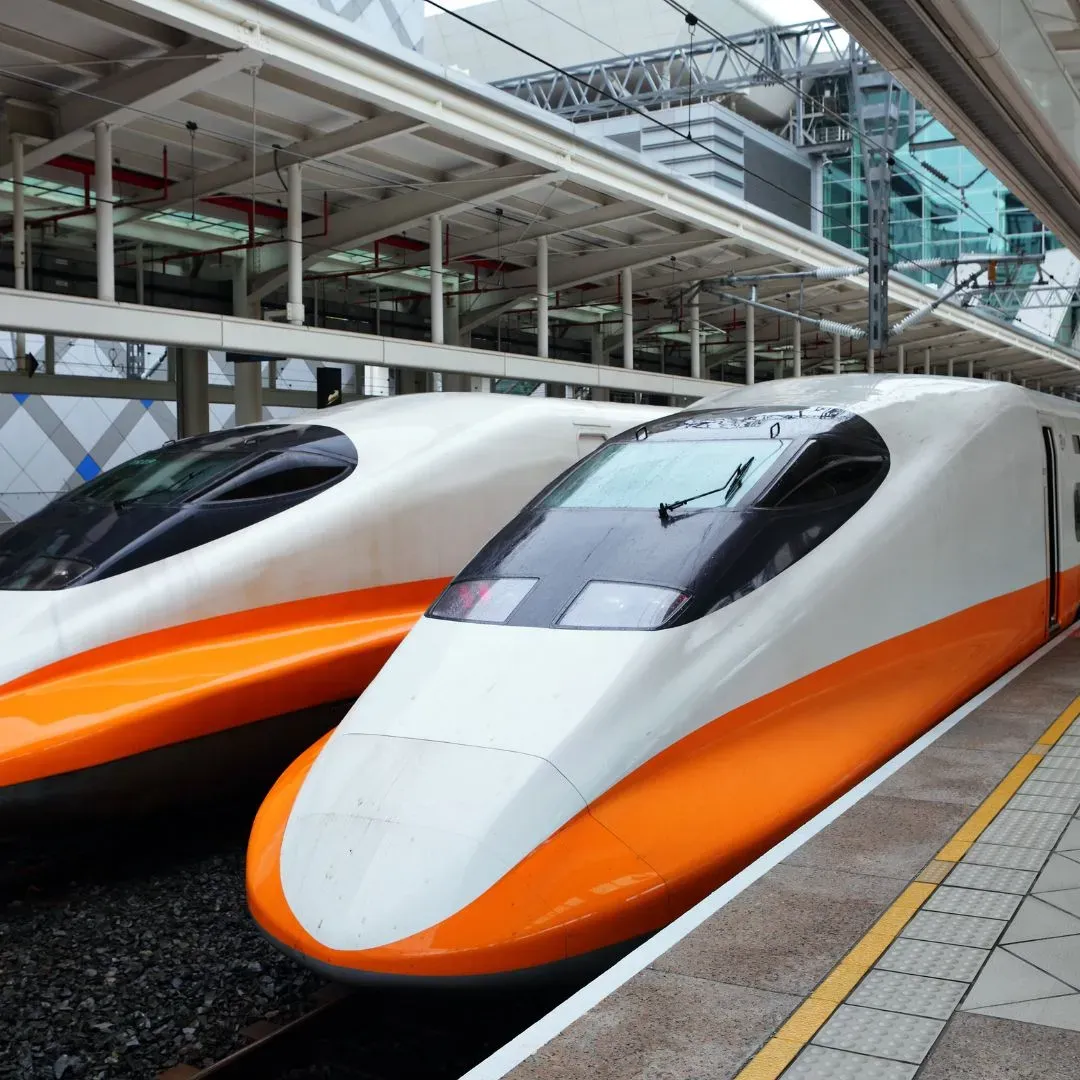
For anyone with a free half-day and even a passing interest in trains, the SCMAGLEV and Railway Park sits near Nagoya's waterfront on the Aonami Line, a short ride from Nagoya Station that makes it an easy add-on rather than a planned excursion. Inside, the collection of retired Shinkansen units includes an early bullet train model, giving visitors a direct look at how the technology has evolved across generations rather than just reading about it secondhand. Exhibits on the Chuo Shinkansen, the maglev line currently under construction between Tokyo and Nagoya, add a forward-looking layer to the museum, connecting the retired trains on display to the technology still being built today.
What makes this stop particularly useful on a trip built around a multi-day event schedule is its reliability as a backup plan. Unlike outdoor stops such as Nagoya Castle or the Sakae district, the museum is entirely indoors, which makes it a practical, weather-proof option if a session gets rained out or a planned outdoor activity has to be scrapped last minute.
- Best for: train history, families, a reliable indoor option
- Getting there: Aonami Line, a short ride from Nagoya Station
- Local tip: save this for a day when outdoor plans are uncertain, since it works equally well as a planned half-day or a last-minute weather backup
- Good to know: the Chuo Shinkansen exhibits give useful context on a project still under construction, so it's a good stop for visitors curious about Japan's next generation of rail travel, not just its history
Atsuta Shrine
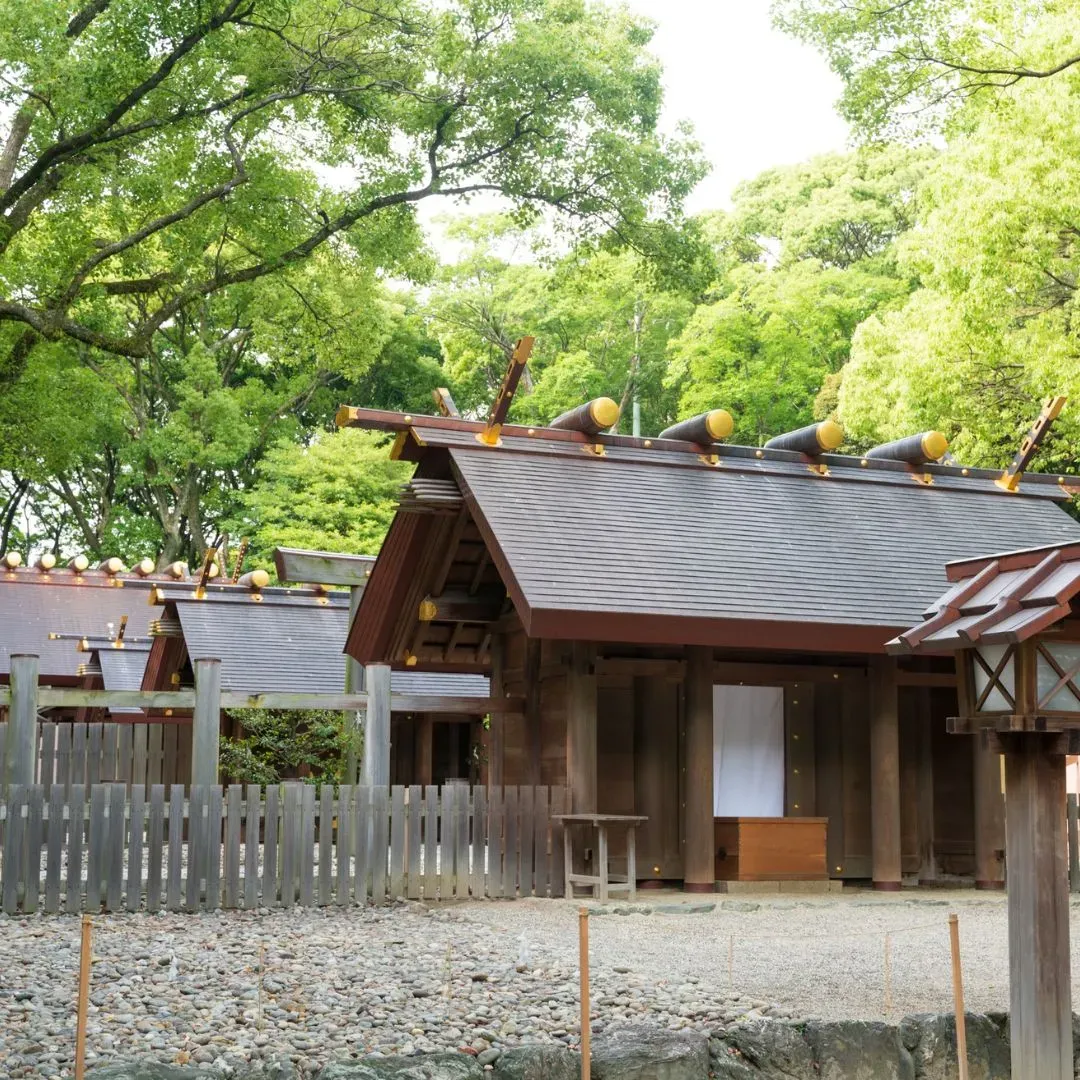
Atsuta Shrine is one of Japan's most historically significant Shinto shrines, commonly said to house the sacred sword Kusanagi-no-Tsurugi, one of the three Imperial Regalia of Japan, a detail that gives the site a level of religious and historical weight few other stops on this list can match. The shrine sits within a quiet, forested precinct a short subway ride south of central Nagoya, and the shift from the city's streets to the shrine's tree-lined approach happens quickly enough that it feels like a genuine change of pace rather than just another stop on an itinerary.
The surrounding streets add a practical reason to visit beyond the shrine itself. Several long-running hitsumabushi restaurants operate in the immediate area, some with histories nearly as long as the neighborhood's connection to the shrine, which makes it easy to pair a quieter, reflective visit with one of the city's defining meals rather than treating the two as separate errands.
- Best for: Shinto history and architecture, a quieter counterpoint to the city center
- Getting there: short subway ride south of central Nagoya
- Local tip: time the visit around a meal, since several established hitsumabushi restaurants sit close enough to the shrine to combine both without extra travel
- Good to know: the forested shrine grounds offer a genuinely different pace from Sakae or the castle, making this a good choice for a slower half-day rather than a stop to rush through between sessions
Where to Base Yourself
- Near Nagoya Station: the most convenient base for reaching Shinkansen connections, the Aonami Line, and most subway lines in one direction or another. Best if your sessions are split across multiple venue clusters.
- Sakae: better for evening dining and nightlife between event days, still a short subway ride from Nagoya Station.
- Toyota City or Okazaki: worth considering only if the bulk of your tickets are for venues in that specific cluster, since commuting back to Nagoya nightly adds up over a multi-day stay.
IV. Staying Connected: The eSIM Solution for the Games
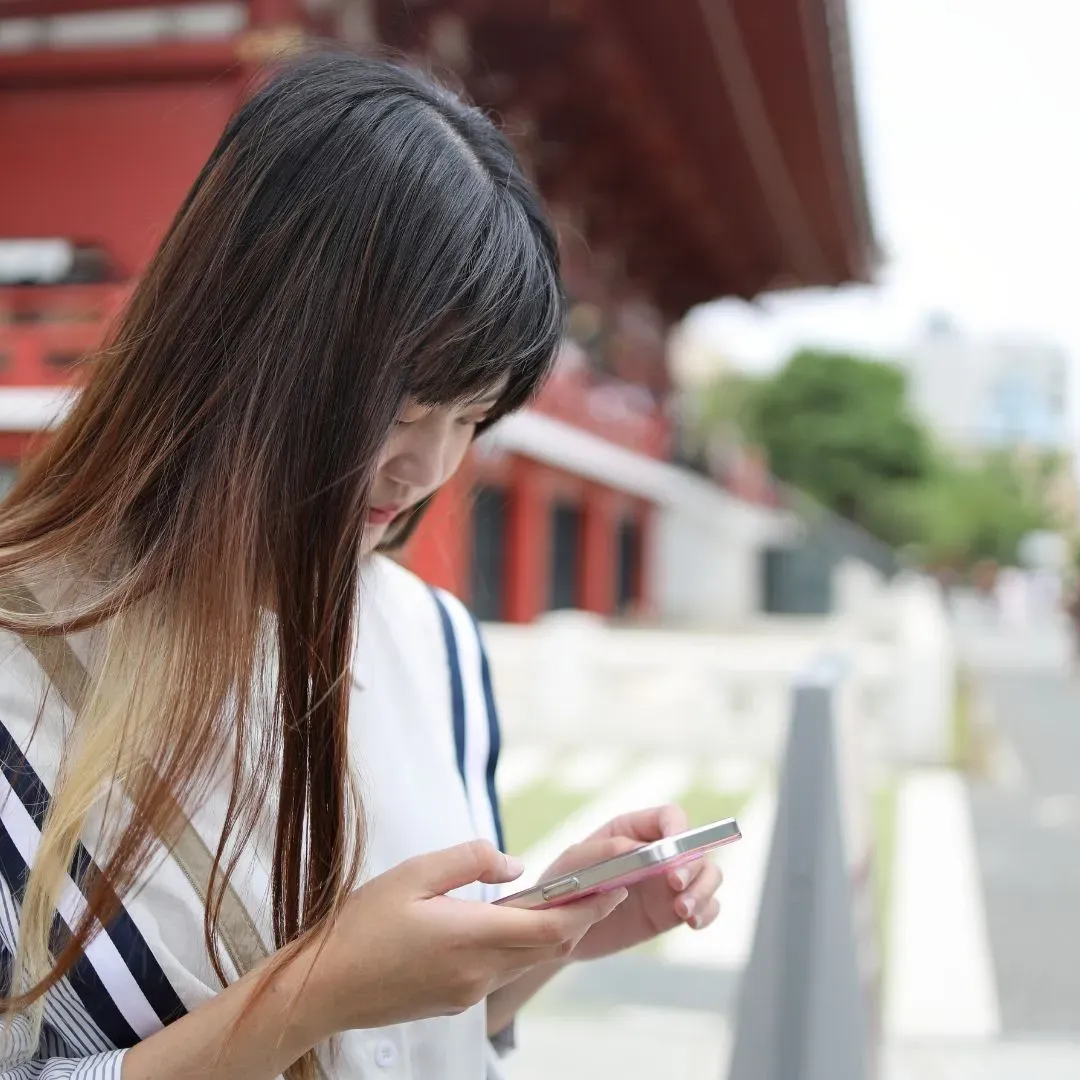
Stadium Wi-Fi at major sporting events is often congested when tens of thousands of people try to upload photos and check results at once, and roaming plans from home carriers can be expensive or throttled. A Japan eSIM solves both problems by connecting directly to local 5G networks the moment you land, without needing to swap a physical SIM card or hunt for an airport counter between sessions.
For the Asian Games window specifically, three things matter more than usual:
- Stadium uploads: Sharing photos or video from Paloma Mizuho Stadium, IG Arena, or any of the 53 venues depends on a stable local connection, since visiting-carrier roaming can deprioritize data during high-traffic events.
- Shinkansen and subway navigation: Moving between Nagoya, Toyota, Okazaki, and Ichinomiya venues requires live train times and maps, especially when switching between JR, Meitetsu, and the Nagoya subway.
- Multi-week trips: With the Games spanning over two weeks (longer if you are staying for the Asian Para Games in October), a fixed daily roaming rate adds up fast compared to a data plan sized to the trip.
Why the Japan Local eSIM from MobiMatter
The Japan Local eSIM on MobiMatter runs on SoftBank, KDDI (au) or NTT Docomo networks, both of which have strong coverage across Aichi Prefecture's cities and rural venue clusters, with 5G available in central Nagoya and along the main transit corridors. Setup takes a few minutes over Wi-Fi before you fly, so the eSIM is ready to activate the moment you land:
- QR code installation: no physical SIM swap, no need to remove your home SIM.
- Data-only plans sized by trip length: from short-trip packs for a long weekend around the opening ceremony to larger multi-week bundles covering the full Games window.
- 5G access on supported devices: relevant for uploading match photos or streaming replays between sessions.
- 24/7 support: useful if activation needs a troubleshooting step after a long flight.
For travelers combining the Games with a wider Japan itinerary, MobiMatter's Japan eSIM guide breaks down how to size a data plan by usage type, and the best eSIM for Japan comparison is a useful read if you want to weigh MobiMatter against other providers before buying.
Quick Setup Checklist
- Confirm your phone is eSIM-compatible and carrier-unlocked before you travel.
- Buy and install the Japan Local eSIM over hotel or home Wi-Fi, ideally a day or two before departure.
- Set the Japan eSIM as your default data line and disable data roaming on your home SIM to avoid accidental charges.
- Activate the data plan once you land, or set it to auto-activate on arrival if your plan supports it.
- If activation stalls, toggle airplane mode off and on, then wait a minute for the phone to register with the local network.
FAQs
When exactly are the Asian Games 2026 in Nagoya? The official Games run September 19 to October 4, 2026, with the opening ceremony at 18:00 Japan time on September 19. The published daily schedule (version 5) shows some competitions, such as volleyball and softball, starting as early as September 10 or 16.
Where do the Asian Games 2026 take place? Across Aichi Prefecture, Japan, with Nagoya as the host city and main hub. Venues are spread across roughly 53 to 54 locations in Nagoya, Toyota, Okazaki, Ichinomiya, Anjo, and other Aichi cities.
What is the fastest way to reach Nagoya for the Games? The Tokaido Shinkansen. From Tokyo, the Nozomi service takes about 94 minutes; from Shin-Osaka, about 47 to 50 minutes. Both run frequently throughout the day, so flexible same-day travel is realistic.
Do I need a Japan Rail Pass for a Nagoya-focused trip? Usually not. A single Nozomi ticket from Tokyo or Osaka is typically cheaper than a multi-day rail pass if Nagoya and Aichi are your only stops. A pass makes more sense if your trip also covers Kyoto, Osaka, or other cities beyond the Games.
What is the main venue for the opening and closing ceremonies? Paloma Mizuho Stadium, also known as Nagoya City Mizuho Park Athletic Stadium, which also hosts track and field athletics during the Games.
Is there an Asian Para Games in 2026 too? Yes. The 5th Asian Para Games Aichi-Nagoya 2026 runs October 18 to 24, 2026, at the same venues, marking the first time Japan has hosted the Asian Para Games.
What should I do about mobile data during the Games? A Japan-specific eSIM on SoftBank or KDDI networks, such as the MobiMatter Japan eSIM, avoids both stadium Wi-Fi congestion and expensive home-carrier roaming, and can be installed before you even leave home.
What food should I try in Nagoya between events? Hitsumabushi (grilled eel over rice), miso katsu (pork cutlet in red miso sauce), and tebasaki (fried chicken wings) are the three dishes most associated with the city, all widely available around Sakae, Nagoya Station, and Osu.
Can I fly directly into Nagoya instead of connecting through Tokyo or Osaka? Yes. Chubu Centrair International Airport (NGO) has direct flights from several Asian hubs and connects to Nagoya Station in roughly 28 to 35 minutes by Meitetsu Limited Express, often a faster path than routing through Tokyo or Osaka first if Aichi is your only Japan stop.
What is the weather like during the Games? Expect early autumn conditions: daytime highs in the low-to-mid 20s Celsius, cooler evenings, and a real possibility of rain given the timing near the end of typhoon season. Layers and a compact rain jacket cover most scenarios.
How far in advance should I book Shinkansen tickets and accommodation? Shinkansen reserved seats can typically be booked about a month ahead, though unreserved cars run frequently enough that same-day travel is realistic outside peak sessions. Accommodation near Nagoya Station and Sakae is likely to tighten as the Games approach, so booking as soon as your ticketed sessions are confirmed is the safer approach.
Will my regular phone plan work in Japan during the Games? Most home carrier roaming plans work but can be expensive over a multi-week trip, and public event Wi-Fi is often congested when large crowds try to use it simultaneously. A dedicated Japan eSIM on SoftBank or KDDI, like the MobiMatter Japan eSIM, gives a more predictable connection sized to your trip length.
Final Word
Nagoya's position on the Tokaido Shinkansen line makes the 2026 Asian Games one of the more logistically simple Games to attend as a spectator, even with venues spread across an entire prefecture. Lock your priority tickets through the official Aichi-Nagoya 2026 site, plan transit by venue cluster rather than by city, and sort out connectivity before departure with an eSIM from MobiMatter so navigation and uploads work the moment you land. With that in place, the gaps between sessions, whether that means Nagoya Castle, a plate of hitsumabushi, or an evening in Sakae, take care of themselves.
- Blog
- Asian Games 2026
- Asian Games Travel Guide
About the author
Travel & eSIM writer, MobiMatter
Writes MobiMatter's eSIM and destination guides since 2024, for travellers who want data from the moment they land. Before that, SEO consulting and nearly ten years in analytics at IBM.